


To adjust lighting during instances of plant melting or algae explosions, reduce light duration to 7-8 hours daily. Start with a conservative intensity of 30% for 4 hours, then increase to 50% for 3 hours. Gradually dim lights at the end of the cycle. Monitor light intensity using PAR readings and adjust your fertilization schedule to manage nutrient levels effectively. Implement these strategies, and one can improve plant health and curb algae growth while discovering further insights on care.
Key Takeaways
- Reduce light duration to 7-8 hours per day to minimize algae growth and support plant recovery.
- Gradually adjust light intensity, starting at 30% for 4 hours, then increasing to 50% for 3 hours.
- Monitor light intensity using PAR readings to prevent excessive brightness that encourages plant melting and algae blooms.
- Regularly assess water quality and nutrient levels to maintain a balanced environment for both plants and algae.
- Introduce fast-growing aquatic plants to outcompete algae and improve overall ecosystem health.
Understanding Plant Melt and Algae Growth
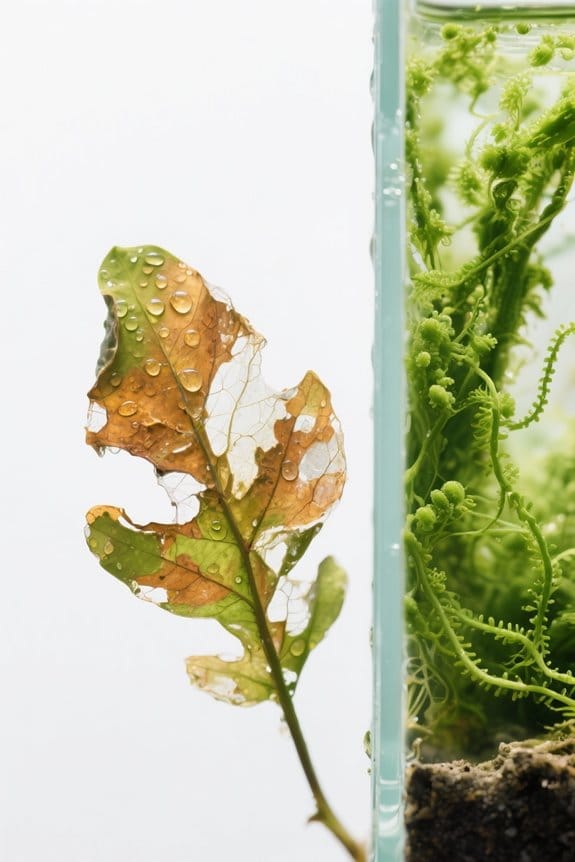
Understanding the dynamics of plant melt and algae growth is essential for maintaining a thriving aquatic environment. Plant melting typically signals poor conditions, such as high light intensity or insufficient CO2, which can stress and decay the foliage. In turn, these decaying plants contribute organic matter that fuels algae growth. To combat this, cultivate a strong, healthy plant mass, as robust plants can outcompete algae for essential nutrients and light. Regularly monitor water quality and nutrient levels; maintaining a balanced environment will alleviate issues. Additionally, reduce light duration and intensity to help mitigate the symptoms of plant melting, therefore curbing unwanted algae blooms. By adjusting these variables, the aquatic ecosystem can remain healthy and balanced, fostering a flourishing environment. Ensure optimal flow rates between 10 to 40 times tank volume to promote healthy plant growth and nutrient distribution.
Assessing Light Intensity and Duration
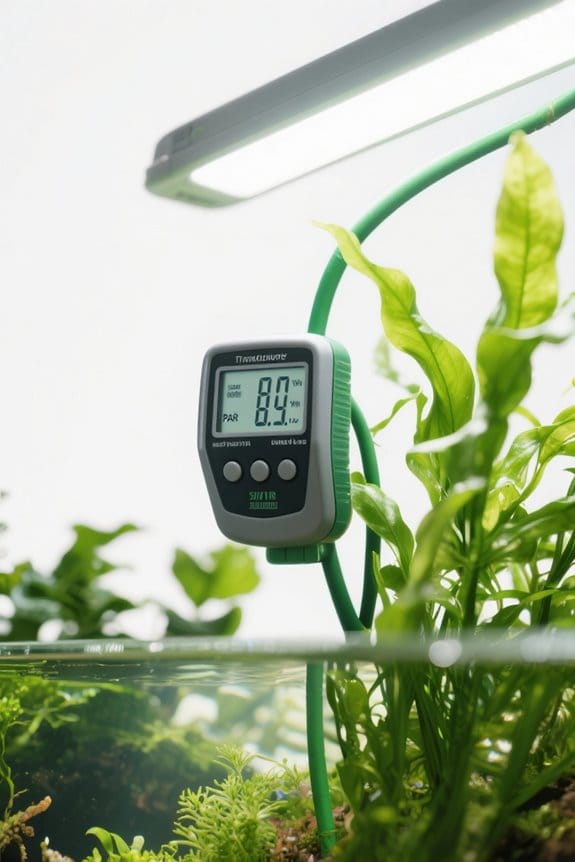
Light intensity and duration play crucial roles in the health of aquatic plants and the management of algae. To mitigate algae growth, monitor light intensity carefully, as excessive brightness can encourage algae proliferation. Shift the lighting duration to 7-8 hours per day, promoting a healthier balance. Experiment by starting at 30% light intensity for four hours before increasing to 50% for an additional three hours; this approach can enhance plant health while curbing algae. Remember, high nutrient levels combined with increased light intensity may worsen algae issues, so adjust both factors thoughtfully. Maintaining a balanced light cycle supports robust plant growth, effectively reducing the risk of unsightly algae blooms that can disrupt aquatic ecosystems. Additionally, Automatic Temperature Compensation in pH meters ensures accurate readings across various conditions, which can be crucial for maintaining optimal water parameters that support plant health.
Recommended Lighting Schedule Adjustments

To achieve ideal plant health while minimizing algae growth, it is essential to fine-tune the lighting schedule in aquatic environments. Limit the total lighting period to a maximum of 7 to 8 hours per day, balancing light duration and intensity. Start with a revised intensity approach: set lights at 30% for 4 hours, increase to 50% for 3 hours, then return to 30% for the remaining time. This structure helps prevent excessive lighting stress that can lead to plants melting. Gradually dim the lights at the end of the cycle to simulate natural conditions, supporting plant recovery. Regularly monitor light intensity using PAR readings, as unregulated power can exacerbate algae blooms and harm plant health. To further enhance the health of your aquarium, consider using nitrate removers which contain blends of nitrifying bacteria to maintain optimal water quality.
Monitoring Light Power (PAR)
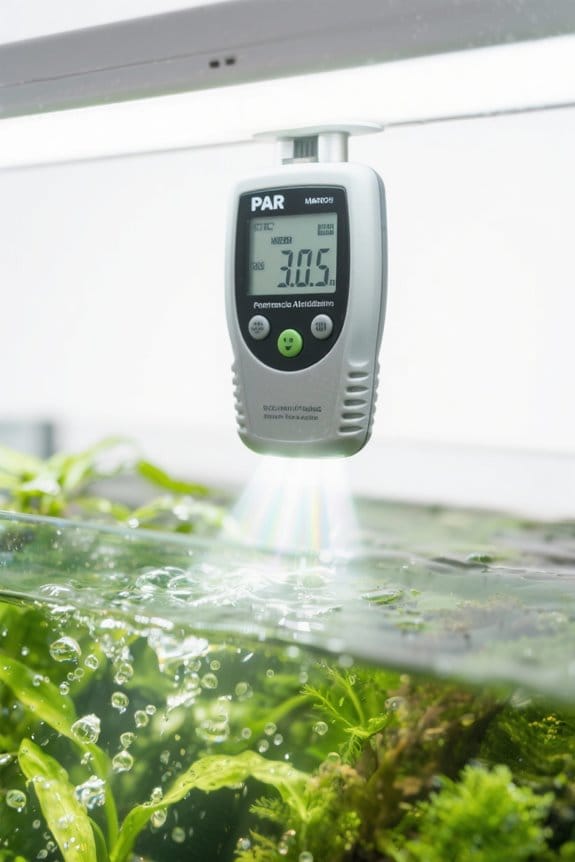
Monitoring Photosynthetically Active Radiation (PAR) is a fundamental practice for anyone dedicated to maintaining healthy aquatic plants. To optimize plant growth, measure light intensity with a PAR meter, which quantifies light in micromoles of photons per square meter per second (µmol/m²/s). The ideal PAR range for most aquatic plants is between 50 to 150 µmol/m²/s. Adjust lighting systems accordingly to guarantee these levels; exceeding them can lead to plant stress or melting. Conversely, low PAR values may indicate insufficient lighting, hindering photosynthesis. By regularly checking PAR, hobbyists can manage light intensity effectively, preventing excessive algae growth and guaranteeing a balanced ecosystem. Understanding these dynamics will enhance plant health and overall aquarium stability. Additionally, it is important to monitor water conditions to ensure that factors like temperature and salinity are within optimal ranges, as they can also impact plant and algae growth.
The Role of Nutrient Management

Nutrient management is frequently overlooked but is essential for maintaining a thriving aquatic ecosystem. Proper nutrient management helps mitigate plant melting and excessive algae growth. Regularly dose essential nutrients, such as nitrogen and potassium (e.g., KNO3), to support robust plant growth, making plants more competitive against algae. Monitor and adjust fertilization schedules based on observed plant health, as poor nutrient balance often contributes to algae proliferation. When necessary, double the fertilizer dosage cautiously, ensuring conditions allow for safe increases in nutrient concentrations. Additionally, manage dissolved organic matter from melted plants, as this can exacerbate algae problems. By consistently managing nutrients and removing decaying material, you promote a balanced ecosystem that fosters healthy plant life while controlling algae. Installing aquarium heaters with automatic shut-off mechanisms can help maintain stable water temperatures, further supporting plant health and reducing stress that may contribute to algae growth.
Importance of CO2 Supply
Plant health in an aquatic environment greatly relies on a balanced CO2 supply, which works hand-in-hand with nutrient management to foster vigorous growth. CO2 injection markedly boosts growth rates in planted tanks, enhancing the absorption of nutrients and effectively combating algae. As light intensity increases, so does the demand for CO2; without an adequate supply, plants may experience stress, leading to melting. Monitor CO2 levels closely, particularly during high-light scenarios, to maintain a healthy balance that supports photosynthesis and robust plant health. In low-tech setups, alternatives like liquid carbon sources, such as Excel, can assist plant health, but they generally provide less benefit than pressurized CO2 systems. Implementing these strategies guarantees thriving aquatic ecosystems. Many aquarium controller systems offer mobile app integration for real-time monitoring and notifications, which can help maintain the optimal CO2 levels required for plant health.
Adjusting Water Quality and Stability
Achieving ideal water quality and stability is fundamental for maintaining a healthy aquatic environment. Perform weekly water changes of at least 50% to markedly reduce nutrient levels that fuel algae growth. Regularly monitor key parameters such as nitrates, ensuring they remain below 20 ppm, alongside ammonia and pH levels, to create ideal conditions for aquatic plants. Remove dead organic matter diligently, as it can contribute to nutrient spikes that favor algae. In newly cycled tanks, stabilize nitrogen levels by cultivating beneficial bacteria that convert harmful ammonia into less dangerous nitrates, preventing plant melt. Avoid rapid fluctuations in water parameters, which can stress plants and encourage algae proliferation, and thereby maintaining ecological balance within the tank. For optimal results, use dechlorinators to treat tap water before adding it to the aquarium to ensure it is free from harmful chemicals.
Incorporating Effective Plant Care Techniques
To foster thriving aquatic plants, it’s imperative to incorporate effective care techniques that cater to their specific needs. Regularly trim old or damaged leaves to promote healthy growth, as this reduces plant stress and mitigates melting or algae outbreaks. Implement a balanced fertilization approach by using liquid fertilizers and root tabs, essential for substrate feeders and overall plant well-being. Monitor and adjust light intensity and duration; this balance supports growth while preventing overexposure. Introduce fast-growing aquatic plants to enhance competition against algae for both nutrients and space. Additionally, maintain consistent water quality through regular water changes, paired with organic matter removal, creating an environment that promotes plant health and naturally deters algae proliferation. For optimal results, using full-spectrum LED lighting is crucial as it not only supports plant growth but also enhances the overall aesthetics of the aquascape.
Community Insights and Recommendations
How can users best adapt their lighting strategies to foster healthier aquatic environments? Community members recommend setting light exposure to 7-8 hours daily, effectively combating algae blooms and preventing plant melting. Emphasize gradual changes; increasing light intensity slowly allows plants to acclimate without stress. Successful users often leverage dense planting, which maximizes light absorption while suppressing algae growth. Balance your lighting with nutrient levels, monitoring water parameters to prevent over-fertilization, which can lead to algae outbreaks. As experienced aquarists highlight, proper CO2 supplementation and fertilization combined with ideal lighting greatly enhance plant growth. Incorporate these insights, patiently experimenting to tailor your strategy to your unique setup, and watch your aquatic garden thrive. A key aspect of maintaining the health of an aquatic setup is the presence of Amano shrimp, which effectively manage algae growth and contribute to a balanced ecosystem.
Observing Plant Health and Growth Responses
Monitoring plant health and growth responses is essential for maintaining a thriving aquatic environment. Regular observation for signs of melting is important, as it may indicate poor CO2 availability or excessive light stress. When plants exhibit melting, lower light intensity can mitigate their decline while still supporting healthy growth. Adjust light duration gradually to monitor improvements—this can help evaluate its impact on algae proliferation as well. An increase in algae generally correlates with melting plants, making strong vegetation critical for overall tank health. Consequently, make gradual adjustments in light intensity, paying attention to positive or negative plant responses, and utilize these insights to foster a balanced ecosystem where both plants and algae coexist harmoniously. Additionally, choosing substrates that promote robust plant growth can enhance overall environmental stability and reduce issues related to melting and algae overgrowth.
Experimenting With Lighting and Fertilization
Adjustments in both lighting and fertilization are essential steps for addressing plant challenges like melting or algae blooms. Begin by decreasing light duration to 7-8 hours while managing intensity; aim for approximately 30% power during extended periods. This setup helps keep plants healthy while stunting algae growth. Utilize PAR data to monitor light effectiveness, ensuring conditions favor plant growth. Next, adjust fertilization rates accordingly, increasing nutrient doses if light is reduced. This provides necessary resources for plants to grow stronger and outcompete algae. Additionally, consider integrating liquid carbon products to support recovery during stressful periods. By experimenting with these variables, plant enthusiasts can create ideal environments for thriving aquatic life while minimizing algae-related issues.
Frequently Asked Questions
How to Deal With Melting Plants?
Dealing with melting plants requires careful plant care, focusing on improving CO2 levels, adjusting the light spectrum, and trimming decaying leaves. Consistent fertilization and adequate lighting duration can also enhance recovery and overall plant health.
What Color Light Stops Algae Growth?
Research indicates that red wavelengths can be less conducive to algae growth, while a balanced use of blue spectrum light supports plant health. Hence, a careful mix of both is essential for controlling algae proliferation.
Will LED Lights Promote Algae Growth?
LED lights can promote algae growth due to their high-intensity LED spectrum. Effective algae control requires careful management of light duration and intensity, ensuring balanced conditions to support plant health while minimizing algal proliferation.
What Kind of Light Kills Algae?
Certain light intensities can inhibit specific algae types. Utilizing wavelengths that favor plant growth while minimizing those beneficial for algae, along with reduced overall light duration, effectively combats algae proliferation in aquatic environments.


