


To set a safe starting CO₂ level in a new planted tank, use a pressurized CO₂ system. Aim for an initial concentration of approximately 20 parts per million (ppm). Gradually inject CO₂ at a rate of about 1 bubble per second per 50 liters. Monitor fish behavior for signs of distress, like gasping or erratic swimming. Regularly check CO₂ and pH levels to maintain balance. By following these guidelines, ideal plant growth can be achieved while keeping fish safe. More detailed insights will enhance your tank setup.
Key Takeaways
- Begin with a conservative CO₂ injection rate of approximately 20 ppm to minimize fish stress during acclimation.
- Use a bubble counter to visually measure CO₂ output, aiming for 1 bubble per second per 50 liters.
- Gradually increase CO₂ levels while closely observing plant responses and fish behavior for any signs of distress.
- Utilize a CO₂ drop checker to confirm CO₂ concentration remains between 20-30 ppm for optimal plant growth.
- Maintain good water surface agitation and regularly service CO₂ diffusers to ensure effective gas exchange and distribution.
Understanding the Importance of CO₂ in Aquatic Plants

Carbon dioxide (CO₂) plays an essential role in the health and significance of aquatic plants in a planted tank. Most aquatic plants, especially high-demand species like Blyxa japonica and dwarf baby tears, thrive with adequate CO₂ levels. The recommended CO2 injection rate typically falls between 20-30 parts per million (ppm) for peak growth while ensuring aquatic life safety. Monitor your tank’s pH level as fluctuations can indicate variations in CO₂ concentration, affecting photosynthesis. Aim for a consistent environment, as stable conditions promote ‘pearling,’ where plants release oxygen bubbles. Be cautious, as exceeding 30 ppm approaches dangerous levels. Regularly track CO₂ and water parameters with tools like drop checkers to maintain balance, ensuring both plant health and fish welfare. For those managing Acropora corals, maintaining stable CO₂ levels is equally important as it ensures the overall stability of water parameters in reef tanks.
Essential Equipment for a CO₂ System

For a successful CO₂ system in a planted aquarium, assembling the right equipment is critical. Start with a pressurized CO₂ cylinder, which should match your aquarium volume for peak performance. Next, install a high-quality CO₂ regulator equipped with a solenoid; this component controls gas release and features two pressure gauges to monitor internal and output pressures effectively. Use CO₂-resistant tubing to connect these elements, ensuring its thickness accommodates high pressures to prevent leaks. Consider adding a bubble counter for convenience, as this accessory measures CO₂ output by displaying the rate of bubbles. Finally, incorporate one-way check valves to safeguard the system, preventing water from siphoning back into the equipment, thereby maintaining its integrity and function. A dual-stage regulator is highly recommended as it prevents the end-tank-dump, ensuring stable CO₂ levels for both tropical and marine aquariums.
Setting Up Your CO₂ Cylinder
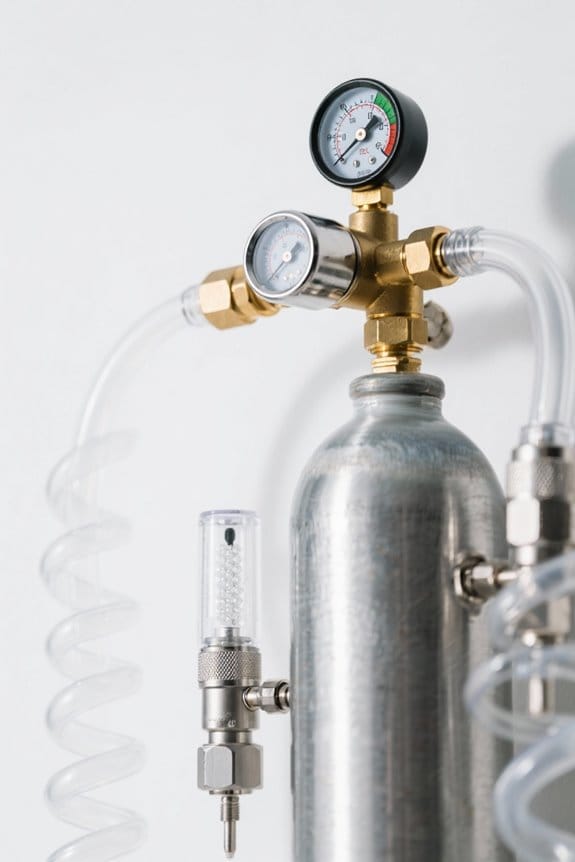
When setting up a CO₂ cylinder for a planted aquarium, confirming proper position and secure connections is essential for safe operation. Position the pressurized CO₂ cylinder securely near the aquarium, ideally within a cabinet, to minimize accidental damage. Attach the CO₂ regulator tightly to the cylinder valve, utilizing an O-ring for a leak-proof seal. Open the cylinder valve slowly to check for gas flow, while monitoring the pressure gauge to confirm operability. Install a bubble counter between the regulator and diffuser to accurately measure CO₂ output; confirm it is filled with liquid for precise readings. Regularly inspect all connections and tubing for leaks using soapy water before initiating the CO₂ flow, maintaining system integrity during operation. It is important to choose a CO₂ tank that is lightweight and durable, such as those made from aluminum, to ensure ease of handling and long-term use.
Installing the CO₂ Regulator

Successful setup of a CO₂ regulator requires careful attention to detail, starting with the installation process. First, verify that a working O-ring is in place, then securely connect the CO₂ regulator to the CO₂ cylinder valve to prevent gas leaks. Next, open the CO₂ cylinder valve slowly while monitoring gas flow; the pressure gauges on the regulator will display both internal and output pressures. Power on the solenoid to control CO₂ flow after confirming the regulator is properly connected. For best results, install a bubble counter between the regulator and the diffuser to visually track CO₂ output. Finally, check all connections for leaks using soapy water, confirming that the system operates safely before introducing fish to the aquarium. To ensure a healthy environment for shrimp, maintaining stable water conditions is crucial in a planted tank setup.
Connecting the CO₂ Tubing and Diffuser

How can one guarantee ideal CO₂ distribution in a planted tank? First, use durable, CO₂-resistant tubing to connect the CO₂ regulator to the CO₂ diffuser. Ascertain that connections are tight to prevent leaks. Position the CO₂ diffuser at the bottom of the aquarium, where it will produce the smallest bubbles, enhancing CO₂ absorption by the plants. If a bubble counter is used, attach CO₂ tubing securely to it as well. Additionally, install a check valve inline with the tubing to prevent water backflow; this protects the entire CO₂ system’s integrity. Regularly inspect the tubing and diffuser for wear and clogs, and clean or replace them as necessary. This ascertains effective CO₂ delivery throughout the tank, supporting healthy plant growth. Ensure the pressure requirements of the CO2 diffuser are met to maximize efficiency in CO2 diffusion.
Adjusting CO₂ Injection Rates
Adjusting CO₂ injection rates plays an essential role in maintaining a healthy planted aquarium. Begin with a CO₂ injection rate of approximately 1 bubble per second for every 50 liters of tank water, providing a safe initial level. Gradually increase the bubble rate, but closely monitor fish and plant behavior to prevent stress. Aim for CO₂ concentrations around 20-30 ppm, utilizing a drop checker as a visual aid to gauge levels. Stabilize CO₂ levels before adding any livestock, facilitating a smoother acclimatization process. Additionally, keep an eye on the pH, aiming for less than a 0.1 pH drop during the photoperiod, ensuring consistent conditions for your aquatic ecosystem. Regular testing is vital for maintaining a healthy aquarium environment, especially when adjusting CO₂ levels. This balanced approach fosters ideal growth and well-being for your plants and fish.
Monitoring CO₂ Levels and Fish Behavior
Monitoring CO₂ levels and observing fish behavior are essential tasks for anyone managing a planted aquarium. Start with a CO₂ level of approximately 20 ppm, allowing plants to acclimate without stressing fish. Observe fish for signs of distress; gasping at the surface or erratic swimming often indicate excess CO₂ levels. Utilize a CO₂ drop checker for a reliable visual cue of CO₂ concentration, ensuring you maintain beginner-friendly levels. Additionally, maintain good water surface agitation to enhance oxygen levels and facilitate gas exchange. Regular maintenance of CO2 diffusers is crucial for optimal performance, as clogged diffusers can hinder CO2 distribution. Adjust CO₂ levels gradually, aiming for consistent readings throughout the photoperiod. This approach promotes plant health while minimizing stress on aquatic life, creating a balanced environment critical for both flora and fauna.
Best Practices for CO₂ Management
Effective CO₂ management is essential for creating a thriving planted aquarium, as proper levels can greatly enhance both plant growth and fish health. Start with a low CO₂ level of approximately 20 ppm to prevent fish stress, allowing plants to acclimate. Gradually increase CO₂ levels over several days, closely monitoring plant responses and fish behavior. Use a CO₂ drop checker to visually track CO₂ concentration, aiming for a range of 20-30 ppm, which is ideal for plant growth. Adjust CO₂ injection rates based on tank size, beginning with one bubble per second for every 50 liters of water. Regularly check water parameters, including pH levels, as they substantially affect CO₂ absorption and overall tank health. Consider using premium stainless steel construction for CO2 tanks, as it ensures longevity and greater resistance to high pressure, promoting reliability in performance crucial for plant health.
Troubleshooting Common CO₂ Issues
Identifying common CO₂ issues in a planted tank requires careful observation and prompt action. Begin with a conservative CO₂ injection rate of 1 bubble per second for every 50 liters, allowing fish to acclimate without stress. Closely monitor fish behavior; signs like gasping indicate excessive CO₂ levels, necessitating adjustments. Utilize a CO₂ drop checker to maintain levels between 20-30 ppm, which supports healthy plant growth. Regularly check all connections and check valves in your CO₂ system to prevent leaks; even minor leaks can disrupt CO₂ levels, harming both plants and fish. If problems arise, stop CO₂ injection immediately and perform a partial water change to stabilize water parameters and reduce stress on inhabitants. For accurate measurements and reliable results, consider using Spring Chef stainless steel measuring spoons, which offer precision and durability.
Frequently Asked Questions
What Should the CO2 Level Be in a Planted Tank?
Ideal CO₂ levels in a planted tank typically range from 20 to 30 ppm. Employing CO₂ measurement techniques and various CO₂ injection methods can help maintain these levels, ensuring healthy plant growth and a balanced aquatic ecosystem.
What Is the Ideal CO2 Level for Plant Growth?
The ideal CO₂ level for plant growth typically ranges between 20 to 30 ppm. These conditions maximize CO₂ benefits, enhancing photosynthesis while maintaining stability, essential for thriving aquatic plants and overall tank health.
When to Run CO2 in a Grow Room?
Co2 timing techniques suggest starting CO2 just prior to lights turning on for ideal grow room optimization. Consistent plant health monitoring guarantees effective levels, promoting growth while preventing potential stress from fluctuations in CO2 concentrations.
How to Introduce CO2 Into an Aquarium?
To introduce CO₂ into an aquarium, utilize CO₂ diffusion methods and appropriate CO₂ setup equipment. Employ CO₂ injection techniques, starting slowly and monitoring plant and fish health to guarantee a balanced aquatic environment.


