
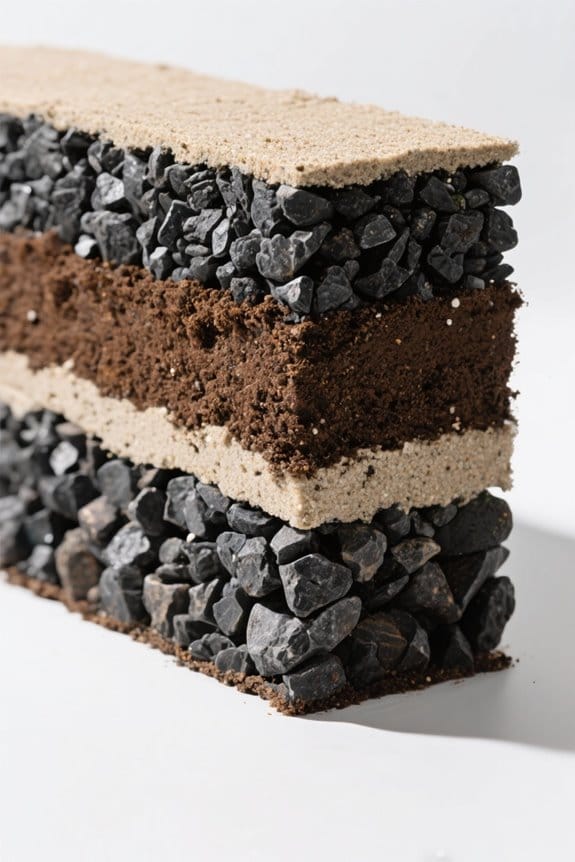

To layer substrates in a planted tank, start with a nutrient-rich base layer like ADA Aquasoil, known for its high cation exchange capacity, measured at 24.5 to 27.5 me/100g. Next, apply a cap material, such as Seachem Flourite, about 2-3 cm thick for root stability. This layering minimizes mixing and allows nutrients to be accessed effectively. Monitor water parameters regularly and recharge layers as needed to maintain health. Interested insights on enhancing your substrate ecosystem await.
Key Takeaways
- Use a nutrient-rich base layer with a high cation exchange capacity for optimal nutrient storage and lower pH levels.
- Layer finer substrate on top to promote healthy root development while maintaining nutrient accessibility.
- Ensure a cap thickness of 2-3 cm to support effective planting and prevent layers from mixing.
- Regularly monitor and recharge the base layer with nutrients to sustain plant growth and stability.
- Maintain minimal disturbance during cleaning to preserve substrate integrity and nutrient reserves.
Understanding Substrate Functionality

While establishing a healthy planted tank, understanding substrate functionality is essential for ensuring robust plant growth. The substrate serves as a foundational layer, influencing nutrient availability and overall water parameters. Different types of substrates, such as nutrient-rich aquasoils and inert substrates, offer varying cation exchange capacities (CEC). For instance, ADA Aquasoil boasts a high CEC of approximately 24.5 to 27.5 me/100g, making it superior at storing nutrients compared to lower CEC options like Eco Complete. Layering substrates can enhance plant growth; start with a nutrient-rich bottom layer, then cap it with an inert substrate to maintain aesthetics while minimizing nutrient disturbances in the water column. Regularly monitor nutrient levels and apply water column dosing as needed. Incorporating crushed coral substrates can also help stabilize pH levels, ensuring a balanced environment for aquatic life.
Choosing the Right Base Layer

Choosing the right base layer in a planted tank can greatly impact overall plant health and growth. A nutrient-rich base layer, such as ADA Aqua Soil, enhances nutrient content and can help lower pH, making it ideal for aquatic plants. Alternatively, inert substrates like standard gravel or sand can be used, but they require regular fertilization to support plant health. To promote healthy root development, consider layering a nutrient-rich option like Caribsea Eco-Complete underneath a finer substrate top layer. Regular maintenance, such as monitoring nutrient levels in the base layer, is essential for the long-term stability of the tank. Seachem Flourite Black Clay Gravel, known for its nutrient retention and pH stability, is another excellent choice for a base layer. By selecting an appropriate base layer, aquarists can create a thriving environment for their aquatic plants.
Selecting an Appropriate Cap Material

Selecting the right cap material is essential for maintaining the benefits of a layered substrate in a planted tank. Consider using Seachem Flourite, which boasts a sharp texture that enhances rooting stability while preserving nutrient retention below the substrate layers. Aim for a thickness of 2-3 cm for the cap material; this allows for easy planting and effective siphoning without disturbing underlying nutrients. Sand is often preferred due to its lower percolation, helping to keep the layers distinct and minimizing mixing over time. Enhance your aquascape with colored gravel or sand for added visual appeal. Additionally, fine sand products like Seachem Flourite Black Sand are ideal for sensitive fish, providing a gentle texture while supporting plant growth and stability. For a phosphate-free option, consider using Aqua Natural Oolitic Aragonite Aquarium Sand, which enhances water quality and reduces algae growth, making it a beneficial choice for aquatic ecosystems.
Enhancing the Substrate Ecosystem

The success of a planted tank largely hinges on the health of its substrate ecosystem, which supports plant roots and maintains nutrient balance. Utilize a nutrient-rich base layer, such as ADA Aquasoil, which boasts a high cation exchange capacity of approximately 24.5 – 27.5 me/100g. This enhances nutrient retention and availability for plant uptake. Implement proper layering techniques by placing this base layer beneath a substrate capping material, like sand or gravel, with a thickness of 2-3 inches to facilitate root penetration and minimize disturbance during maintenance. Confirm you regularly recharge your bottom layer with nutrients, as nutrient effectiveness diminishes over time, impacting long-term plant growth. Maintaining nutrients in this manner creates a thriving substrate ecosystem essential for your planted tank. Consider using natural riverbed appearance gravels, such as CaribSea Super Natural Peace River Gravel, which not only enhance aesthetics but also support beneficial bacteria colonization.
Best Practices for Maintenance and Stability

Maintaining a healthy planted tank involves implementing best practices that enhance stability and promote ideal plant growth. Regularly monitor water parameters and replenish nutrients in the nutrient-rich substrate, especially the bottom layers, to support long-term health. To avoid disrupting substrate integrity during maintenance, minimize disturbances and utilize mesh bags for nutrient layers, allowing roots access while preventing mixing. Implement a systematic cleaning schedule to manage mulm build-up, which protects nutrient reserves crucial for aquatic plant growth. Utilize proper capping techniques with fine sand or gravel, enabling better water flow while limiting percolation that can deplete foundational nutrients. Consider supplementing with root tabs to further enhance nutrition. Applying liquid fertilizers like Seachem Flourish can provide essential macro and micronutrients, supporting robust plant growth and ensuring a thriving and stable planted tank environment. Following these methods guarantees a thriving and stable planted tank environment.
Frequently Asked Questions
How to Layer Substrate in a Planted Aquarium?
Layering substrate in a planted aquarium involves using nutrient layers like soil beneath inert materials such as gravel, ensuring adequate substrate depth for plant roots while monitoring water chemistry and employing eco-friendly materials for effective substrate maintenance.
Should I Layer My Substrate?
Research shows that layered substrates can increase nutrient retention by up to 50%. Implementing diverse substrate types enhances plant growth, improves water parameters, and boosts filtration effectiveness, while also providing aesthetic appeal and aiding substrate maintenance for aquatic organisms.
How Long Does Aquarium Substrate Last?
Aquarium substrate longevity varies based on composition, with inert options lasting years and nutrient-rich types needing replacement every 1-3 years. Maintenance requirements and water quality impacts influence longevity, alongside cost considerations and aesthetic choices that affect compatibility.
Can I Add Stratum to an Established Tank?
Like a gardener nurturing new blooms in a seasoned garden, adding Stratum to an established tank poses challenges. Careful substrate addition techniques and monitoring guarantee plant growth thrives despite water chemistry effects and fish compatibility issues.


