


To keep aquarium temperature stable during power outages, prepare by using battery-operated air pumps and thermal blankets for insulation. Cover the tank tightly to reduce heat loss and monitor the water temperature frequently, aiming for 75-85°F. Use heat packs, one for every 20-30 gallons, taped to the outside of the aquarium for warmth. If temperatures rise, cool the tank gradually with battery-operated fans and frozen RODI water bottles. More detailed methods and tips follow.
Key Takeaways
- Use battery-operated air pumps and aerators to maintain oxygen levels during power outages.
- Insulate the aquarium with blankets or Mylar wraps to minimize heat loss and stabilize temperature.
- Monitor the temperature closely using a reliable thermometer, aiming for 75–85°F.
- Apply heat packs outside the aquarium to provide additional warmth; use one for every 20-30 gallons.
- Develop a contingency plan for frequent outages, including alternative heating methods and regular water quality checks.
Preparing for Power Outages

Preparing for power outages is essential for any aquarium owner, as unexpected electricity loss can jeopardize the health of aquatic inhabitants. Equip your setup with battery-operated air pumps to maintain oxygen levels in the tank, guaranteeing aquatic animals receive adequate aeration. Store extra warm water in thermal containers for emergency water changes, matching temperatures to prevent shocking your fish. Utilize Mylar blankets or thermal wraps to insulate the aquarium, which minimizes temperature fluctuations during cold weather. Keep emergency heat packs on hand, using one for every 20-30 gallons, to maintain warmth effectively. Finally, regularly check and maintain backup systems, such as generators or uninterruptible power supplies (UPS), to confirm they function properly when required.
Insulation Techniques for Your Aquarium
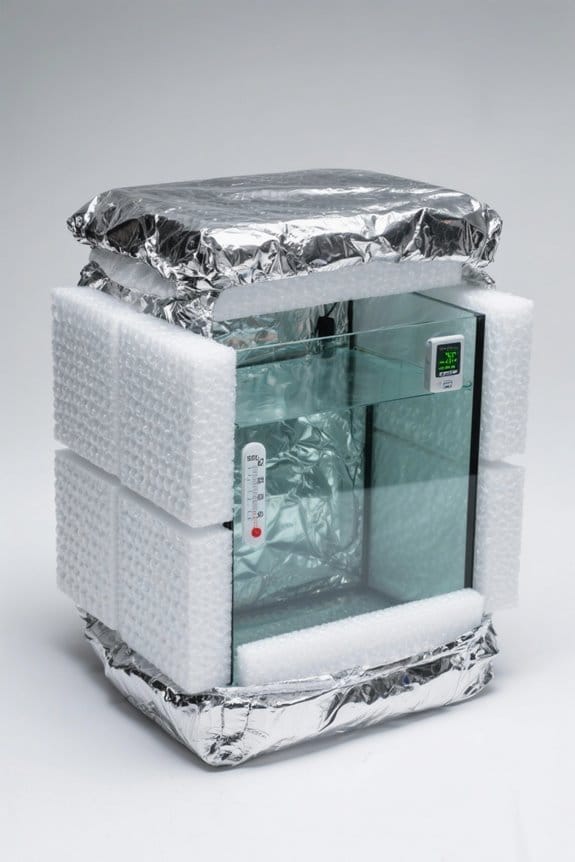
Insulating an aquarium is essential for maintaining stable temperatures, especially during power outages or extreme weather conditions. To insulate effectively, cover the aquarium with a tight-fitting lid and wrap it in materials like blankets or Mylar, which help minimize heat loss. Position the aquarium away from drafts and direct sunlight to reduce temperature fluctuations. Utilize heat packs, applying one per 20-30 gallons and taping them to the outside of the aquarium, to guarantee added warmth. Regularly monitor the tank’s temperature using a thermometer, making gradual adjustments to avoid stressing your fish. These insulation techniques collectively help maintain a safe environment, keeping the water temperature stable and guaranteeing the well-being of aquatic life.
Using Heat Packs and Hot Water Bottles

To maintain warmth in an aquarium, utilizing heat packs and hot water bottles can be very effective, especially during colder months. Affix heat packs to the outside of the tank, using one pack for every 20-30 gallons of water. For added warmth, fill hot water bottles with warm water and carefully float them in the aquarium; this method helps gradually increase the water temperature and avoid drastic changes. It is essential to monitor temperature closely, ensuring adjustments are made at a rate of no more than 1-2°F per hour. Always mix boiling water with tank water in a separate bucket before adding to the aquarium, preventing any risk of scalding your fish. Choosing a multi-stage filtration system can also help maintain stable conditions in your aquarium, as they effectively remove impurities and support consistent water quality.
Monitoring Temperature During Outages

When power outages occur, maintaining a stable temperature in an aquarium is essential for the health of aquatic life. Use a reliable thermometer to regularly monitor the temperature, making certain it stays within the ideal range of 75–85°F for tropical fish. During longer outages, check the temperature every few hours to proactively manage any fluctuations. To insulate the aquarium, wrap it in blankets or Mylar during cold weather, as this minimizes heat loss. Additionally, avoid placing the aquarium in direct sunlight or near heat sources, which can cause thermal spikes or drops. If temperature changes do occur, adjust gradually by no more than 1–2°F each hour to prevent shocking the fish and maintain their ongoing well-being. Consider using dual relay options in temperature controllers to manage both heating and cooling, ensuring stable conditions even during power fluctuations.
Cooling Strategies for High Temperatures

Maintaining an ideal temperature in an aquarium is particularly important during periods of excessive heat. For effective cooling, use battery-operated fans to enhance evaporation cooling, which lowers water temperatures. Avoid placing the aquarium in direct sunlight; instead, move it to a shaded area to reduce thermal spikes. To gradually decrease temperatures, float frozen water bottles filled with RODI water in the tank, ensuring no more than a 2-3 degrees Fahrenheit drop per few hours to prevent shocking the fish. Additionally, insulate the aquarium with Mylar blankets to minimize heat loss. If temperatures rise excessively, avoid direct cooling methods; rather, mix cold water with aquarium water in a separate container to maintain stability and prevent low oxygen conditions. Consider using a digital LED controller for precise temperature management to ensure your aquarium remains within the optimal range.
Gradual Temperature Adjustments
Ensuring a stable aquarium temperature is essential for fish health, particularly during unexpected events such as power outages. Gradual adjustments to water temperature, ideally at a rate of 1-2°F per hour, can prevent thermal shock. Use frozen water bottles filled with RODI water to lower the tank temperature slowly, targeting a reduction of 2-3 degrees Fahrenheit over four hours. During colder conditions, covering the aquarium with emergency Mylar blankets can help conserve heat, promoting a steady temperature. Additionally, larger aquariums maintain temperature longer, reducing vulnerability to rapid fluctuations. It is important to consider the minimum tank size recommendations for Betta fish, as larger tanks provide more stable environments. By emphasizing slow fluctuations in temperature changes, fish health remains protected, minimizing stress during these critical situations. Consistency is key for successful temperature control.
Water Change Considerations
To maintain a healthy aquarium environment, performing water changes requires careful attention to detail, establishing the foundation for ideal fish health. Use dechlorinated water that matches the tank’s temperature to prevent stress and mortality in fish. If water temperature drops, prepare partial water changes gradually, adjusting the temperature by 1-2°F over several hours. Store extra treated water, equivalent to 10-20% of the tank volume, for emergencies when tap water is not suitable. After a power outage, avoid large water changes immediately to reduce risks of ammonia spikes that can harm beneficial bacteria. Regularly test ammonia levels and water quality before and after changes to guarantee the ongoing safety of the aquatic environment while keeping fish safe and healthy. Introducing captive-bred clownfish can promote adaptability and health in your aquarium setup, supporting ethical sourcing and community stability.
Importance of Consistent Temperature Levels
Given that fish are ectothermic, their body temperature is directly affected by the water around them, making consistent temperature levels vital to their well-being. Tropical fish thrive between 75–85°F, and even minor fluctuations can cause stress, making monitoring water temperature critical. Power outages can disrupt these levels, raising ammonia concentrations detrimental to aquatic life. To maintain stable temperatures, larger aquariums are preferable, as they resist rapid changes better than smaller tanks. During outages, utilize heat packs or insulation techniques to keep the water warm. Implement regular monitoring with a reliable thermometer to guarantee ideal conditions. For added safety, consider using aquarium heaters with protective guards, which are designed to prevent fish burns and ensure a stable environment. By providing stability, the likelihood of stress and disease among fish decreases, promoting overall health and longevity in the aquarium environment.
Post-Outage Temperature Management
After a power outage disrupts the aquarium’s environment, immediate attention to temperature management becomes essential for the health of tropical fish. First, monitor the tank temperature closely, aiming for a stable range of 75–85°F. To keep the water warm, use heat packs taped to the outside of the aquarium; one pack for every 20-30 gallons is recommended. Make certain to avoid shocking the fish by making gradual adjustments of no more than 1–2°F per hour. Reconnect filters only after the temperature stabilizes to prevent sudden changes in water quality. Once power restoration occurs, keep monitoring temperature and verify water quality tests for ammonia and nitrite levels are performed to maintain a healthy environment for the fish. Regular testing enables early identification of water quality issues, which is crucial for maintaining the well-being of your aquarium inhabitants.
Frequently Asked Questions
How to Keep a Fish Tank Warm in a Power Outage?
To keep a fish tank warm during a power outage, use heating pads, insulated blankets, and chemical warmers. Mixing hot water slowly and employing a battery heater can also maintain ideal temperatures while utilizing solar heaters for additional warmth.
What to Do With an Aquarium When the Power Goes Out?
During a power outage, he recommended an emergency plan involving aquarium insulation, heat packs, and temperature monitoring. A battery backup for aeration maintained water quality, while recovery tips focused on observing fish behavior for signs of stress.
How to Keep Aquarium Temperature Stable?
To maintain aquarium temperature stability, individuals should utilize heating mats, thermal packs, and battery heaters. Insulating blankets and Styrofoam covers help with retention, while monitoring with a thermometer prevents temperature fluctuations harmful to various fish species. Avoid sunlight exposure.
How to Oxygenate a Fish Tank Without Electricity?
To oxygenate a fish tank without electricity, one can employ manual aeration techniques, utilize battery-operated pumps, or use air stone alternatives. Understanding fish breathing patterns and integrating natural aeration methods enhances emergency fish care strategies during power outages.


