To build a simple Iwagumi layout, start by selecting three or five stones, ensuring one large focal stone (Oyaishi) and two smaller stones (Fukuishi) for balance. Clean the stones thoroughly before arranging them off-center using the Golden Ratio for visual appeal. Use nutrient-rich aquasoil as the substrate to support plant growth. Fill the tank with dechlorinated water and allow it to settle. Begin cycling the aquarium setup by introducing beneficial bacteria. Progressing further reveals essential maintenance tips and troubleshooting strategies.
Key Takeaways
- Sketch your layout first, prioritizing one large rock (Oyaishi) and two smaller rocks (Fukuishi), applying the Golden Ratio for placement.
- Select clean, cohesive stones, positioning the main focal point off-center to create natural depth and avoid symmetry.
- Use nutrient-rich aquasoil as substrate to promote plant growth, and ensure stable water conditions before introducing aquatic life.
- Cycle your tank by adding beneficial bacteria, perform regular water changes, and monitor parameters for a balanced ecosystem.
- Choose low-maintenance plants and evaluate your aquascape periodically to enhance aesthetics and ensure healthy aquatic life.
Understanding the Iwagumi Aesthetic

The Iwagumi aesthetic frequently appeals to aquascapers for its stunning simplicity and focus on natural elements. This style emphasizes rocks as the main feature, typically using a minimalist approach that fosters a clean, serene environment. Aquascapers often follow traditional layouts, which include three key stones: one large focal point, known as Oyaishi, complemented by two smaller stones called Fukuishi. To enhance visual appeal, arrangements utilize the Golden Ratio, guiding the positioning of rocks to create balance. Negative space is also essential, as it adds depth by emphasizing open areas, allowing the arrangement to breathe. Ultimately, the Iwagumi aesthetic aims for a natural look, making each element work harmoniously to evoke tranquility and unity within the aquatic landscape. Incorporating driftwood options with low tannin release can further enhance the tank’s natural beauty while maintaining clear water conditions.
Selecting the Right Rocks

When selecting rocks for an Iwagumi layout, one must consider both aesthetics and structural integrity. Choose stones that are at least three-quarters the height of the aquarium to create a striking focal point. Opt for rocks from the same family, ensuring they have interesting textures and colors for a cohesive style aquascape. Remember, odd numbers work best; arrange three or five rocks to enhance the layout’s natural appearance and prevent symmetry. Clean the selected rocks thoroughly with a power hose and stiff bristle brush to remove contaminants. Position the main stone off-center, aligning it with the Golden Ratio for ideal visual balance. This attention to rock formation fosters the essence of Japanese and Chinese landscapes within your Iwagumi design. Consider incorporating manzanita driftwood pieces to enhance the natural habitat replication within the tank, providing both aesthetic appeal and functional hiding spots for aquatic life.
Planning Your Layout

With the rocks selected and prepped, attention now turns to planning the layout for the Iwagumi aquascape. Begin by sketching your design; this will help visualize the placement of stones and plants, ensuring a balanced composition that adheres to Iwagumi style principles. Choose an odd number of rocks, typically three or five, to foster a natural look without symmetry. The selected rocks should feature interesting textures and shapes while belonging to the same rock family for cohesion. Incorporate low-growing carpet plants, such as Dwarf Hairgrass or Hemianthus callitrichoides, to complement the hardscape. Finally, consider your aquarium’s dimensions—larger tanks require taller rocks for visual proportion, while smaller setups should utilize shorter stones for harmony. It’s important to provide multiple hiding spots such as caves and plants, to reduce stress and encourage natural behaviors in aquatic inhabitants.
Arranging Your Stones

Begin the arrangement of stones by selecting an odd number, ideally three, five, or seven, to create visual interest and balance within the Iwagumi layout. Designate one large stone as the main stone, or Oyaishi, and position it according to the Golden Ratio or rule of thirds to enhance visual dynamics. This focal stone should be complemented by smaller stones, known as Fukuishi and Soeishi, leaning towards the main stone for a natural look. Arrange these stones at varied angles and heights, creating triangular shapes that contribute depth and intrigue. Ascertain smooth shifts between the rocks and substrate, incorporating negative spaces that foster tranquility. To ensure a healthy aquarium ecosystem, consider introducing compatible sand sifting starfish, which help maintain water quality by consuming detritus. In this way, rocks can be used to create a harmonious, visually engaging aquascape.
Choosing the Best Substrate

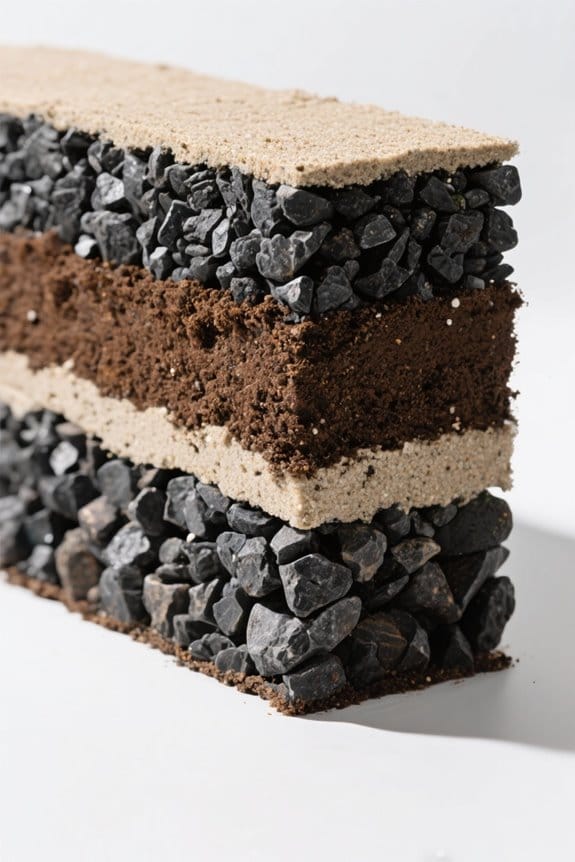
Choosing the right substrate is essential for a successful Iwagumi layout, as it directly influences the growth of aquatic plants and the overall health of the ecosystem. Aquasoil is the preferred choice, being nutrient-rich and fostering robust plant growth. This substrate minimizes nitrogen and phosphorus levels in the water, which greatly reduces algae growth. In contrast, inert substrates like sand can require additional nutrients, potentially leading to algae issues if not monitored. To achieve a visually appealing effect while providing necessary nutrients, consider combining aquasoil with cosmetic sand. This approach enhances aesthetics and supports a thriving aquatic ecosystem, maintaining ideal water quality. Prioritize nutrient balance to cultivate a healthy habitat for your aquatic plants. Additionally, Fluval Natural Mineral-Rich Volcanic Soil is an excellent option for promoting robust plant growth due to its lightweight granules that enhance root penetration and microbial colonization.
Selecting Suitable Carpet Plants
Selecting suitable carpet plants is essential for achieving a balanced and visually appealing Iwagumi layout. For beginner aquascapers, consider Dwarf Hairgrass (Eleocharis parvula) and Hemianthus callitrichoides Cuba. Dwarf Hairgrass grows vertically but remains low to the substrate, while Hemianthus callitrichoides is one of the smallest aquatic plants, making it perfect for a detailed aesthetic. Both thrive when supplemented with CO2 injection and nutrient-rich substrates, ensuring vibrant and healthy growth. Additionally, choose plants based on their light requirements and growth habits to maintain their lush appearance. Regular trimming is vital to avoid overgrowth, fostering a neat look in your Iwagumi aquascaping. By carefully selecting these carpet plants, one can create a natural-looking aquatic landscape that enhances overall design. Incorporating live plants into your aquarium not only adds vibrant colors but also improves water quality by providing oxygen and natural filtration.
Planting Techniques for Your Aquascape
When creating an Iwagumi aquascape, utilizing effective planting techniques is crucial to achieving a harmonious aesthetic. Begin by choosing low-growing carpet plants like Dwarf Hairgrass or Hemianthus Callitrichoides to form a lush foreground that complements your hardscape. Ascertain the root systems are securely embedded in a nutrient-rich substrate, such as aquasoil, promoting healthy growth and reducing cloudiness. Prior to planting, lay out your designs to visualize arrangements and minimize substrate disturbance. Regularly trim and prune your carpet plants every few months to encourage denser growth, maintaining the desired look throughout the aquarium’s life. For a balanced look, subtly incorporate background plants like Vallisneria nana, providing vertical contrast without overshadowing the focal stones of your aquascape. In order to ensure precise measurement of any additives or fertilizers, consider using stainless steel measuring spoons to maintain accuracy and consistency.
Filling the Tank With Water
Filling the tank with water is a critical step in setting up an Iwagumi aquascape, and it requires careful attention to detail. Begin by slowly adding dechlorinated water to prevent disturbing the substrate. Using a plate or bowl can help disperse the flow, minimizing cloudiness. Ascertain the water temperature is stable and suitable for your future Dwarf hairgrass (Eleocharis) and other plants. This species thrives best in a balanced environment, ultimately contributing to a full carpet effect and a natural feel in the tank. After filling, allow the water to settle for at least 24 hours before introducing any plants or fish. Don’t forget to check for leaks and confirm that all equipment, such as the filter and heater, functions properly. Consider using Fluval Plant Stratum to support vigorous plant growth and maintain a stable pH for your aquatic garden.
Initial Set-Up and Cycling
With the tank filled and allowed to settle, attention shifts to the initial setup and cycling process, which lays the foundation for a thriving Iwagumi layout. Choose a suitable tank size, ideally around 60 x 30 x 36 cm (approximately 13.2 gallons), to create ample space for rock and plant arrangements. Prepare a nutrient-rich substrate, like 2Hr Aquarist aquasoil, to foster plant growth while minimizing algae. Thoroughly clean the selected rocks, removing contaminants with a power hose and hard bristle brush. Position the main stone off-center per the golden ratio, with supporting stones nearby for visual harmony. Slowly fill the tank with dechlorinated water, then initiate the cycling process by adding beneficial bacteria or a few hardy fish to encourage a balanced ecosystem. Consider using Fluval Plant and Shrimp Stratum for maintaining optimal pH levels and promoting healthy plant growth in your aquascape.
Maintaining Your Iwagumi Layout
Maintaining an Iwagumi layout requires consistent attention to both water quality and plant health. Perform weekly water changes of 20-30% to control organic waste and maintain water quality effectively. Regularly prune carpeting plants like Dwarf Hairgrass to prevent overgrowth and keep the layout visually appealing. Additionally, monitor water parameters diligently, adjusting CO2 levels and fertilization as needed to support a healthy environment for both plants and fish. Clean filters regularly, servicing pre-filters every three weeks and the main chamber annually for peak filtration efficiency. To enhance plant health, apply a nutrient-rich substrate treatment, such as APT Jazz Root Tabs, every eight months. Consider using low-maintenance plants like Java Ferns to add natural decor and support ecosystem health in your aquarium. These steps will guarantee the long-term success of your Iwagumi layout.
Troubleshooting Common Issues
Successful aquascaping often involves maneuvering common challenges encountered in an Iwagumi layout. To maintain a natural aesthetic, closely monitor water parameters, as imbalances in nitrogen, phosphorus, or CO2 can lead to algae blooms, a significant concern for Iwagumi layouts. Regularly inspect plants for nutrient deficiencies, adjusting fertilization to prevent yellowing leaves or stunted growth. Consistent lighting is essential; excessive light promotes algae while too little can harm plants. Aim for 50-70% water changes weekly to manage organic waste and uphold water quality. If algae become problematic, reduce lighting duration and intensity, and increase water flow to disrupt growth without depriving plants of necessary light. Careful attention to these factors guarantees a thriving Iwagumi environment.
Frequently Asked Questions
What Are the Basic Iwagumi Rock Layouts?
Basic Iwagumi rock layouts employ rock placement techniques focusing on balance principles, with focal points created by larger stones. Selecting appropriate plants, ensuring suitable water parameters, substrate types, and maintenance tips enhance overall aesthetics and health.
How to Set up an Iwagumi Aquarium?
To set up an Iwagumi aquarium, focus on substrate selection, incorporate appropriate plant varieties, guarantee fish compatibility, adhere to ideal water parameters, utilize lighting techniques, and establish a consistent maintenance routine for aesthetic balance and health.
How to Make a Simple Aquascape?
Creating a simple aquascape involves mastering aquascaping basics, selecting appropriate substrate types, and aquatic plants. Consider water parameters, fish selection, and integrate CO2 systems to enhance growth and landscape design for a thriving aquatic environment.
How to Build an Aquarium Step by Step?
To build an aquarium step by step, one must prioritize substrate preparation, plant selection, and consider lighting requirements, water parameters, filtration systems, and fish compatibility, along with ongoing aquarium maintenance for ideal ecological balance.