


When choosing grow lights for plants, balance budget and premium options carefully. Budget lights like shop lights offer decent full-spectrum lighting at lower costs, while premium LED grow lights are highly efficient and long-lasting, often exceeding 50,000 hours. The latter can enhance plant growth and yields by providing tailored light spectrums. Although upfront costs for quality LEDs are higher, energy savings and improved plant health justify the investment. Explore further to discover the specific benefits of different lighting types.
Key Takeaways
- Budget lighting options like shop lights provide adequate full-spectrum lighting but may lack efficiency and long-term performance compared to premium models.
- Premium LED grow lights offer energy efficiency, longer lifespans, and customizable features, justifying their higher initial costs through potential yield increases.
- Initial costs for quality LED lights can deter some buyers, but their efficiency leads to lower electricity bills over time.
- Heat generation is a crucial factor; premium LEDs produce less heat, reducing cooling needs, while budget options may require additional systems.
- Evaluating specific growth requirements helps determine the right balance between budget and premium lighting for optimal plant health.
Understanding Plant Growth and Light Requirements
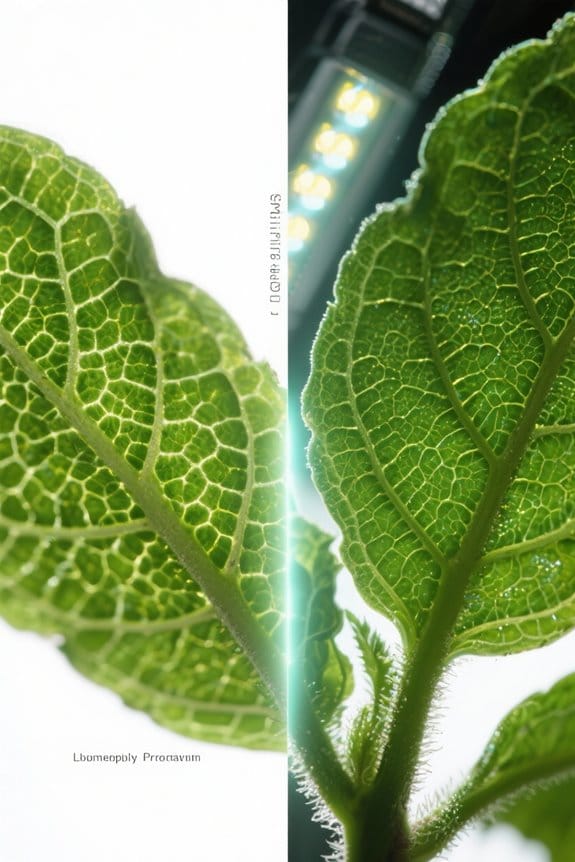
Light serves as an important energy source for plants, guiding their growth and development in profound ways. Plants need specific light for growth, which varies by species. Different plants thrive under varying conditions, categorized as full sunlight, partial shade, or low-light. Understanding these needs is fundamental for ideal plant growth. Full-spectrum light, incorporating blue and red wavelengths, plays a critical role—blue light fosters vegetative growth, while red light supports flowering. In addition, photoperiodism influences flowering and dormancy, underscoring the significance of controlled lighting. Additionally, different light spectrum categories, including ultraviolet (UV) and infrared (IR), offer unique benefits; UV light may stimulate protective compounds, and IR can enhance photosynthesis efficiency. Full spectrum lights with a CRI of 90 or above support aquatic plant growth and enhance fish colors, providing an optimal environment for thriving aquarium life. Matching light sources to plant requirements is important for healthy, thriving plants.
The Role of Light Spectrum

Color wavelengths within the light spectrum greatly impact plant development. For indoor growing, understanding the effects of blue and red light is essential. Blue light, ranging from 400-500 nm, supports vegetative growth, promoting strong roots and lush foliage. In contrast, red light, found in the 600-700 nm range, is critical for flowering and fruit production. Utilizing LED grow lights can effectively target these specific wavelengths, optimizing energy efficiency and minimizing heat output. Additionally, UV light enhances plant resilience by stimulating protective compounds, while infrared further supports photosynthesis. Remember, the duration of light exposure affects blooming and dormancy, necessitating a well-balanced photoperiod. By considering these aspects of the light spectrum, one can considerably boost plant health and yield in indoor environments. Full spectrum LED lights, with their high Color Rendering Index ratings, ensure accurate color representation, which is crucial for effective plant growth and health.
Types of Grow Lights Available

Numerous types of grow lights are available, each designed to cater to specific growing needs and environments. Fluorescent lights are energy-efficient, perfect for seedlings and young plants, as they emit low heat, allowing close positioning. Consider these for smaller setups. HID lights, including metal halide and high-pressure sodium, deliver powerful light, suitable for larger operations, but they require significant energy consumption and additional cooling due to high heat output. Alternatively, LED lights excel in energy efficiency, boasting lifespans up to 50,000 hours, and they offer customizable light spectra, making them versatile for different growth stages. Smart grow lights can even adjust intensity and spectrum as needed, enhancing plant growth. Each option has its own strengths; choose wisely based on your specific requirements. Additionally, energy-efficient models contribute to affordable long-term usage by reducing electricity costs, as seen in various aquarium LED lighting options.
Advantages of LED Grow Lights

When considering ideal solutions for indoor plant growth, many growers turn to LED grow lights due to their distinct advantages. These lights are highly energy-efficient, consuming up to 50% less energy than traditional HID and HPS lighting, consequently cutting electricity costs. They provide full-spectrum light, incorporating essential red and blue wavelengths that enhance photosynthesis, promoting robust plant growth at all stages. With a lifespan of approximately 50,000 hours, LEDs require fewer replacements, lowering long-term maintenance expenses. Additionally, their low heat output minimizes overheating risks, allowing growers to position lights closer to plants. Energy-efficient LEDs used in aquariums also promote plant growth and enhance fish coloration. Investing in quality LED lighting can yield healthier plants and potentially increase yields by up to 25%, making it a wise choice for serious cultivators.
Disadvantages of LED Grow Lights

While many growers appreciate the benefits of LED grow lights, several notable disadvantages merit careful evaluation before making a purchase. First, initial costs for high-quality LED bulbs can be considerably higher than traditional options, which may deter some buyers despite potential long-term savings. Additionally, not all affordable LED models provide a full-spectrum light, compromising growth quality for plants needing specific wavelengths. Moreover, growers must be cautious with customizable wavelengths; improper settings can negatively affect plant development. Also, some individuals may find intense LED lighting uncomfortable, potentially leading to migraine symptoms. Finally, placement is vital; improper positioning can hinder light penetration, resulting in leggy or weak growth. These factors to take into account are essential for successful cultivation. It’s important to consider that LED lights consume significantly less power compared to traditional lighting, which contributes to energy-efficient options that enhance plant growth and overall sustainability.
Comparing LED Grow Lights to Other Lighting Options
LED grow lights have emerged as a popular choice among cultivators, offering distinct advantages over traditional lighting options like fluorescent and HID lights. Significantly, LED grow lights boast impressive energy efficiency, using up to 50% less electricity and lasting up to 50,000 hours—far surpassing fluorescent lights’ 7,000 to 10,000-hour lifespan. While fluorescent options are perfect for seedlings due to low heat output, they lack the effective spectrum control found in LED grow lights. Additionally, HID lights, though powerful, generate significant heat, necessitating complex cooling systems. LED grow lights often feature customizable lighting settings that enable users to tailor the light spectrum to meet the specific needs of their plants. Crucially, LED grow lights can be positioned closer to plants without risk of burning, promoting light penetration tailored to each growth stage, ultimately addressing specific plant needs for peak health and liveliness.
Fluorescent Lights vs. LED Grow Lights
Choosing between fluorescent lights and LED grow lights can greatly impact a plant’s growth and energy costs. Fluorescent lights are generally more affordable and ideal for seedlings due to their low heat output, but they have a shorter lifespan, lasting only a few thousand hours compared to LED grow lights, which can last up to 50,000 hours. Opt for LED grow lights to take advantage of their energy efficiency, consuming up to 50% less electricity. These lights also offer customizable light spectra, allowing targeted growth stages for specific plants, unlike the fixed spectrum of fluorescent lights. Additionally, LEDs provide more intense light and can be placed closer to plants, enhancing light penetration and promoting healthier growth. When selecting LED grow lights, consider full spectrum lights that cover wavelengths from 400 to 700 nm to ensure optimal plant growth and vibrancy.
HID Lights vs. LED Grow Lights
When comparing HID lights to LED grow lights, it is essential to contemplate various factors that impact both plant health and energy efficiency. HID lights (High-Intensity Discharge) consume more energy, resulting in higher energy bills, and generate substantial heat, necessitating additional cooling systems. In contrast, LED grow lights use approximately 50% less energy and produce minimal heat, allowing them to be placed closer to plants without risk of burning. Moreover, LED lights boast a lifespan of up to 50,000 hours, considerably outlasting HID lights, which generally require replacement after 10,000 hours. Additionally, LEDs offer customizable light spectra tailored to various growth stages, unlike HID lights, which provide a fixed spectrum, limiting their versatility in plant cultivation. A key advantage of LED lights is their ability to provide full-spectrum lights with CRI above 80, which is crucial for photosynthesis and enhances plant growth.
Factors to Consider When Choosing Grow Lights
How can one effectively select the best grow lights for plants? First, assess the light spectrum; blue light enhances vegetative growth, while red light encourages flowering. Aim for an intensity of at least 5,000 lumens to maintain peak seedling health. Next, consider budget lights such as shop lights, which provide adequate full-spectrum lighting at a lower cost. Alternatively, invest in LED grow lights for their energy efficiency, longer lifespan, and customizable light spectra despite a higher price. Additionally, monitor the heat output; LEDs release less heat compared to HID systems, reducing cooling needs and making them ideal for small spaces. Regular water testing with comprehensive kits, like the API Freshwater Master Test Kit, ensures ecological balance and the health of aquatic life. Prioritize these factors to tailor your lighting setup effectively for plant growth.
Frequently Asked Questions
What Kind of Lighting Is Best for Plants?
The best lighting for plants combines natural light, a full growth spectrum, adequate light intensity, and appropriate photoperiod cycles. This approach optimizes photosynthesis and promotes healthy development across all stages of plant growth.
Can Regular LED Lights Help Plants Grow?
Regular LED lights may aid plant growth, but their questionable light spectrum offers a lackluster performance. While energy efficiency dazzles, they often falter in critical growth phases, leaving plants yearning for more than budget lighting can provide.
Can Too Much LED Light Hurt Plants?
Excessive LED light can harm plants, as high light intensity may lead to plant stress and damage. Selecting the appropriate LED spectrum and managing energy efficiency are essential for maintaining ideal growth conditions without overwhelming the plants.
Which Light Is Most Favourable for Plant Growth?
Which light is most favorable for plant growth? LED lights, with energy efficiency and customizable light spectrum, provide cost effectiveness, catering to various plant types, outperforming traditional options by promoting robust growth and healthy development.


