


Canister filters are ideal for larger aquariums over 20 gallons. They provide customizable filtration, handling high bioloads effectively. Setup requires 30-60 minutes, while maintenance prolongs cleaning intervals. In contrast, hang-on-back filters suit smaller tanks up to 75 gallons, offering easy installation and quick maintenance in just 5-10 minutes. They are budget-friendly and user-friendly, though they may struggle in very dense setups. Consider these factors carefully for the best aquarium solution, as more insights await.
Key Takeaways
- Canister filters are ideal for larger aquariums (20+ gallons) with high bioloads, while HOB filters suit small to medium tanks (up to 75 gallons).
- Canister filters offer customizable filtration media, whereas HOB filters have limited media selection.
- Maintenance time is significantly longer for canister filters (30-60 minutes) compared to HOB filters (5-10 minutes).
- Canister filters feature adjustable flow rates for tailored circulation, but HOB filters come with fixed flow rates.
- HOB filters are typically more budget-friendly and user-friendly, making them suitable for beginners, unlike more complex canister systems.
What Is a Canister Filter?
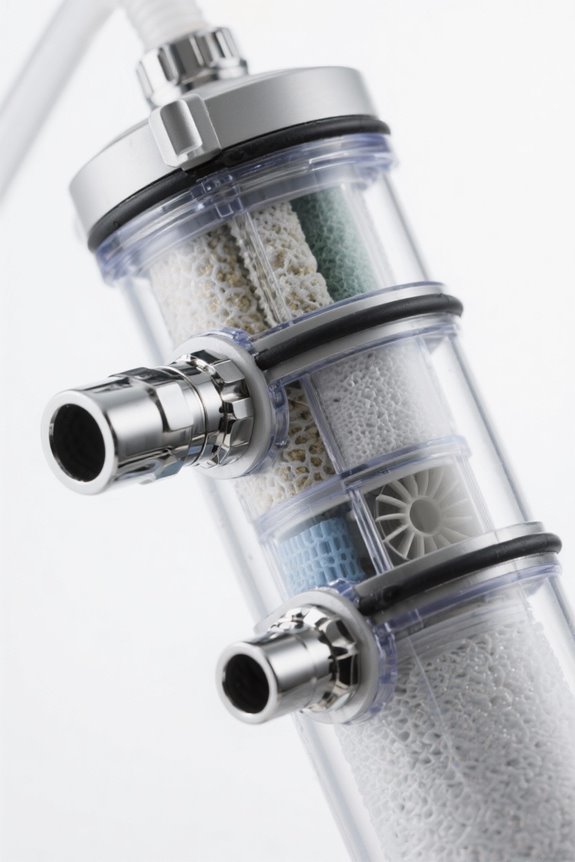
A canister filter is an efficient external filtration system that plays an essential role in maintaining a healthy aquarium environment. Typically placed beneath or beside the tank, this type of filter offers high-capacity filtration suited for larger aquariums, usually starting at 20 gallons. Canister filters accommodate various types of filtration media—mechanical, biological, and chemical—enabling customizable setups that promote exceptional filtration. By utilizing these filters, aquarists can effectively manage high bioloads, making them good filters for densely stocked tanks. Additionally, the adjustable water flow allows greater control over circulation, enhancing water quality. Despite their more complex initial setup and maintenance, the long-lasting efficiency of canister filters makes them a favored choice among experienced aquarists. Many canister filters, like the 225GPH Canister Filter, support up to 55 gallons and are known for their compact design and efficient water circulation.
What Is a Hang-On-Back Filter?

Hang-On-Back (HOB) filters serve as practical solutions for aquarium enthusiasts, especially those managing small to medium-sized tanks, typically up to 75 gallons. A HOB filter is a type of power filter that hangs on the back of the aquarium, drawing water in through a pump for efficient filtration. These aquarium filters provide mechanical, biological, and chemical filtration, which are essential for maintaining excellent water quality. To install, simply mount the unit to the tank’s back, ensuring the water intake is submerged. Maintenance is user-friendly, involving regular rinsing or replacing of filter cartridges, making it ideal for beginners. Overall, HOB filters represent a convenient choice for effective aquarium filtration with minimal hassle. Many aquarium owners prefer filters that operate at less than 35 dB for a quieter home environment.
Key Differences Between Canister and Hang-On-Back Filters

When comparing canister filters and Hang-On-Back filters, several key differences emerge that can significantly impact aquarium care. Canister filters serve larger aquariums and offer customizable filter media setups, which enhance filtration capacity and versatility. In contrast, Hang-On-Back filters are compact and ideal for smaller tanks, employing replaceable cartridges that limit media selection. Maintenance also varies considerably; HOB filters generally require only 5-10 minutes for upkeep, while canister filters demand 30-60 minutes for thorough cleaning. Additionally, canister filters provide adjustable flow rates, granting more control, whereas HOB filters have fixed rates. Finally, canister filters operate quietly outside the tank, unlike the noisier HOB filters that may disrupt the environment by generating sound from water movement. Among the top options, multi-stage filtration systems are recommended for effective cleaning, ensuring high water quality and clarity in larger setups.
Benefits and Drawbacks of Canister Filters

Canister filters present a range of benefits and drawbacks that aquarium enthusiasts must consider. One significant advantage is their exceptional filtration capacity, suitable for larger tanks with high bioloads, allowing longer intervals between cleanings. Hobbyists benefit from customizable filter cartridges, enabling tailored filtration for unique aquatic needs. Additionally, canister filters operate quietly, enhancing the serenity of the aquarium environment. However, the setup and maintenance can be more complex and time-consuming, often requiring 30-60 minutes for thorough cleaning, compared to just 5-10 minutes for HOB filters. Finally, the initial investment is higher, with prices ranging from $97.49 to $369.99, which may deter some buyers. Sponge filters are often preferred for small tanks due to their gentle water flow and safety features. Weighing these pros and cons is essential before making a decision on filtration systems.
Benefits and Drawbacks of Hang-On-Back Filters

Aquarium enthusiasts seeking an efficient and budget-friendly filtration solution often find that Hang-On-Back (HOB) filters meet their needs effectively. These filters are user-friendly, making them perfect for beginners with tanks up to 75 gallons. HOB filters provide excellent mechanical, biological, and chemical filtration, greatly improving water quality in smaller tanks. Maintenance is simple, with cartridge changes typically taking only 5-10 minutes. However, they may struggle to maintain ideal filtration in heavily stocked tanks due to their limited capacity. Additionally, the strong water flow can disturb delicate aquatic plants, posing a challenge for specific setups. Overall, HOB filters are an economical choice, yet users should consider their tank’s specific demands when selecting a filtration system. Tetra Whisper EX 70 Filter is suitable for larger aquariums, with a flow rate of 240 GPH that ensures clean and clear water, making it a popular choice among aquarists.
Frequently Asked Questions
Are Canister Filters Better Than Hang on Back?
In the great filtration debate, canister filters often outshine their HOB counterparts, offering significant advantages. Tank size considerations and maintenance preferences lean favorably towards canisters, while HOB filters reveal drawbacks in performance, especially for larger setups.
What Are the Disadvantages of a Canister Filter?
Canister filters present disadvantages including maintenance challenges due to their complexity, initial cost that can be high, size limitations impacting placement, and potential noise concerns that could disrupt the tranquility of the aquarium environment.
Why Does No One Use Undergravel Filters?
Undergravel filters face dwindling popularity due to maintenance challenges, limited filtration capabilities, and negative water quality impacts. While they offer some advantages, like simplicity, the portability and effectiveness of modern filters outweigh their benefits considerably.
What Is the Best Filtration Method for Aquariums?
The best filtration method for aquariums varies dramatically; larger tanks thrive on canister filters for efficiency, while smaller setups favor hang-on-back filters for low maintenance. Ultimately, tank size, water type, and maintenance frequency dictate the choice.


