
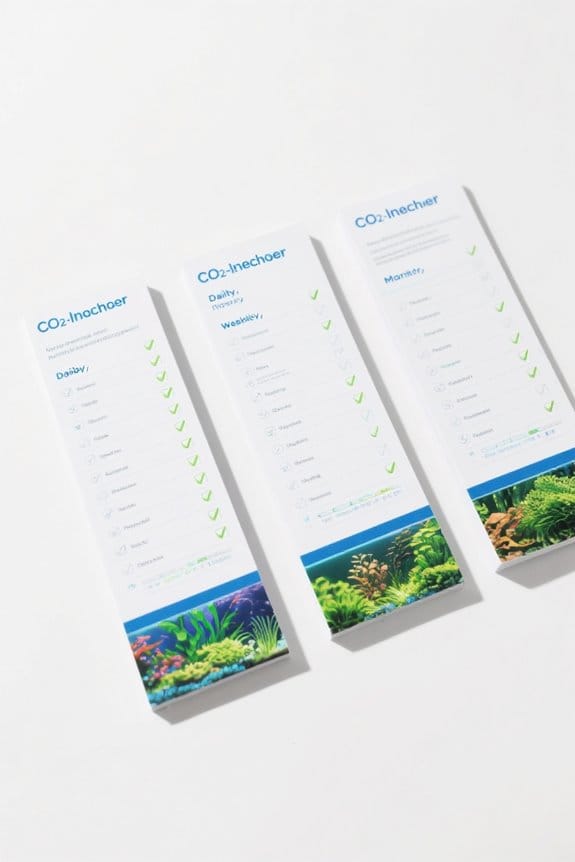

To maintain a CO₂-injected planted tank, follow a structured checklist. Daily, check water quality for clarity and monitor CO₂ levels at one bubble per second per 50 liters. Weekly, execute a 10% to 25% water change, test for essential parameters, and trim plants. Monthly, inspect the CO₂ cylinder and filter. Regular equipment checks are crucial. These tasks guarantee a vibrant aquatic ecosystem. Further guidance on this systematic approach awaits to enhance your tank management skills.
Key Takeaways
- Daily, check water clarity, CO₂ levels, and ensure lighting timers provide an appropriate day/night cycle for plants’ growth.
- Weekly, perform a 10% to 25% water change and test key parameters like pH and nutrient levels for optimal tank health.
- Monthly, inspect CO₂ cylinder pressure, filter flow rate, and replace nutrient tablets, ensuring plant needs are met effectively.
- Regularly monitor algae growth and clean surfaces to enhance light penetration and maintain a clean environment for aquatic life.
- Keep records of water quality tests and equipment functionality to track changes and preemptively address any potential issues.
Daily Maintenance Tasks

When maintaining a CO₂-injected planted tank, it is crucial to establish a daily routine to confirm the health of both the aquatic plants and the fish. Begin by checking the water quality; clarity is essential to a thriving ecosystem. Monitor the CO₂ levels using a bubble counter, aiming for approximately one bubble per second for every 50 liters, as plants need this for peak growth. Next, verify the lighting timers to ascertain the appropriate day/night cycle. Conduct daily inspections for algae presence, which can indicate imbalances. Additionally, feed the fish in line with nutrient dosing schedules for their well-being. Finally, top off the tank daily with reverse osmosis or deionized water to maintain stable conditions, countering evaporation effectively. Consider using a reverse osmosis system with high filtration efficiency to ensure the water added is free from contaminants, enhancing the overall health of the tank environment.
Weekly Maintenance Tasks

Weekly maintenance tasks in a CO₂-injected planted tank require consistency and attention to detail for peak health. Begin with water changes, performing a 10% to 25% exchange to enhance water quality and reduce nitrate buildup. Conduct weekly water tests to monitor temperature, pH, hardness, and nutrient levels, confirming ideal conditions for plant growth and fish health. Trim and groom your plants by removing dead leaves and replanting as needed, promoting healthier, more robust growth. Clean algae from the glass and hardscapes regularly for better light penetration. Finally, inspect all equipment, including the CO₂ injection system, for proper functionality and potential leaks. Address any issues immediately, as this will guarantee efficient operation and support the thriving ecosystem of your planted tank. Regular maintenance is crucial, including monitoring water quality, to ensure the health of aquatic life.
Monthly Maintenance Tasks

Monthly maintenance tasks in a CO₂-injected planted tank are essential for sustaining a healthy aquatic environment. First, perform standard weekly maintenance actions such as water changes and substrate cleaning, which keep tank water clear and healthy. Next, check the CO₂ cylinder pressure; refill if necessary to maintain an adequate supply of dissolved CO₂, crucial for aquatic plants. Inspect the filter for flow rate, cleaning or replacing the media if flow is inadequate. Additionally, harvest excessive surface plants to avoid light blockage, ensuring all aquatic plants receive sufficient light. Finally, replace nutrient tablets every 4 to 6 weeks, adjusting based on specific plant needs. To ensure optimal CO2 levels in your tank, choose a CO2 reactor that matches your aquarium’s size and offers efficient gas exchange. By diligently following these tasks, a balanced ecosystem will flourish.
Frequently Asked Questions
Is CO2 Injection Necessary for a Planted Tank?
CO₂ injection is necessary for achieving ideal planted growth, enhancing nutrient balance and ensuring fish compatibility. It aids in algae control, supports various plant varieties, and is influenced by tank size, lighting intensity, and water chemistry.
How Much CO2 Is Needed for a Planted Aquarium?
In a planted aquarium’s symphony, achieving ideal CO₂ levels involves a careful dance; utilizing bubble counters, custom setups, and monitoring pH impact guarantees robust plant growth while safeguarding fish health through precise dosing frequency and diffusion methods.
How Long Should You Run a CO2 Planted Tank?
A CO₂ planted tank should run the CO₂ injector for 1-2 hours before lights activate, adjusting frequency based on plant response and safety, while monitoring CO₂ levels to optimize growth without causing oxygen depletion.
How to Measure CO2 in a Planted Aquarium?
“Measure twice, cut once.” To gauge CO₂ in aquariums, employ reliable CO₂ measurement methods, utilize test kits, monitor pH fluctuations, analyze bubble counters, and consider light intensity impacts on plant growth while troubleshooting CO₂ issues effectively.


