


Water depth greatly affects light penetration in taller aquariums, particularly beyond 40-50 cm, where light intensity drops sharply. To promote effective plant photosynthesis, utilize higher wattage LED fixtures with wide-angle diffusion, such as those with a 120-degree spread. Aim for at least twice the tank’s gallon capacity in watts. Regularly measure Photosynthetically Active Radiation (PAR) using a PAR meter to guarantee ideal light levels. Understanding these factors is key to supporting healthy aquatic plant growth and health.
Key Takeaways
- Light intensity significantly decreases with water depth, particularly beyond 40-50 cm, impacting photosynthesis effectiveness for aquatic plants.
- Effective light penetration is crucial for deeper aquariums to ensure adequate PAR levels for plant growth.
- High-wattage LED fixtures enhance light intensity at greater depths and promote healthier plant development.
- Using wide-angle diffusion (120 degrees) helps improve overall light distribution throughout the tank.
- Regular empirical testing with a PAR meter is essential to evaluate and adjust lighting setups for optimal plant growth at varying depths.
The Relationship Between Water Depth and Light Intensity

When selecting lighting for a taller aquarium, it’s important to understand how water depth affects light intensity. Light intensity decreases greatly as it penetrates water, particularly beyond depths of 40-50 cm, where PAR values drop steeply. For a tank depth of 47 cm, this necessitates a careful approach to selecting lights, as effective light penetration is essential for plant photosynthesis in planted aquariums. Utilizing higher wattage fixtures can enhance light intensity at greater depths; therefore, stronger lighting is critical for successful growth. Also, choose light sources with wide-angle diffusion (120 degrees) to enhance coverage, thereby mitigating the intensity drop off as depth increases. This strategic selection guarantees vibrant plant health and overall tank viability. Selecting energy-efficient options, like some of the Tetra LED hoods, can also help manage long-term costs while maintaining adequate light levels for deep aquariums.
Understanding Photosynthetically Active Radiation (PAR)

Understanding Photosynthetically Active Radiation (PAR) is vital for successful aquarium gardening, particularly in taller setups. PAR encompasses the light spectrum between 400 and 700 nanometers, which plants utilize for photosynthesis. As depth increases, PAR values appreciably decline, with light intensity dropping markedly at around 40-50 cm. To promote ideal plant growth, make sure that the PAR levels fall within effective ranges, typically from low (<40 μmol/m²/s) to very high (>150 μmol/m²/s). This variation depends on plant species. Use quality aquarium lights that can efficiently penetrate water. Additionally, conducting empirical tests is fundamental since observed PAR at 45 cm can relate to the wattage of your lighting, directly influencing both plant health and growth success. Consider investing in SEAOURA LED Aquarium Lights, which provide full-spectrum lighting to support plant growth in various tank sizes, ensuring that your setup maintains the necessary PAR levels for optimal plant health.
Factors Affecting Light Penetration in Aquariums

Light penetration in aquariums is influenced by several key factors, each playing a fundamental role in the health of aquatic plants. First, light intensity diminishes with depth due to water absorption, especially beyond 40-50 cm. Make sure that the distance of the light source from the surface is ideal, as this greatly impacts light intensity reaching deeper areas. For deeper tanks, consider using LED lights, which have a wide-angle diffusion of about 120 degrees, enhancing overall light penetration. Empirical testing is essential to determine the best lighting setup, as water refraction and reflection can alter expected behaviors. Regular adjustments based on these factors will promote a healthier environment for plant growth while refining effective PAR measurements. Additionally, using K1 Filter Media can improve water quality, indirectly supporting light penetration by reducing cloudiness and enhancing conditions for aquatic life.
Importance of Light Quality for Plant Growth
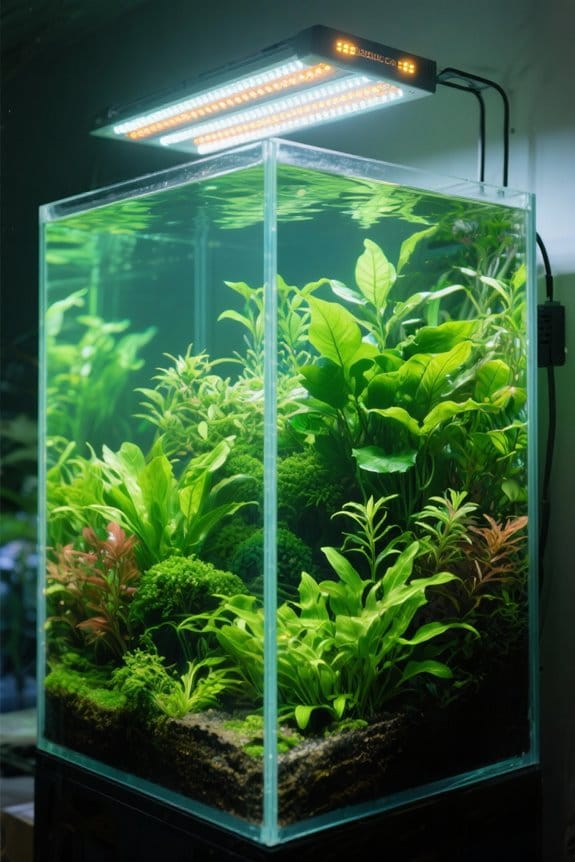
Quality of light is crucial for aquatic plant health, influencing growth, color, and overall vitality. In taller aquariums, ineffective light quality can restrict plant development, as light intensity decreases rapidly beyond 40-50 cm. Make sure you select LED lighting with the appropriate spectrum; high-light plants thrive best with photosynthetically active radiation (PAR) levels above 150, while low-light varieties flourish below 40. Utilize lights with wide-angle diffusion, ideally around 120 degrees, for improved coverage and reduced intensity loss. Full spectrum LED lights, with their high Color Rendering Index ratings above 90, provide an enhanced color representation that supports effective aquatic plant growth. Conduct empirical testing to assess how different setups influence light penetration, since factors like refraction and reflection in water can skew traditional rules. By prioritizing light quality, aquarists greatly enhance the health of growing plants, making certain a vibrant underwater environment.
Power Requirements for Deep Tanks
Achieving thriving aquatic plants in deeper tanks requires careful consideration of power requirements for lighting systems. In a 47cm tank, light intensity markedly diminishes around depths of 40-50cm, necessitating more powerful lighting for effective light penetration. Opt for LED lights with higher wattage, ideally providing at least twice the tank’s volume in gallons for adequate Photosynthetically Active Radiation (PAR). This guarantees ideal plant growth. Measure light intensity at various depths to assure successful outcomes. Additionally, higher-powered LED fixtures distribute light more uniformly, promoting healthier plant development compared to their lower wattage counterparts. By prioritizing these power requirements and choosing the right lights, aquarists can enhance both the health of their plants and the overall aesthetics of their deep aquarium setups. For optimal aquarium lighting, it’s essential to consider adjustable brightness settings that allow for customization depending on the depth and specific needs of the aquatic environment.
Spectrum Considerations for Effective Lighting
What factors contribute to ideal light spectrum considerations in taller aquariums? A critical aspect involves the balance of red and blue light, which is essential for plant growth. Blue light around 480nm promotes photosynthesis, while red light at 680nm enhances coloration, making LED fixtures that prioritize these wavelengths key for planted aquarium light. Avoid full spectrum lights, as they can introduce excess green light which does not aid in growth. Taller tanks require fixtures that emit broad light spectrums to counteract reduced effective PAR levels. LED lights with tunable spectrum capabilities allow aquarists to adjust color output, optimizing growing conditions. By focusing on the appropriate light spectrum, aquarists can support plant health while minimizing algae growth. Additionally, full spectrum lights with a CRI of 90 or above can enhance visual aesthetics by improving color visibility and supporting diverse aquatic life.
Evaluating Coverage for Optimal Light Distribution
To guarantee ideal light distribution in taller aquariums, aquarists must consider various factors that affect how light penetrates the water column. Light intensity drops considerably, with a typical decrease in Photosynthetically Active Radiation (PAR) around 40-50 cm deep. For aquariums that are 47 cm or deeper, more powerful lighting is essential to reach the substrate and support plant growth. Employ lights with wide-angle diffusion, ideally 120 degrees, to enhance coverage and make certain uniformity across all areas of the tank. Dual fixtures outperform single bar setups, providing better distribution for complex aquascapes. Finally, conduct regular PAR measurements at varying depths to evaluate the effectiveness of your light arrangements and adjust as necessary to optimize plant health. For optimal coral health, maintain moderate to high lighting conditions to ensure vibrant coloration, as highlighted by the care requirements for zoanthid corals.
Measuring Light Efficacy in Aquatic Environments
How can aquarists effectively measure light efficacy in aquatic environments? Begin by evaluating light levels using a PAR meter, which quantifies Photosynthetically Active Radiation essential for plant growth. Position the meter at varying depths, noting that significant PAR values drop around 45cm. Choose quality plant lights with higher wattage; they typically penetrate deeper, ensuring light intensity reaches necessary depths. Remember, the inverse square law indicates that light intensity decreases as distance from the source increases, yet factors like water refraction can alter this. Conduct empirical testing by adjusting the lighting setup, ensuring ideal light levels reach the tank bottom. Additionally, maintaining water quality in your aquarium is crucial as it can impact how light penetrates and benefits aquatic plants. Overall, thorough measurement and adaptation are key to fostering healthy aquatic plants in deeper tanks.
Strategies for Enhancing Light Penetration
Light intensity plays an essential role in the health of aquatic plants, especially in taller aquariums where depth can hinder penetration. To enhance light penetration, utilize LED lights with a wide-angle diffusion of 120 degrees. This design evenly distributes light across the aquarium surface, ensuring that plants at various depths receive adequate illumination. Consider empirical testing of Photosynthetically Active Radiation (PAR) to determine the ideal spectrum and placement of lights for peak growth. For taller tanks, higher wattage LED fixtures positioned above the tank can effectively combat light loss, allowing sufficient intensity to reach the bottom. Additionally, select low-maintenance plants that can thrive in lower light conditions, as they adapt well to varied lighting environments and still flourish. For accurate measurements, utilize waterproof sensors that ensure precise readings even in aquatic environments, providing confidence in light management decisions.
Common Misconceptions About Lighting in Aquariums
While it may seem intuitive that brighter light equates to healthier aquatic plants, many misconceptions surround the topic of aquarium lighting. First, remember that brightness, measured in lumens, does not accurately reflect light intensity underwater; instead, focus on PAR (Photosynthetically Active Radiation) for better plant growth. Next, avoid assuming that higher wattage always guarantees improved growth; light quality and spectrum play critical roles. Importantly, certain wavelengths—especially red and blue—are essential for photosynthesis. Additionally, excessive light without adequate CO2 and nutrients can fuel algae growth rather than promote healthy plants. Finally, grasp that light intensity decreases considerably with depth, and efficient photosynthesis typically occurs at depths less than 40-50 cm from the light source. In 2026, energy efficiency is a critical consideration for aquarists, ensuring that lighting solutions not only support plant growth but also minimize power consumption.
Selecting the Right Fixtures for Tall Aquariums
When selecting the right fixtures for a tall aquarium, one must consider how the depth of the tank impacts light penetration and plant growth. For tanks around 47 cm deep, opt for LED light fixtures with high PAR (Photosynthetically Active Radiation) values. These fixtures should have higher wattage and a wide-angle diffusion of about 120 degrees, as this enhances light coverage and reduces losses in deeper waters. To further improve light distribution, use dual light fixtures instead of a single bar, particularly beneficial for complex aquascapes. Finally, measure effective PAR at varying depths, noting that light intensity may drop considerably beyond 40-50 cm from the source, ensuring plants receive adequate illumination for healthy growth.
Frequently Asked Questions
What Factor Affects the Amount of Light Penetration in Water?
Light penetration in water is influenced by factors such as light absorption and water clarity. Tank height affects the distance light travels, while wavelength effect determines how different colors are absorbed at varying depths.
Do Fish Prefer Taller or Wider Tanks?
Like birds in a wide sky, fish generally prefer wider tanks for increased aquatic comfort and enhanced fish behavior. Tank shape markedly impacts habitat simulation, fostering natural exploration and social interactions over the limitations of vertical spaces.
How Deep Does Light Penetrate Lake Water?
Light penetrates lake water up to 10-20 meters in clear conditions, with significant absorption occurring in depth zones. Water clarity and plankton density further influence light penetration, affecting aquatic plant growth and overall ecosystem dynamics.
What Is the Best Height for Aquarium Lights?
The best height for aquarium lights is between 2 to 6 inches above the water, as this optimizes light intensity, dependent on bulb type and fixture design, ensuring an effective light spectrum reaches plants below.


