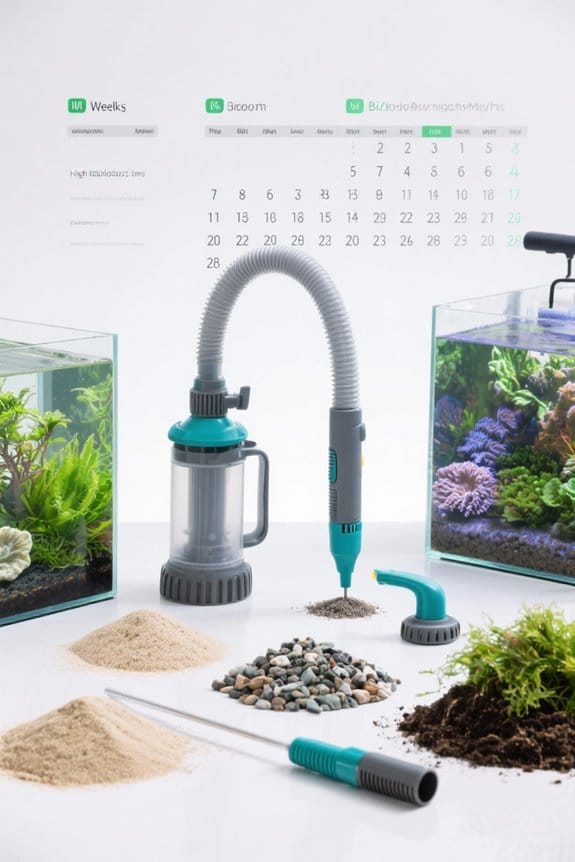

Vacuum the substrate based on your tank type. For gravel substrates, vacuum every week or every other week. In sand tanks, stir lightly and vacuum as needed. For planted tanks, clean around roots monthly and avoid frequent deep suction. If the tank is heavily stocked, vacuum weekly to manage waste. Use siphons during water changes to boost efficiency. Monitor water quality with ammonia tests to guide these practices. The specifics of substrate maintenance can greatly impact tank health.
Key Takeaways
- Gravel substrates should be vacuumed once every week or every other week for effective waste management.
- Sand substrates require light stirring every few weeks, with vacuuming based on visible debris.
- In planted tanks, vacuum around plant roots once a month to avoid disturbing delicate root systems.
- For community tanks, regular vacuuming every other week ensures ideal water quality; increase frequency for bottom-dwelling fish.
- Heavily stocked tanks necessitate weekly vacuuming to manage waste buildup and maintain healthy conditions.
Understanding Substrate Types and Their Impact on Vacuuming Frequency

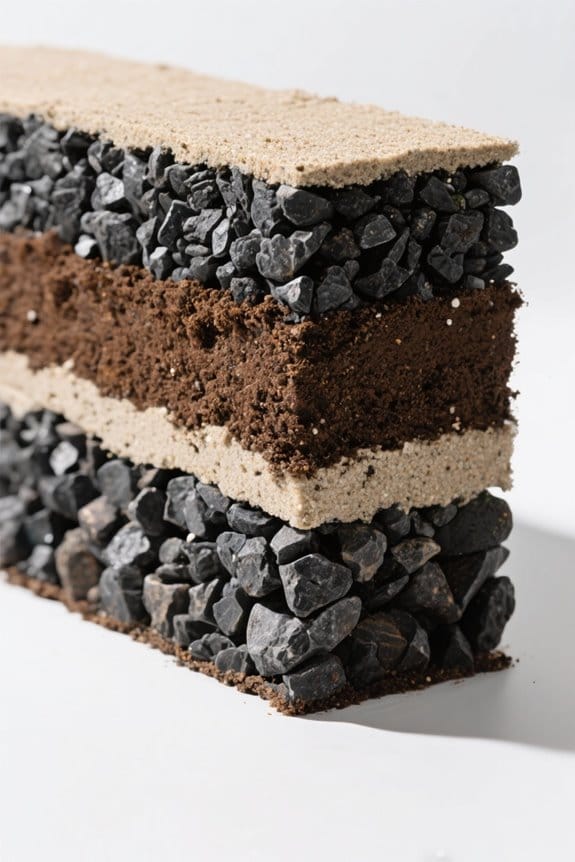
When managing an aquarium, understanding the specific types of substrates and their respective impacts on vacuuming frequency is essential for maintaining a healthy aquatic environment. Gravel substrates typically require a gravel vacuum once every week or every other week to remove detritus trapped in the granules. In contrast, sand substrates should be stirred lightly every few weeks to prevent gas buildup, vacuuming only as needed based on visible debris. For planted tanks, it is important to clean the substrate around plant roots about once a month, ensuring delicate roots remain undisturbed. However, with nutrient-rich planted substrates, avoid frequent vacuuming to protect beneficial bacteria, highlighting the need for tailored substrate maintenance based on tank size and fish population. Regular use of ammonia test kits can help monitor water quality, indicating when vacuuming may be necessary to maintain a healthy environment.
Recommended Vacuuming Frequency for Community Tanks

Maintaining a regular vacuuming schedule in community tanks is critical for guaranteeing ideal water quality and overall fish health. It is generally recommended to vacuum the substrate every other week to manage waste without stressing fish or disrupting beneficial bacteria. For tanks with lower bioloads, a three to four-week interval may suffice, but always monitor water parameters closely. If the tank features bottom-dwellers like corys, increase the frequency to once a week to keep their feeding areas clean. In heavily planted setups, consider vacuuming around plant roots monthly; this approach avoids disturbing the substrate, allowing fish and plants to thrive. Confirm vacuuming coincides with water changes of 30-35% for the right cleaning routine and satisfactory tank conditions. Moreover, using multi-functional capabilities found in gravel cleaners like the AQQA 4-in-1 Cleaner can streamline maintenance tasks and enhance cleaning efficiency.
Vacuuming Guidelines for Planted Aquariums

To guarantee the health of a planted aquarium, it is essential to approach vacuuming carefully. Vacuuming too aggressively can disturb the delicate roots of plants and disrupt their nutrient absorption. Instead, prioritize cleaning by gently removing accumulated surface debris. This can be done monthly, focusing on the substrate around plant roots while avoiding deep suction. Maintaining a balanced level of detritus within the aquarium substrate is fundamental, as this organic material provides essential nutrients for live plants. For substrates like Fluval Stratum, avoid vacuuming altogether to preserve beneficial bacteria. Lightly clean the surface, ensuring the plants’ root systems remain undisturbed to promote a thriving aquatic environment. Additionally, nutrient-rich substrates like Fluval Natural Mineral-Rich Volcanic Soil Bio Stratum enhance plant growth by stabilizing ammonia levels and activating dormant nitrifying organisms.
Addressing Substrate Maintenance in Heavily Stocked Tanks

In heavily stocked tanks, effective substrate maintenance becomes paramount for ensuring water quality and fish health. Vacuum the substrate at least once a week to manage waste buildup, as a higher number of fish increases bioload. Pay attention to the type of substrate; fine substrates and densely planted setups may require more frequent vacuuming. Every time you perform a water change, utilize a gravel vacuum to efficiently remove detritus and leftover food while minimizing disturbances to beneficial bacteria. Observe your fish for signs of stress or health issues, as these may indicate the need for more regular vacuuming. For delicate planted substrates, vacuum carefully to avoid uprooting plants and disrupting their root systems, ensuring a balanced environment for all inhabitants. Choosing durable materials such as brass for any additional equipment used in the tank maintenance process can also contribute to long-term reliability and efficiency.
Techniques for Effective Substrate Cleaning

Effective substrate cleaning is essential for maintaining a healthy aquarium environment. For gravel substrates, use a siphon tube weekly or biweekly to vacuum specific areas where detritus accumulates, ensuring to protect beneficial bacteria. When dealing with sand substrates, gently stir the sand every few weeks and vacuum as needed to remove plant debris without disturbing roots. In heavily planted tanks, avoid deep vacuuming; instead, gently siphon surface debris once a month to preserve plant health. Employ a substrate washer for delicate planted tanks, which makes it easy to clean without displacing nutrient layers. Regularly integrating these techniques during water changes not only keeps the substrate clean but also supports overall water quality by eliminating decaying matter and minimizing ammonia spikes. It is important to consider Goniopora corals when planning tank maintenance, as their placement and lighting preferences can influence cleaning schedules and methods.
The Role of Detritus in Tank Health
Understanding the role of detritus in tank health is essential for maintaining an ideal aquarium environment. Detritus, composed of decomposing organic matter such as fish waste and uneaten food, can accumulate in the substrate. While small amounts can benefit tank water and provide nutrients for live plants, excessive buildup poses risks. It can lead to harmful spikes in ammonia and nitrites, threatening fish health. Consequently, effective management is vital. Clean your substrate regularly using a siphon or vacuum, ensuring you tailor your approach to the type of substrate used, as some trap debris more than others. For example, substrates like Fluval Plant and Shrimp Stratum are known to facilitate rapid colonization of beneficial nitrifying organisms, which help maintain water quality. Monitor detritus levels closely, especially in planted tanks, where balanced nutrient levels can enhance plant growth while maintaining stable water quality.
Best Practices for Maintaining a Clean Aquarium Environment
Maintaining a clean aquarium environment requires diligence, as a well-cared-for tank guarantees the health and stability of aquatic life. Begin by vacuuming gravel substrates every one to two weeks to prevent waste buildup; this promotes ideal water quality. For heavily planted tanks, avoid vacuuming to protect beneficial detritus, focusing instead on gently removing surface debris. Conduct water changes of 30-35% weekly to manage waste levels effectively. When using sand substrates, stir the sand lightly every few weeks and vacuum as needed based on debris visibility. Tailor your substrate cleaning practices to your specific tank setup, fish species, and plant presence, as these factors will determine the appropriate frequency and method for maintaining a thriving aquarium environment. Consider using dual-function siphons that combine waste removal and water refilling to simplify maintenance tasks and enhance water quality.
Frequently Asked Questions
How Often Should I Vacuum Substrate?
Every tank’s care varies: gravel needs weekly vacuuming for algae control, sand requires light stirring, while planted tanks often avoid it. Proper vacuuming techniques enhance water quality, ensuring substrate types receive tailored maintenance for ideal health.
How Often Should I Vacuum My Betta Tank?
For ideal betta tank maintenance, substrate cleaning frequency should be weekly to enhance fish tank hygiene. This practice promotes betta fish health by reducing waste accumulation and preventing harmful spikes in ammonia and nitrites. Adjust as necessary.
How Often Is It Normal to Vacuum?
Normal vacuuming frequency typically ranges from once a week to once a month, depending on substrate types and tank health. Vacuum techniques and equipment maintenance play essential roles in ensuring ideal conditions for aquatic life.
How Often Should I Clean My Fish Tank Gravel?
Cleaning fish tank gravel typically occurs once or twice monthly, depending on gravel types and observed debris. Effective vacuum techniques promote substrate health, enhancing fish tank cleanliness while preserving beneficial bacteria within the aquarium ecosystem.