


To choose LED lighting for low-tech planted aquariums, select fixtures that provide a balanced spectrum with an emphasis on red (680nm) and blue (480nm) wavelengths. Ascertain the wattage meets the 1-to-2 rule, providing at least 20-35 PAR for medium-light plants. Maintain a daily lighting duration of 8-10 hours to enhance photosynthesis and reduce algae growth. Consider energy-efficient models like Aqua Worx SOL or Lifegard Full Spectrum 2.5 for effective results. Further insights await.
Key Takeaways
- Select full-spectrum LED lights focusing on red (680nm) and blue (480nm) wavelengths to support plant growth.
- Ensure PAR values between 10-20 for low-light plants; choose fixtures that match the 1-to-2 wattage rule.
- Maintain a consistent lighting duration of 8-10 hours daily to enhance photosynthesis while reducing algae growth.
- Opt for energy-efficient LED models to save on electricity costs and minimize environmental impact.
- Engage with community forums for feedback on effective lighting solutions suited for low-tech aquariums.
Understanding the Importance of Lighting in Low-Tech Aquariums
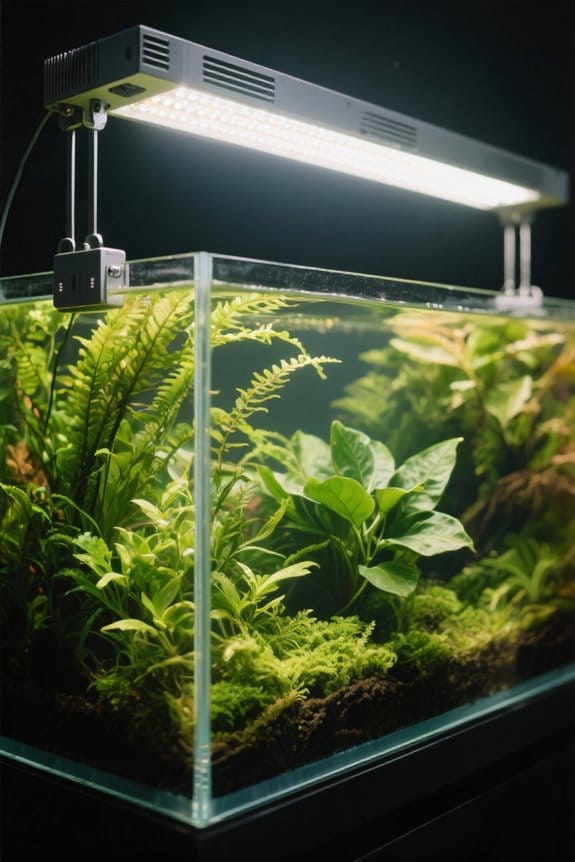
Why is proper lighting fundamental for successful low-tech aquariums? Adequate light directly influences plant growth, health, and ecosystem balance in these setups. Low-tech aquariums typically benefit from lighting that provides PAR values ranging from 10 to 35, ideal for plants such as Anubias and Java Ferns. Employ full-spectrum lights that focus on red and blue wavelengths, specifically around 680nm and 480nm, to promote peak plant coloration and growth. Maintain a standard lighting duration of 8-10 hours each day to enhance photosynthesis while minimizing algae growth. Affordable options like Aqua Worx SOL or Hygger 24/7 can greatly improve aesthetics and growth rates, proving that successful planted aquariums can thrive on budget-friendly lighting solutions. LED lights with programmable features mimic natural light cycles, promoting aquatic health.
Key Factors in Selecting LED Lights for Plants

Selecting the right LED lights for a low-tech planted aquarium is essential to foster a vibrant and healthy underwater environment. Prioritize lights that offer a balanced spectrum, emphasizing red and blue wavelengths vital for plant health. Match the wattage to the 1-to-2 rule, ensuring sufficient illumination for effective growth. Consider the PAR (Photosynthetically Active Radiation), with low-light plants thriving under 10-20 PAR, while medium-light varieties require around 20-35 PAR. Choose full-spectrum, energy-efficient models like Aqua Worx SOL or Lifegard Full Spectrum 2.5 LED, especially for tanks under 15 gallons. Finally, maintain a lighting duration of 8-10 hours per day to support photosynthesis, while simultaneously minimizing the risk of algae growth in your aquarium. Ensure that the substrate used in the aquarium is nutrient-rich to support vigorous growth of aquatic plants, as this enhances the overall health of the aquatic ecosystem.
The Role of PAR in Plant Growth
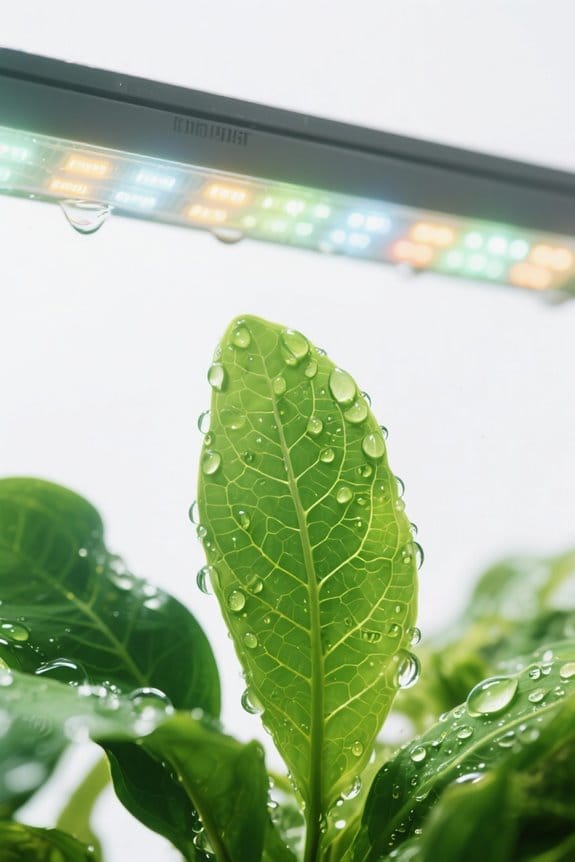
PAR (Photosynthetically Active Radiation) plays a vital role in the growth and health of aquatic plants in an aquarium. It measures light wavelengths between 400 and 700 nm, essential for photosynthesis. To maintain ideal plant growth, consider the required light intensity measured in μmol/m²/s. Low-tech aquariums flourish with light providing 10 to 20 PAR for species like Anubias and Java Ferns, while medium-light plants require 20 to 35 PAR for robust growth. Remember, light intensity decreases with distance from the source; thus, proper placement of lighting is essential. Be cautious with excessive light, as it can foster algae growth, disrupting the delicate balance of the aquarium’s ecosystem. Understanding PAR guarantees thriving aquatic plants. Additionally, full spectrum LED lights can support multiple plant types across various growth stages by providing essential wavelengths that promote photosynthesis.
Recommended LED Lighting Options for Beginners

For beginners setting up an aquarium, choosing the right LED lighting can greatly influence plant growth and overall tank health. Recommended LED lighting options include the Aqua Worx SOL and Lifegard Full Spectrum 2.5, which are effective for low to moderate light-demanding plants in nano aquariums under 15 gallons. The Fluval Nano 3.0 offers adjustable settings that cater specifically to low-tech planted aquariums, enhancing both plant health and aesthetics. Additionally, budget-friendly options like the Aqua Worx EOS RGB LED Light and ReefBreeders Pico LED Light Fixture support the growth of plants such as Anubias and Java Ferns. These beginner-friendly lights typically feature full-spectrum illumination and are easy to install, making them ideal for cultivating low-light plants like Crypts and Moss. Incorporating energy-efficient LEDs into your aquarium setup can lead to long-term operational savings and minimize risks to aquatic life.
Budget-Friendly Low-Tech Lighting Solutions
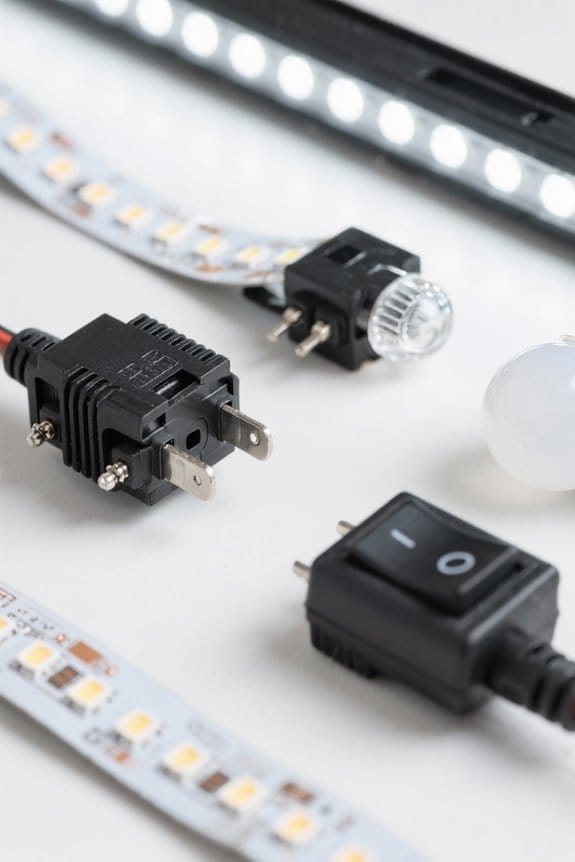
Budget-friendly LED lighting options offer effective solutions for enhancing the health and beauty of low-tech planted aquariums. Consider the Aqua Worx SOL and Lifegard Full Spectrum 2.5 LED, both designed for low to moderate light plants without straining your budget. For nano aquariums under 15 gallons, the Fluval Nano 3.0 and Aqua Worx EOS RGB LED Light provide affordable solutions that are easy to install and support plant growth. Another excellent choice is the Easy Plant LED, featuring a dimmable range from 10-100%, praised for its durability. For minimal additional costs, the ReefBreeders Pico LED Light Fixture serves both freshwater and planted setups. Always verify your lighting aligns with specific plant needs, maximizing health in your low-tech aquarium. Consider energy-efficient models to reduce electricity costs, ensuring sustainable and affordable long-term lighting for your aquarium setup.
Adjustable Features for Customized Plant Care
Adjustable features in LED lighting play an essential role in ensuring that low-tech plants receive the best care they require. Utilize adjustable lighting features such as brightness controls to fine-tune light intensity, catering to your plants’ specific needs. Incorporate programmable timers to establish consistent lighting durations—aim for 8 to 10 hours—to align with photosynthesis cycles. Employ dimmable settings to adapt lighting for varying growth stages, promoting healthy growth while minimizing algae risk. Explore advanced options featuring spectrum control to direct essential wavelengths of blue and red light to enhance photoreactions. Finally, consider customizable mounting heights for optimal light distribution, ensuring that all plant species receive even coverage throughout the aquarium. These features empower users to create a tailored aquatic environment. Additionally, energy-efficient lighting solutions like the Tetra LED Hood can significantly reduce electricity consumption while maintaining effective illumination for your aquatic plants.
Energy Efficiency and Operating Costs
Energy efficiency is an essential consideration when selecting LED lighting for aquariums, as these fixtures are known to consume considerably less electricity than traditional lighting options. Typically, LED lighting uses 50-75% less power, resulting in notably reduced operating costs over time. With lifespans of 25,000 to 50,000 hours, LED solutions require fewer replacements, further decreasing long-term expenses. The annual operating cost can range from £6 to £12, depending on usage, making them a smart choice for aquarium illumination. Additionally, consider dimmable LED options to tailor brightness based on plant needs, enhancing energy savings. By choosing energy-efficient LED lighting, users not only lower electricity bills but also promote a sustainable aquarium ecosystem, minimizing their carbon footprint effectively. Selecting the right LED light can also help suppress algae growth while promoting the health of your aquarium plants, ensuring a balanced and thriving environment.
Real-World Performance of Popular LED Models
When selecting LED lighting for aquariums, it is essential to take into account real-world performance to guarantee peak growth and health of aquatic plants. The Hygger 058 offers a superior lumen output, surpassing the Seaoura SR616 by 7.5% at a similar price point, making it an ideal choice for low-tech setups. Both models feature adjustable brightness settings, allowing customization based on specific plant needs. Remarkably, real-world testing shows the Hygger lights excel in enhancing the coloration of red plants, contributing to vibrant displays. Additionally, the Hygger 076 shines in energy efficiency, operating at an annual cost of £8.51, which is considerably lower than the £12.16 of the Hygger 957 while delivering similar brightness. To ensure optimal living conditions, consider the temperature control and energy consumption as essential factors in selecting the right lighting and heating solutions for your aquarium.
Importance of Community Feedback and Experiences
While individual preferences and aquarium setups vary, community feedback remains an invaluable resource for aquarists seeking ideal LED lighting solutions. Feedback from fellow enthusiasts clarifies which plant lights excel in low-tech planted aquariums, often illuminating choices like the Hygger 24/7 model. Personal experiences shared in forums highlight important performance metrics such as PAR output, which measures light intensity vital for plant health. Additionally, community discussions emphasize budget-friendly options that do not compromise quality, essential for beginners starting their aquascaping journey. Engaging with these discussions encourages collaboration and the exchange of tips tailored to diverse aquarium lighting needs, ultimately aiding aquarists in selecting the most effective solutions for their aquatic plants. Incorporating full-spectrum LED lighting into aquariums is crucial for both plant growth and enhancing the overall aesthetics of the aquascape.
Tips for Ensuring Optimal Lighting Conditions
To create ideal lighting conditions for aquatic plants, aquarists must prioritize specific parameters that directly influence growth and health. First, select planted tank light with a PAR output of 10-20 for low-light plants like Anubias and Crypts, as this meets their photosynthesis needs. Next, aim for a lighting duration of 8-10 hours daily to support plant growth while minimizing algae growth. Choose full-spectrum LED lights highlighting blue (approx. 480nm) and red (approx. 680nm) wavelengths to enhance plant importance and coloration. Furthermore, verify the wattage is at least double the aquarium’s gallon capacity for effective light distribution. Balanced light spectrum is crucial for not only plant growth but also the overall health of the aquarium environment. Consider affordable options like Aqua Worx SOL or Lifegard Full Spectrum LED for low-tech setups, providing good light without financial strain.
Frequently Asked Questions
How to Choose LED Light for Planted Aquarium?
To choose LED lights for a planted aquarium, consider LED types, color temperature, and light intensity. Proper fixture placement enhances growth spectrum, while energy efficiency guarantees sustainability, creating an ideal environment for aquatic plants.
How Much Light for a Low Tech Planted Tank?
Low light levels foster fantastic plant growth in low-tech tanks, typically requiring 10-20 PAR. An aquarium’s size dictates light duration—8-10 hours daily—essential for effective aquarium maintenance and maintaining nutrient balance for thriving greenery.
Will Any LED Light Work for Aquarium Plants?
Not all LED lights facilitate plant growth; spectrum importance, light intensity, and color temperature are essential. Quality LEDs enhance plant health through energy efficiency, showcasing the benefits of appropriate lighting tailored for specific aquatic flora.
How to Calculate LED Light for Aquarium?
Calculating LED light for an aquarium involves evaluating illumination intensity, light spectrum, and color temperature. Additionally, consider bulb lifespan, fixture placement, and energy efficiency to achieve ideal growth and reduce maintenance while ensuring plants thrive.


