
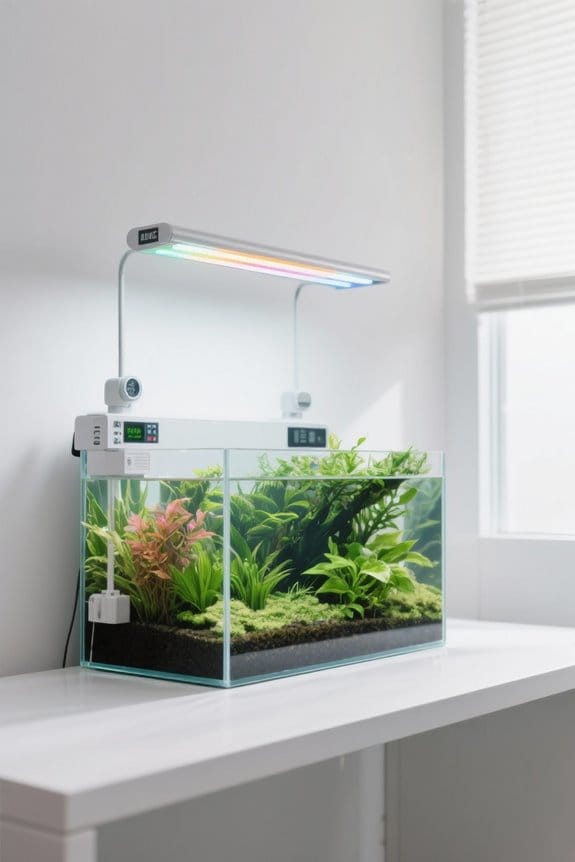

To combine natural daylight and LED light without encouraging algae, position the aquarium away from direct sunlight, using curtains to manage indirect light. Select full-spectrum LED lights designed for planted tanks, starting with brightness at 20-40%. Maintain a light duration of 8-10 hours daily, gradually adjusting as plants grow. Monitor nutrient levels, keeping nitrates below 10-20 ppm, and perform regular water changes. By controlling these elements, one can promote plant health while minimizing algae issues, and further insights await.
Key Takeaways
- Position the aquarium away from direct sunlight to prevent algae blooms while still allowing for some indirect natural light.
- Use curtains or blinds to regulate indirect sunlight, enhancing plant growth and managing algae levels in the tank.
- Implement LED lights with built-in timers to create a consistent light schedule and avoid excessive exposure.
- Aim for a total light exposure of 8-10 hours daily, combining both natural daylight and artificial lighting effectively.
- Regularly test and manage nutrient levels in the water to prevent conditions that encourage algae growth.
Understanding the Impact of Natural Daylight

How does natural daylight influence the environment within an aquarium? Natural daylight can greatly affect algae growth and plant growth in planted tanks. Indirect sunlight is generally more favorable, as it provides consistent light levels without the intensity spikes that can trigger excessive algae blooms. Efficient waste removal is crucial for maintaining a balanced environment in aquariums, as it helps reduce nutrient levels that contribute to algae growth. To maintain a balanced environment, aquarists should establish a lighting schedule that combines natural daylight with artificial LEDs, ensuring they monitor both duration and intensity. During seasonal changes, adjustments may be necessary, as varying natural daylight can impact the overall light exposure. Maintain a maximum of 12 hours of total light exposure daily to optimize plant growth while curbing algae. Proper tank placement, away from direct sunlight, is essential for long-term aquarium success.
Ideal Aquarium Placement to Minimize Sunlight

Selecting the ideal location for an aquarium is essential for maintaining a stable environment, as it directly impacts both aquatic plants and fish. Choose a space shielded from direct sunlight exposure, ensuring stable light levels and preventing fluctuations. Indoor placements provide complete control over artificial lighting, allowing precise adjustments to duration and intensity. Avoid positioning the tank near windows or areas that experience seasonal daylight changes, as these can disrupt light consistency and lead to nutrient imbalances. Additionally, use room curtains or blinds to regulate any remaining indirect sunlight effectively. Such strategic tank placement not only enhances plant growth but also aids in the aquarium’s ecosystem balance, greatly reducing excessive algae blooms and fostering a healthier environment overall. Leveraging full spectrum LED lights in your aquarium setup can further optimize plant growth while minimizing energy consumption.
Selecting the Right LED Lighting Equipment

Choosing the appropriate LED lighting equipment is crucial for any aquarium enthusiast aiming to create a thriving aquatic environment. Focus on lights specifically designed for planted tanks, as they optimize brightness and color spectrum. Select full-spectrum LEDs with a high Color Rendering Index (CRI) to support healthy plants while diminishing algae problems. Adjusted brightness settings are essential; begin at 20-40% to monitor plant health and adjust as needed. Consider using multiple light fixtures for even light distribution, preventing dark areas that may foster algae growth. Finally, opt for LED lights with built-in timers, maintaining consistent light duration to avoid excessive exposure that can lead to algae blooms. These measures collectively enhance the aquarium’s health and vitality. Ensure energy efficiency is a critical consideration when selecting LED lights, as it affects both operational savings and the health of your aquatic ecosystem.
Optimal Light Duration for Plant Growth

To cultivate robust plant growth in aquariums, maintaining an ideal light duration is essential. For newly planted aquariums, a suitable light duration of 6–8 hours daily is recommended, gradually increasing to 8–12 hours as plants mature. Use a timer to create a consistent lighting schedule, ensuring plants receive adequate light without excessive exposure that can foster algae growth. To further mitigate algae, implement a “midday siesta” by turning off lights for a few hours during the main photoperiod. Regularly monitor and adjust light duration based on plant health and algae presence, as too much light can lead to rapid algae blooms and hinder plant growth. When combining natural daylight with LED lights, aim for a total exposure between 8–10 hours for best results. Incorporating dimmable LED lights allows for customizable light intensity, which benefits various aquatic plant species with different light needs and enhances the aesthetic appeal of the aquarium environment.
Managing Light Intensity to Control Algae

Maintaining an appropriate light intensity is essential for preventing algae overgrowth in aquariums. To achieve this, start LED lighting at a brightness of 20-40%, adjusting gradually as plants grow, while monitoring for any signs of algae. Place your aquarium in an area with indirect natural light to minimize fluctuations that destabilize this delicate balance. Utilize programmable timers to guarantee consistent lighting schedules, operating LED lights for 6-8 hours daily. Additionally, raise LED fixtures above the tank to disperse light evenly, preventing concentrated areas that favor algae growth. Adjust lighting intensity based on plant health and algae response, employing methods like using black tape for excessive brightness or selecting dimmable fixtures for precise control over light levels. Consider opting for weather-resistant materials when designing aquarium setups to ensure long-lasting use and durability in varying conditions.
Regular Monitoring of Plant and Algae Health
While directly observing plant and algae health may seem straightforward, it plays an imperative role in maintaining an aquarium’s ecosystem. Regular monitoring includes testing water parameters, like nitrate and phosphate levels, to guarantee a balanced environment. This balance is vital, as nutrient competition can threaten plant health, prompting algae starts. Keep a journal to note trends related to light spectrum exposure and LED intensity, facilitating easier adjustments over time. Conduct weekly assessments to observe growth patterns and color changes, identifying stressed plants that may invite algae issues. Make adjustments at a time, focusing on Photosynthetically Active conditions to optimize light duration and intensity. Use visual cues, such as algae presence, to guide necessary changes in strategy. Testing phosphate levels frequently allows identification of elevation or decline in phosphate concentrations, ensuring overall tank health.
Utilizing Timers for Consistent Light Schedules
Effective light management in an aquarium setting hinges on the careful utilization of timers, which automate and optimize light schedules. Start by setting your timer for 6–8 hours of combined natural daylight and LED lighting. Gradually increase this to 8–12 hours as plant health improves, ensuring you maintain dark periods for proper respiration. To avoid excessive algae growth, use a programmable timer that adjusts for seasonal daylight variations, preventing prolonged exposure. Limit LED lighting to specific hours that complement the natural daylight. This prevents overlapping periods that may encourage algae proliferation. Regularly monitor the effectiveness of your light schedule, adjusting the timer settings according to observed responses in both plants and algae, ensuring a balanced and thriving aquatic ecosystem. Additionally, maintaining optimal flow rates between 10 to 40 times the tank volume is crucial for coral health, as it promotes proper water circulation and nutrient distribution.
Strategies for Balancing Light Sources
To achieve a harmonious balance between natural daylight and LED lighting in an aquarium, it is crucial to carefully consider the positioning of the aquarium and the types of light used. Place the aquarium in a shaded area to limit natural daylight exposure, preventing fluctuating sunlight and subsequent algae growth. Use full-spectrum LED lighting with adjustable intensity, setting it to 20–40% initially. Establish a controlled photoperiod of 6–8 hours for LED light, which should complement indirect natural sunlight for ideal plant health. Select LED lights that emit higher blue wavelengths, as they support growth without enhancing algae. Monitor the overall light exposure to maintain it within 8–10 hours, adjusting as necessary based on algae response and plant health. Full spectrum lighting enhances plant growth, improves color visibility, and supports diverse aquatic life, making it an essential component for aquarium setups.
Importance of Nutrient Management
Balanced nutrient management profoundly impacts aquarium health, particularly in controlling algae growth. Maintaining nutrient levels is essential; keep nitrates below 10-20 ppm and phosphates around 0.02-0.1 ppm. Regular water changes of 10-20% weekly dilute excess nutrients, ensuring a stable environment that promotes plant growth while limiting algae proliferation. Incorporating live plants into the aquarium increases competition for available nutrients, effectively reducing algae growth by outcompeting them for resources. Utilize nitrate and phosphate removal media in your filtration system to help maintain ideal nutrient levels, benefiting both plants and fish. Regularly test your water parameters and adjust nutrient levels based on plant needs, reducing any surplus. This approach forms a vital part of an effective algae management strategy. Regular ammonia testing is also crucial to prevent ammonia poisoning and ensure a healthy environment for aquatic life.
Adjusting Your Lighting Setup Over Time
An effective lighting strategy is essential for the development of aquarium plants. Begin by gradually adjusting your lighting setup, starting with a six-hour photoperiod of natural daylight supplemented by LED light. Use timers to synchronize LED lighting with natural daylight, providing consistent illumination. Monitor algae growth; if blooms occur, reduce LED intensity or duration. Aim for a balanced light spectrum by investing in full-spectrum LED lights, which support healthy plant growth while minimizing algae-promoting wavelengths. Regularly assess plant health and adapt your lighting setup accordingly. Alter the duration and intensity of both light sources as plant needs change, ensuring a harmonious environment that discourages unwanted algae proliferation while promoting vibrant aquatic plants. Consider using energy-efficient lighting, which not only supports plant growth but also reduces long-term operating costs, as emphasized in various aquarium lighting solutions.
Frequently Asked Questions
Do LED Lights Cause Algae Growth?
LED lights can indeed promote algae growth due to their specific light spectrum effects and higher intensity. Balancing LED lighting benefits with algae bloom prevention is crucial for maintaining aquatic ecosystem balance and controlling algae nutrient sources.
How Many Hours of Light to Avoid Algae?
In the delicate dance of aquatic balance, maintaining light duration between 6-10 hours promotes ideal lighting for plant growth while ensuring algae prevention. Effective tank maintenance requires strategic adjustments to inhibit unwanted algae proliferation, safeguarding vibrant underwater life.
What Color Light Does Algae Not Like?
Algae do not prefer blue and ultraviolet light wavelengths, which inhibit their growth. Understanding algae preferences within the light spectrum can guide ideal lighting strategies in aquatic ecosystems, effectively managing key algae growth factors.
Can Algae Grow Under UV Light?
In the intricate dance of the aquatic ecosystem, UV light effects can indeed fuel algae growth factors, requiring light spectrum analysis and careful algae prevention methods to maintain harmony amidst natural lighting and vibrant life.


