
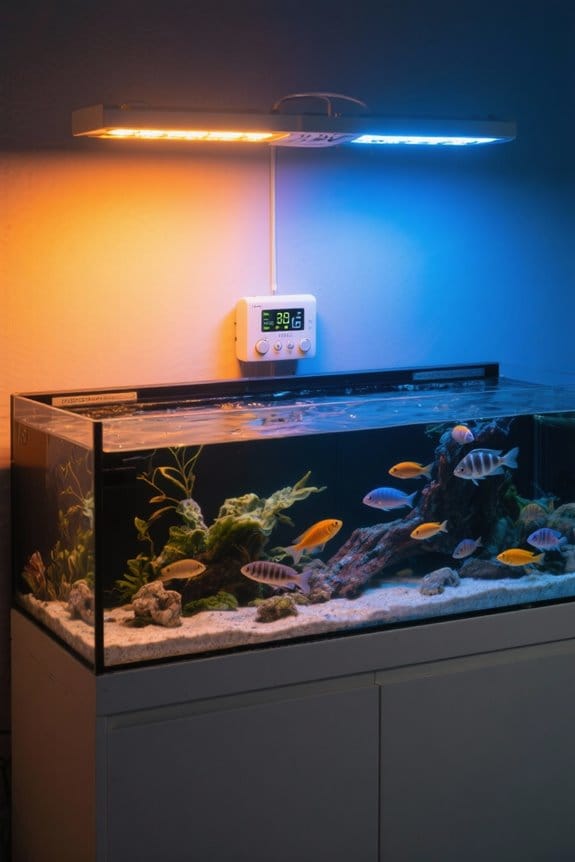

To create a sunrise and sunset lighting schedule, use a programmable timer with adjustable settings. Start by gradually increasing light intensity over 15 minutes for sunrise, using warm and blue spectrum lights. Maintain full brightness for 6-8 hours during the day to support photosynthesis. For sunset, dim lights similarly over 15 minutes. Finally, implement a moonlight phase for 6 hours with soft illumination. Monitoring plant health and algae growth can help refine this schedule for ideal fish comfort. More insights await on enhancing your aquatic environment.
Key Takeaways
- Start the sunrise phase with low-intensity LED lights that gradually increase over 15 minutes for a natural start to the day.
- Maintain full lighting intensity for 6-8 hours during the daylight phase to replicate natural conditions and support photosynthesis.
- Use a color spectrum favoring blues and warm colors during sunrise to cater to aquatic life’s natural needs.
- Implement a moonlight phase lasting approximately six hours, with dim lights that gradually fade to simulate nighttime.
- Regularly check and adjust timer settings seasonally to maintain a consistent lighting schedule that promotes fish comfort.
Understanding the Importance of Lighting for Fish

While many aquarium enthusiasts may overlook the significance of lighting, it plays an essential role in the overall health and well-being of fish. Adequate light duration regulates biological processes, supporting feeding and sleeping habits, which is fundamental for long-term health. A consistent light cycle, mimicking natural daylight patterns, reduces stress and encourages normal behaviors. For fish-only tanks, aim for 6 to 8 hours of light daily, while planted tanks may require 10 to 12 hours to facilitate photosynthesis effectively. Prioritize periods of darkness, as extended rest is critical for fish recovery and well-being. Be aware that algae blooms can signal improper lighting schedules; monitor algae growth closely to adjust light durations and maintain a balanced tank ecosystem. Many modern LED lights, such as the Hygger 30 Watts LED Light, offer customizable settings to mimic natural light patterns and enhance coral growth.
Selecting a Programmable Timer for Your Aquarium

How can aquarium enthusiasts guarantee their lighting needs are met with precision? Selecting a programmable timer is essential for this task. Opt for models with adjustable photoperiods to facilitate specific durations for sunrise, daylight, sunset, and moonlight phases. Confirm the timer includes ramp features that simulate natural light alterations, ideally with a 15-minute gradient. This minimizes stress on fish by avoiding abrupt changes in lighting. Select a timer with a repeat function, allowing it to reset daily without manual adjustment. User-friendly programming and a digital display are critical for making seasonal or maintenance adjustments easily. Additional features like background lighting options can enhance the aquarium experience while maintaining aquatic health. Energy-efficient models contribute to affordable long-term usage, optimizing energy use with adjustable brightness and increased LED counts. Prioritize quality for peak results.
Mimicking Natural Sunrise: The Morning Ramp-Up

Creating an effective lighting schedule begins with mimicking natural sunrise conditions, which helps fish acclimate to changes in their environment. Start with LED lights set to a low intensity, gradually increasing over 15 minutes. This gentle ramp-up creates a dawn-like effect, easing fish into the day. Aim for a total sunrise duration of about 1 hour, sustaining a spectrum that favors blues and warm colors. This careful adjustment not only reduces stress but also encourages natural behavior, including feeding and swimming. Full spectrum LED lights are ideal for this purpose because they can emit a range of wavelengths from 380nm to 800nm, supporting the natural needs of aquatic life. Verify the LED light is programmable to enable timely shifts, enhancing fish comfort. After completing the sunrise phase, the lights can seamlessly shift to the bright daylight phase, ensuring ideal conditions for aquatic life.
Achieving Full Brightness: The Daylight Phase

What are the key elements to achieve full brightness during the Daylight phase of an aquarium? First, maintain tank lighting at full intensity for 6 to 8 hours, mirroring natural light conditions that benefit both fish and aquatic plants. Confirm the color spectrum of your lights supports photosynthesis, enhancing the health of all tank inhabitants. Additionally, utilize background lighting to improve visibility and create an engaging atmosphere. Monitor the Photosynthetically Active Radiation (PAR) levels, targeting 75 to 150 PAR for soft and LPS corals, and 200 to 350 PAR for SPS corals, to promote ideal growth. A consistent intensity will also reduce stress in corals, fostering a balanced ecosystem in the aquarium. Consider using full spectrum lighting around 6500 Kelvin to further enhance plant growth and fish coloration.
Simulating Sunset With Gradual Dimming

To achieve an effective simulation of sunset in an aquarium, incorporate a gradual dimming process lasting approximately 15 minutes. Begin by lowering the light intensity slowly, allowing it to taper off gently. This approach provides the right light for fish comfort, reducing stress during their adjustment to nighttime. After the dimming phase, maintain a specific color spectrum for an additional hour, mimicking natural twilight conditions. This helps signal to the fish that night is approaching, which is essential for their resting and feeding routines. By implementing a twilight phase within a detailed lighting schedule, aquarists can promote harmonious lighting cycles, enhance fish behavior, and create a more natural environment within the aquarium. Additionally, using a light system like hygger 24/7 Mode Submersible Aquarium LED Light can effectively simulate natural lighting transitions, adding to the realism and comfort for aquatic life.
Implementing a Moonlight Phase for Nighttime Comfort
Following the gradual dimming process that simulates sunset, implementing a moonlight phase is a vital step in establishing a natural lighting schedule in aquariums. This phase should last approximately six hours, activating shortly after sunset. Use moon lights that gradually fade out by midnight to create a seamless shift into darkness. Such a soft illumination mimics natural nighttime conditions, allowing fish to exhibit their natural behaviors while minimizing stress. Consistent moonlight can stabilize light cycles, essential for fish health, ensuring they receive adequate darkness. By replicating the influence of moon phases in their natural habitats, aquarists help regulate fish sleep patterns, improving overall wellbeing and comfort as they adapt to the artificial sunrise and sunset schedule. Additionally, incorporating quiet operation air pumps in the aquarium setup can enhance the tranquil environment, further supporting the fishes’ nocturnal rest and overall comfort.
Adjusting Your Schedule Based on Tank Conditions
Adjusting the lighting schedule based on tank conditions is essential for maintaining a healthy aquarium environment. Start with a sunrise phase lasting 15 minutes, gently increasing light intensity. Follow this with an 8-hour daylight phase, providing enough light for fish activity and plant photosynthesis, while preventing excessive algae growth. If algae becomes problematic, reduce the duration to 6 hours. Implement a 15-minute sunset phase, gradually dimming the lights to ease fish into nighttime behavior. Monitor fish behavior closely; reduced activity or increased hiding might indicate the need for further adjustments. By staying attentive to these factors, aquarists can create a comfortable and balanced environment for their aquatic inhabitants, ensuring the aquarium remains healthy and vibrant. Using full spectrum lighting can enhance plant growth and improve color visibility, contributing to a thriving aquarium ecosystem.
Maintaining Your Lighting System for Long-Term Success
Maintaining a successful lighting system for an aquarium requires diligent care and routine upkeep. Every day, inspect light covers for condensation, confirming they remain clear to maximize light penetration. Clean light fixtures every 2–4 weeks to prevent algae build-up and keep the aquarium bright. After power cuts, check the accuracy of timers to maintain a steady lighting schedule, avoiding disruptions in fish routines. Replace aging bulbs, especially fluorescents, to sustain consistent lighting output, as inadequate illumination can harm both fish and plants. Monitor algae growth and plant health regularly; these indicators help assess the effectiveness of the lighting schedule. It’s crucial to choose lighting fixtures that are compatible with aquarium light hanging kits to ensure stability and optimal light coverage. By following these steps, aquarists can guarantee long-term success and ideal comfort for their aquatic inhabitants.
Frequently Asked Questions
What Is the Best Lighting Schedule for a Fish Tank?
The best lighting schedule for a fish tank balances intensity and duration; 6 to 8 hours of consistent lighting supports health. Gradual changes mimic nature, preventing stress, while maintaining a serene contrast between day and night.
How Many Hours a Day Should You Have Your Fish Tank Light On?
Light duration for a fish tank typically ranges from six to ten hours daily. Adjusting this time according to tank type, light intensity, and algae levels guarantees ideal plant growth and fish comfort in the aquarium environment.
What Is the Best Lighting Schedule for SPS?
The best lighting schedule for SPS corals involves 8 to 10 hours of light daily, with a 1-hour ramp-up to peak intensity and a gradual 1-hour ramp-down, fostering ideal coral growth and minimizing stress.
Why Do My Fish Freak Out When I Turn off the Light?
When the sun abruptly vanishes, fishes become startled like creatures in a darkened forest, driven by light sensitivity. Such sudden darkness can invoke panic, leaving them feeling exposed and vulnerable, increasing their distress and confusion.


