To plan hardscape for shrimp-focused and betta-focused tanks, choose inert materials like black lava rock and seiryu stone. Incorporate driftwood, disinfected by boiling, for natural aesthetics and hiding spots. Maintain about 2 inches of substrate for plant growth, and guarantee a mix of open swimming areas and secluded refuges to reduce stress. Secure hardscape elements with aquarium-safe adhesives. This setup caters to both species’ needs, while further tips await for thorough planning.
Key Takeaways
- Use inert rocks and driftwood to create a stable hardscape that does not alter water parameters for both shrimp and bettas.
- Design hiding spots using stacked rocks and driftwood, ensuring a balance between security for shrimp and open swimming space for bettas.
- Incorporate epiphytic plants like Java Fern and Anubias to enhance aesthetics while providing additional surfaces for beneficial bacteria growth and hiding spots.
- Conduct regular water changes and substrate vacuuming to maintain a clean environment that supports the health of both shrimp and bettas.
- Ensure smooth edges on hardscape elements to prevent injury, and use aquarium-safe adhesives for stability and safety in the tank.
Choosing the Right Hardscape Materials

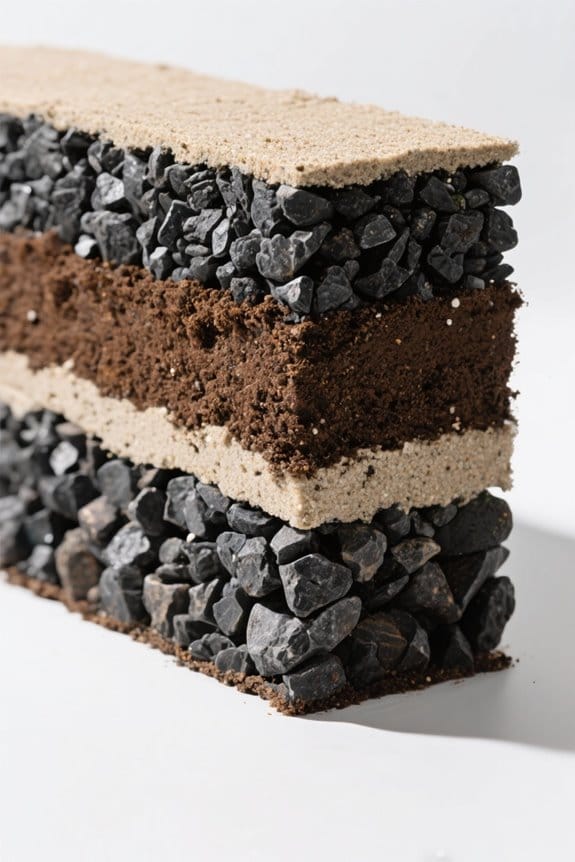
When planning the hardscape for shrimp and betta tanks, it is essential to select materials that both enhance the aesthetic appeal of the aquarium and support the well-being of its inhabitants. Start by choosing inert rocks such as black lava rock and seiryu stone, as these will not alter the water’s pH or hardness. Incorporate driftwood, like dragon wood, ensuring it is boiled to remove tannins and disinfect. This wood provides surfaces for beneficial bacteria, essential for a healthy tank ecosystem. Maintain approximately 2 inches of substrate to promote plant growth while allowing sufficient navigation space for shrimps and bettas. Consider aquarium-safe adhesives to secure hardscape elements, ensuring stability in small tanks that enhances overall organization. Dragon Stones promote beneficial bacteria growth, making them an excellent choice for maintaining a healthy aquatic environment.
Designing for Hiding Spots and Open Areas
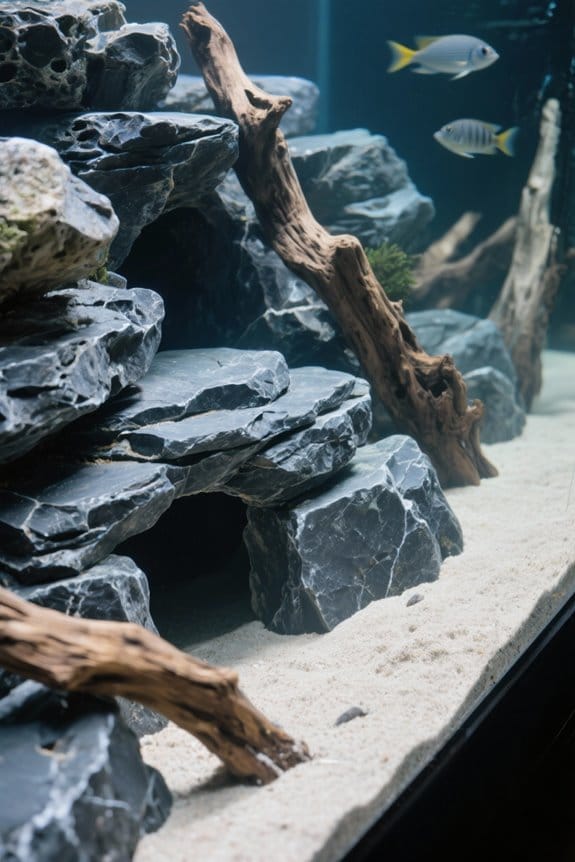
Creating a balanced aquarium environment for shrimp and bettas requires thoughtful hardscape design that includes both hiding spots and open swimming areas. Utilize materials such as rocks, driftwood, and caves to establish hiding spots, which provide refuge for shrimp, enhancing their comfort and reducing stress. Aim to create navigable open areas, allowing bettas ample space for swimming and exploration. When designing, consider stacking rocks or driftwood to introduce different elevations, adding variety and additional hiding spots for shrimp. Surround these hardscape features with dense plant growth, ensuring they are adjacent to open areas. This layout not only meets the security needs of shrimp but also supports the territorial instincts of bettas, resulting in a harmonious, dynamic planted tank. Incorporating an ergonomic design in your tank setup can make maintenance easier and more effective.
Securing Hardscape Effectively

Securing hardscape materials in shrimp and betta tanks is essential for maintaining a stable and appealing environment. Begin by selecting aquarium-safe glue, guaranteeing no harmful substances enter the water. Assess the weight and size of each element, placing heavier stones or larger pieces at the bottom to create a secure foundation. Employ a variety of hardscape materials, such as rocks and driftwood, to enhance visual interest while maintaining stability. Ascertain all edges are smooth, as sharp surfaces can injure delicate aquatic creatures. Driftwood contributes significantly to aquarium aesthetics with unique shapes, allowing for diverse arrangements. Finally, regularly inspect the arrangements, especially after adding substrate or plants, as these changes can shift positioning. By following these guidelines, hobbyists can guarantee a safe and aesthetically pleasing habitat for their aquatic pets.
Incorporating Epiphytic Plants

Incorporating epiphytic plants into shrimp and betta tanks not only enhances visual appeal but also promotes a healthier ecosystem. Utilize plants like Java Fern and Anubias, which attach securely to driftwood and rocks. This method benefits shrimp habitats that thrive in softer substrates. Employ aquarium-safe glue or fishing line to anchor these plants, ensuring they receive adequate light and water flow. By not rooting into the substrate, epiphytic plants offer additional surfaces for beneficial bacteria, essential for maintaining tank health. Their slow growth requires minimal maintenance, providing hiding spots and foraging surfaces for both shrimp and bettas. Choose plants that complement the tank’s design, ensuring ideal water conditions while enhancing overall aesthetic balance. Adding live plants like Moneywort can further enhance water quality by providing oxygen and naturally filtering the water.
Creating Depth and Visual Appeal

Achieving depth and visual appeal in shrimp and betta tanks involves careful manipulation of hardscape elements to create an inviting and dynamic environment. Begin by arranging rocks and driftwood of varying heights, placing taller pieces in the back and shorter ones in the front. This layout guides the eye, enhancing the illusion of depth. Incorporate negative space to provide shrimp and bettas with hiding spots, while promoting a sense of spaciousness. Use contrasting substrates—coarse sand upfront and finer gravel in the back—to add texture. Position hardscape elements at angles for a naturalistic look and introduce plants of differing heights alongside the hardscape to create layers, improving both visual appeal and habitat complexity in your planted aquariums. Consider integrating an aquarium internal filter to maintain optimal water quality and clarity, as this is essential for a thriving aquatic environment.
Balancing Hardscape With Ground Layer
A well-balanced design of hardscape and ground layer is essential for fostering a healthy aquarium environment. Incorporate platforms using flat rocks or driftwood above a shallow ground layer of fine gravel or sand, ensuring shrimp have foraging space while bettas enjoy exploration. Aim for a substrate depth of around 1 to 2 inches, which prevents anaerobic zones that can harm water quality. Choose inert hardscape materials to maintain stable water chemistry, particularly vital in a low-tech tank. This balance promotes proper water circulation and rooted plant growth, contributing to a thriving ecosystem. Keep swimming areas open for bettas while providing hiding spots for shrimp, creating a harmonious environment catering to both species’ needs. For those interested in laboratory setups, borosilicate glass is a durable material option known for its thermal shock resistance and excellent visibility, which could inspire the aquarium’s hardscape choices.
Planning for Tank Maintenance
Maintaining a clean and healthy aquarium environment is vital for the wellbeing of both shrimp and betta fish. Conduct regular water changes of 10-20% weekly, as this helps to maintain water quality and reduce harmful toxins. During these changes, vacuum the substrate to eliminate detritus and waste buildup. Additionally, monitor water parameters, including pH, ammonia, nitrite, and nitrate levels every week; this will guarantee stability in the aquatic environment, important for sensitive inhabitants. Incorporate a reliable filtration system with appropriate media to establish beneficial bacteria, necessary for biological filtration. Finally, regularly trim and maintain plants to prevent overcrowding, ensuring adequate light and space for all aquatic life. Implement these practices to create a thriving ecosystem. Regular nitrite testing is crucial to prevent fish loss and ensure a healthy aquatic environment.
Considering Future Inhabitants
When establishing an aquarium, considering future inhabitants shapes both the aesthetics and functionality of the space. For a shrimp-focused nano tank, prioritize hardscape elements that provide hiding spots and stable grazing surfaces, such as moss-covered rocks and driftwood. In contrast, a planted betta tank necessitates avoiding sharp edges, which could injure the betta. Instead, include caves and foliage for shelter and territory establishment. Make sure that the hardscape does not obstruct filter flow and light penetration, as effective water circulation supports both fish care and plant health. Additionally, regular water quality monitoring, using comprehensive testing kits, ensures a thriving aquatic environment by detecting potential contaminants early. Finally, adhere to minimum tank size requirements—five gallons for bettas and smaller setups for shrimp—to create a thriving aquatic environment tailored to your future inhabitants’ needs.
Enhancing Aesthetics With Backgrounds
To effectively enhance the aesthetics of an aquarium, selecting the right background can create a striking visual impact while improving the overall environment for aquatic inhabitants. Begin by choosing a background color that complements the substrate and hardscape materials, aiming for shades that elevate visual appeal. For a cost-effective option, consider window privacy film; it applies easily with water to remove bubbles and can be trimmed for a seamless appearance. Additionally, a well-designed background minimizes glare from lighting, enhancing visibility for both fish and the observer. This thoughtful choice not only enriches the tank’s aesthetics but also provides hiding spots or visual barriers, contributing to a more natural habitat and reducing stress for shrimp and betta fish. When choosing a background, consider durable thickened vinyl material options, like those found in high-quality backgrounds, to ensure longevity in aquatic environments.
Frequently Asked Questions
How to Keep Shrimp and Bettas Together?
To keep shrimp and bettas together, choose compatible species like dwarf shrimp, provide ample hiding spaces, and monitor tank conditions. Implement peacekeeping strategies, ensuring a stress-free environment to reduce aggressive interactions between these potential tank mates.
What Rocks Are Best for Shrimp Tanks?
Inert stones like lava rock and seiryu stone are ideal for shrimp tanks, comprising 70% of the hardscape. Rock shapes should feature smooth surfaces, while combining driftwood types and varied substrate options provides a thriving environment.
How Many Shrimp Can I Put With My Betta?
A betta can coexist with 10 to 12 smaller shrimp, depending on individual betta compatibility. Observing shrimp behavior and maintaining ideal tank conditions, like ample hiding spots, is essential for ensuring their safety and survival.
What Size Tank for Betta Fish and Shrimp?
Like a carefully crafted masterpiece, a betta tank size of at least 5 gallons and a shrimp tank size starting at 10 gallons guarantees harmonious coexistence. Ideal tank dimensions provide essential space for swimming and territorial behavior.