


To pre-filter intakes and protect shrimp and fry, use safe devices like EHEIM shrimp guards or create DIY mesh coverings. Install inlet strainers or pre-filters on external pumps to block suction injuries. For internal filters, choose options like the Dennerle Nano corner filter, which prevents small shrimp from getting trapped. Additionally, maintain water flow with sponge filters and regular cleaning. Ensuring shrimp safety requires attention to detail, so explore further strategies to enhance their habitat.
Key Takeaways
- Install protective pre-filters like EHEIM shrimp guards to block shrimp from entering filter intakes and avoid suction hazards.
- Use corner filters or sponge filters that create less disruptive currents, ensuring a safer environment for shrimp and fry.
- Cover filter inlets with nylon stockings or fine mesh materials to prevent small shrimp from being trapped while allowing efficient water flow.
- Regularly inspect and clean pre-filters and filter guards to maintain effectiveness, replacing any worn-out components promptly for optimal shrimp safety.
- Position canister filters strategically to create calm zones with reduced water flow, enhancing foraging opportunities and overall shrimp health.
Why Extra Safety for Dwarf Shrimp?
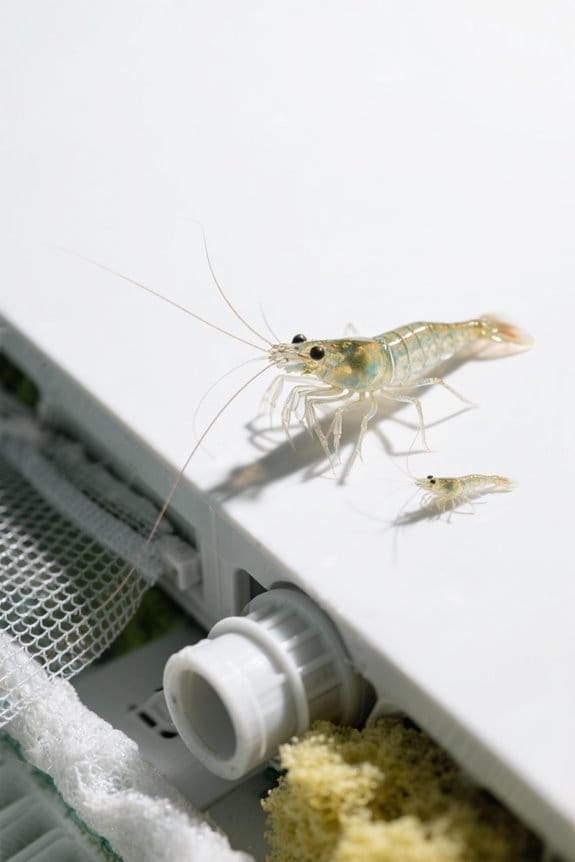
Although Dwarf shrimp are popular among aquarium enthusiasts, extra safety measures are necessary due to their size and vulnerability. Adult Dwarf shrimp range from 15 mm to 40 mm but can still be easily sucked into standard filter intakes. Newly hatched shrimp are even more at risk, measuring only 1-2 mm. To mitigate these dangers, it is important to use protective pre-filtering systems that effectively block shrimp from entering the filter intake. Make sure your aquarium’s water quality remains ideal without subjecting shrimp to strong water flow. Additionally, opt for designs featuring sponge pre-filters or mesh guards that safeguard against the dangers of rotors and impellers. These measures are essential for maintaining shrimp health and preventing potential fatalities in diverse species. Marimo moss balls can also be added to the tank as they contribute to a healthy ecosystem by absorbing waste and impurities.
The Risks of Filters and Skimmers for Shrimp

Small shrimp are particularly at risk when exposed to standard filtration systems and surface skimmers. Newly hatched shrimp, measuring only 1-2 mm, can easily be sucked into these systems. This leads to potential injuries or fatalities due to impeller contact. High-flow filtration can create currents that stress shrimp, disrupting their foraging and breeding behaviors. Additionally, surface skimmers, while effective for maintaining water quality, can trap small shrimp, blocking their escape routes. To mitigate these risks, install protective measures such as EHEIM shrimp guards or DIY solutions like mesh coverings over filter pads. These adaptations are essential in safeguarding shrimp from the dangerous effects of standard filters and skimmers while ensuring a healthier aquatic environment. Adding Indian Almond Leaves to the tank can also help create a more secure environment, as they provide hiding spots and improve water conditions naturally.
Approaches to Internal Filters

Internal filters play an essential role in maintaining water quality, yet their design can pose significant risks to small shrimp and fry. Many internal filters feature slit openings that can trap these delicate creatures, potentially leading to injury or fatality. To enhance shrimp safety, consider using products like the Dennerle Nano corner filter, which offers manufacturer-provided shrimp safety solutions. Additionally, employ DIY methods by covering intake slits with nylon mesh or fine filter sponges. Regular maintenance is vital: inspect filter guards for debris frequently to prevent clogging. Finally, set gentle water flow and strategically place the filter away from shrimp gathering areas to minimize stress and danger, creating a safer environment for these small aquatic organisms. To ensure optimal cleaning effectiveness, use gravel cleaners designed for specific tank sizes, which will enhance aquarium health by reducing waste buildup and promoting a balanced ecosystem.
Strategies for External Filters (Canister Filters)

For those considering the use of external filters, often known as canister filters, implementing protective measures is paramount to safeguarding small shrimp and fry. First, add inlet strainers or pre-filters to prevent suction injuries, as these devices block small creatures from being drawn into the system. A simple solution involves covering the filter inlet with nylon stockings, effectively creating a low-cost barrier against the intake current. Additionally, opt for glass or stainless steel inflows, which enhance aesthetics while minimizing risks through larger openings. Strategically position the canister filters to create safe zones with reduced water flow. It’s important to store test strips in a cool, dry environment to extend their effectiveness, ensuring accurate water testing for the safety of your aquatic pets. Finally, maintain the pre-filters regularly, checking and cleaning them to avoid clogs and guarantee the ongoing safety of your aquatic pets.
Enhancing Safety With Hang-On Filters

When seeking to enhance the safety of shrimp and fry, hang-on filters provide an effective filtration solution that requires careful adjustments to minimize risk. To safeguard shrimp measuring between 1-40 mm, install filter guards or sponges on the intake. These modifications prevent small aquatic creatures from being sucked in, thereby reducing injury or death from filter suction. Additionally, use sponge filters to create a gentler water flow, which minimizes stress on shrimp populations while maintaining effective filtration. Positioning the hang-on filter higher than the substrate allows shrimp and fry to evade the intake easily. Finally, perform regular maintenance by checking and cleaning filter guards to verify they remain effective in protecting shrimp and fry from potential harm. For comprehensive maintenance, consider using multi-functional models that can handle gravel cleaning and algae removal alongside water changes.
Managing Risks With Surface Skimmers
Surface skimmers play an essential role in maintaining water quality by facilitating gas exchange, but their strong intake currents can pose significant risks to shrimp and fry. To mitigate these risks, install specialized guards, like Eheim’s shrimp guard, on the skimmers to prevent entrapment. Consider using timers to allow periods when the skimmer is off, giving shrimp safe escape routes. Regularly monitor the skimmer for debris and functionality to verify it operates safely, reducing the risk of harming delicate aquatic life. Adjust the height of the skimmer above the substrate to create a calmer zone for shrimp and fry, minimizing exposure to strong flows. Using canister filters in conjunction can also help maintain ideal conditions. For added protection, ensure that any additional equipment, such as infrared thermometers, is used to monitor temperature changes that could affect shrimp and fry.
Recommended Products for Shrimp Protection
Protection for shrimp in aquariums hinges on selecting the right products that offer both safety and functionality. The GreenWorks Filter Guard is an excellent choice for hoses with diameters of 12 to 16mm, priced at €14.48, as it effectively prevents shrimp from being suctioned. Consider the EHEIM Prefilter, available for €12.48; it adds extra filtration against debris while shielding small aquatic organisms. For canister filters, the Dennerle Corner Filter Baby Protect 40/60, at €9.98, is specifically designed to block small organisms from entering filtration systems. Finally, the EHEIM Float Insert for Skim 350, priced at €5.73, offers a barrier against shrimp being trapped in surface skimmers. Implementing these products can substantially reduce shrimp mortality in aquariums. When choosing a siphon hose, ensure it is made of non-toxic PVC for the safety of fish and other aquatic life during maintenance.
Placement Strategies for Optimal Safety
Strategically positioning filtration equipment in an aquarium enhances the safety of shrimp and fry markedly. Place filters away from areas where shrimp typically gather, as this minimizes the risk of suction drawing them in. Install skimmers higher than the substrate level, ensuring sufficient escape routes and preventing entrapment. Utilize corner filters to create less disruptive currents, making safer foraging zones for shrimp and fry. Distribute water flow evenly by using multiple filtration sources, which helps reduce stress on shrimp populations. Designate specific “safe zones” within the aquarium, giving shrimp places to retreat from stronger currents generated by the filtering equipment. Following these placement strategies promotes a healthier and safer environment for delicate shrimp and fry. Incorporating high porosity bio media into your filtration system can further enhance aquatic health by providing optimal habitats for essential bacteria.
Maintenance Tips for Filter Protection
Maintaining the integrity of filtration systems is essential for the health of shrimp and fry in an aquarium. Regularly inspect and clean filter guards and pre-filters weekly, as debris can trap these small organisms. Replace worn-out pre-filters promptly, since their effectiveness diminishes over time, heightening the risk of shrimp and fry being drawn into canister filters. Use a bucket of old aquarium water to rinse filter sponges gently, preserving beneficial bacteria while ensuring ideal filtration. Adjust flow rates to create gentler currents, reducing stress on shrimp and fry. Incorporating sponge filters offers a safer filtering option, minimizing clogging compared to traditional intakes while also providing a less turbulent environment for delicate aquatic life. Choose thermometer stickers with strong adhesive to ensure they stay in place, providing consistent and accurate temperature readings crucial for maintaining optimal tank conditions.
Community Insights and Experiences
How can aquarium enthusiasts enhance the safety of their shrimp and fry? Community members advocate for the use of sponge filters, providing effective intake protection. Coarse intake sponges are recommended, as they reduce clogging while safeguarding smaller aquatic life from filtration systems. Additionally, mesh filters with flexible openings maintain water flow efficiency, making them popular in shrimp tanks. Regular checks and cleanings of pre-filters are essential to sustain their effectiveness and prevent stress on shrimp populations. Users have highlighted products like EHEIM prefilters and glass inlet tubes for specific compatibility and cleaning ease. Overall, well-designed filter guards and pre-filters appreciably boost shrimp safety and fry survival, offering peace of mind for aquarium enthusiasts dedicated to nurturing their aquatic ecosystems. Effective waste management through the use of appropriate filter systems can also help maintain water clarity and promote healthier environments for aquatic life.
Frequently Asked Questions
How to Protect Shrimp From Filter Intake?
To protect shrimp from filter intake, one can implement suction reduction techniques, such as installing filter guards or using sponge filters. Regular maintenance guarantees continued effectiveness and safety for small aquatic life in the aquarium.
How to Make an Internal Filter Safe for Shrimp?
To enhance shrimp safety, one should utilize filters specifically designed for small organisms, position intakes away from shrimp habitats, cover slits with fine mesh, and maintain pre-filters regularly to prevent clogs and strong suction.
What to Cover Filter Intake With?
To safeguard tiny aquatic lives, one should consider using intake covers crafted from nylon mesh or fine filter sponges. Such materials cleverly balance protection and effective water flow, ensuring a safe environment without compromising filtration efficiency.
How to Protect Fry in an Aquarium?
To protect fry in an aquarium, create safe habitats with dense plants, utilize sponge filters, and maintain a gentle flow. Regularly monitor water conditions and provide tailored feeding to foster healthy growth in their environment.


