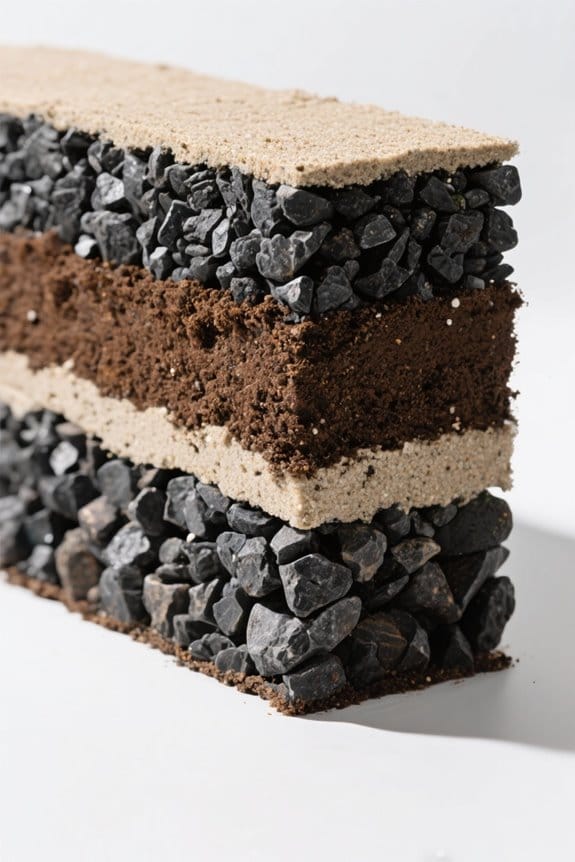
To prevent substrate anaerobic pockets and gas bubbles in aquariums, use larger substrate grains like gravel, as they enhance oxygen flow. Keep substrate layers thin, ideally a couple of inches, to minimize gas buildup. Regularly disturb the substrate using tools or burrowing organisms such as Malaysian trumpet snails to promote aeration. Conduct routine inspections for dark layers or foul odors. Implementing these practices can considerably improve aquatic health, ensuring a vibrant aquatic environment. There’s more to reflect on for maintaining ideal conditions.
Key Takeaways
- Use larger substrate grains like gravel to enhance porosity and oxygen distribution, preventing compaction and anaerobic conditions.
- Regularly disturb the substrate through stirring or incorporating burrowing organisms to disrupt potential anaerobic pockets.
- Maintain thin substrate layers of a couple of inches to limit gas buildup and improve aeration.
- Introduce substrate-dwelling organisms, like Malaysian trumpet snails, to enhance water circulation and aerate substrate effectively.
- Conduct routine inspections for signs of gas accumulation, such as bubbles or foul odors, allowing for early intervention.
Understanding Anaerobic Conditions in Aquariums

How can aquarists guarantee a healthy environment within their aquariums? First, it’s essential to understand that anaerobic conditions arise in substrate layers when oxygen levels fall below 0.08 mg/L. This situation allows anaerobic bacteria to thrive, breaking down organic matter but sometimes producing harmful gases, such as hydrogen sulfide. Compacted or overly deep substrate layers can worsen these conditions, restricting water flow and oxygen penetration. To prevent issues, maintain shallower substrate layers with larger grain sizes, enhancing oxygen distribution. Additionally, regularly disturb the substrate using tools or by introducing burrowing fish and invertebrates. These actions help disrupt potential anaerobic pockets, ensuring a balanced and healthy aquatic environment while keeping harmful bacteria at bay. Consider selecting substrates like Fluval Bio Stratum that promote vigorous plant growth and improve water quality, as they activate dormant nitrifying organisms to further support a healthy ecosystem.
Signs of Anaerobic Pockets in Substrate

Identifying signs of anaerobic pockets in aquarium substrate is essential for maintaining a healthy aquatic environment. Look for gas pockets, often visible as bubbles rising to the surface, indicating trapped gases. Pay attention to any foul odor, particularly a smell reminiscent of rotten eggs, which signals hydrogen sulfide buildup from low oxygen conditions. Additionally, an accumulation of detritus or uneaten food can suggest anaerobic pockets, as decomposition thrives in these low-oxygen areas. Inspect the substrate visually for compacted layers or dark coloration, both indicative of reduced oxygen levels. Encourage active species like Kuhli loaches or Malaysian trumpet snails, which can help disturb these areas, breaking up potential anaerobic conditions unnoticed in your tank. Regular maintenance needs of aquarium filters can prevent the buildup of detritus and help maintain optimal water conditions, reducing the likelihood of anaerobic pockets forming.
The Role of Substrate Type in Anaerobic Prevention

Choosing the right substrate type is essential for preventing anaerobic pockets in an aquarium. Larger substrate grains, such as gravel, promote increased porosity. This design reduces compaction, allowing water to flow freely and minimizing gas buildup beneath the surface. Conversely, avoid layering sand substrates too thickly, as they can trap gas and create anaerobic conditions. Instead, maintain a thin layer to facilitate gas exchange. Incorporate varying substrate textures, such as clay or expanded clay aggregates, to enhance aeration and water circulation. Additionally, consider including invertebrates, like Malaysian trumpet snails, which actively burrow and aerate the substrate, further preventing anaerobic pockets. Select a suitable substrate mix to guarantee a healthy, well-balanced aquatic environment. Spectrastone Special Black Aquarium Gravel is a modern substrate option that enhances visual appeal while maintaining water chemistry stability.
Effective Maintenance Techniques for Substrate Care

Maintaining ideal substrate health plays a critical role in preventing anaerobic pockets in an aquarium. Regularly stir the substrate with tools like chopsticks or spatulas, ensuring even aeration and disrupting any potential pockets. Keep the substrate layer thin, ideally a couple of inches, which minimizes gas accumulation while promoting beneficial bacteria. Introduce substrate-dwelling organisms such as Malaysian trumpet snails or Kuhli loaches; their natural behaviors aerate the substrate, enhancing water circulation. Perform routine gravel vacuuming carefully in planted tanks; this can help dislodge minor gas pockets without damaging roots. Regularly inspect the substrate for visual signs of gas buildup, responding swiftly to mitigate risks of toxic gas emissions that threaten fish health. Additionally, consider using nutrient-rich aquarium substrates to support plant growth while maintaining a balanced ecosystem.
Strategies for Preventing Anaerobic Pocket Formation
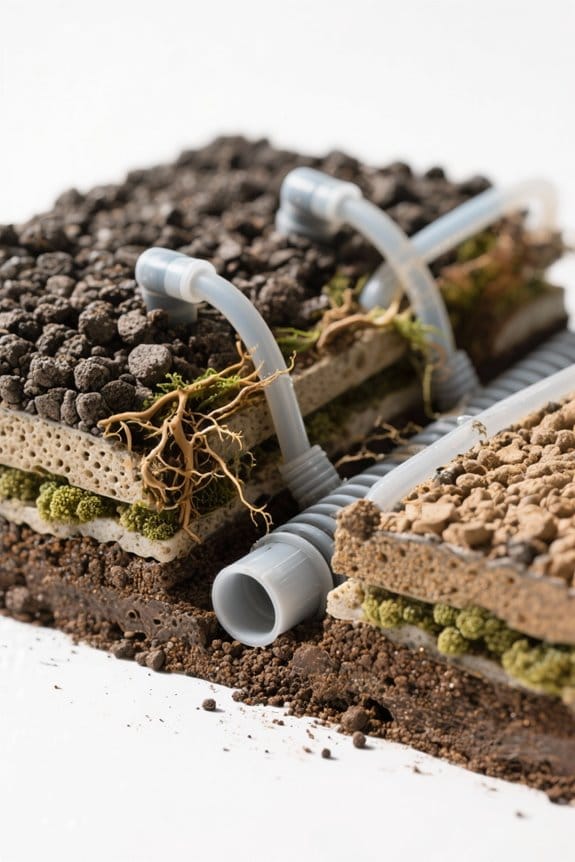
Establishing effective strategies for preventing anaerobic pocket formation requires a multifaceted approach that prioritizes substrate health and water circulation. First, maintain a shallow substrate layer of a couple of inches thick; thinner substrates reduce the likelihood of oxygen-deprived areas, which can lead to anaerobic conditions. Additionally, opt for larger substrate grains, such as gravel, to promote better water flow. Introduce organisms like Malaysian trumpet snails, which aerate the substrate by stirring it up, preventing the accumulation of anaerobic pockets. Regularly stir the substrate with chopsticks or spatulas to dislodge trapped gases. Finally, guarantee proper water flow and circulation to enhance oxygenation, reducing the risk of low-oxygen zones. Implementing these strategies will support a healthier substrate environment. Adding fast-growing plants like Water Sprite can also improve water quality by promoting oxygen production and preventing overgrowth of unwanted algae.
The Importance of Substrate Aeration
Substrate aeration plays a pivotal role in maintaining a healthy aquatic environment, as proper oxygen distribution throughout substrate layers mitigates the risk of harmful gas buildup. To enhance substrate aeration, consider introducing substrate-dwelling fish or invertebrates, such as Malaysian trumpet snails or Kuhli loaches, which burrow and churn the substrate. Regularly stir the substrate during maintenance using tools like chopsticks or spatulas to break up compacted areas, allowing oxygen to penetrate deeper layers. Maintaining a stable salinity is crucial, as it supports the health of your aquatic inhabitants and ensures that substrate conditions remain optimal. Maintain a shallow substrate layer of a couple of inches to minimize organic accumulation that leads to anaerobic pockets. Additionally, perform gravel vacuuming near the substrate surface to remove organic waste without disturbing deeper layers excessively, thereby reducing the risk of hydrogen sulfide gas formation.
Selecting the Right Substrate for Your Tank
Choosing the right substrate for an aquarium can substantially influence the overall health and aesthetic of the tank. Opt for larger grain options like gravel, as they reduce the likelihood of anaerobic pockets becoming a problem compared to finer substrates like sand. While sand may enhance visual appeal, it risks gas pockets if layered too thick. Keep the substrate layer thin, ideally under two inches, to promote oxygen flow and minimize dead spots. If using sand, consider incorporating substrate-dwelling organisms like Malaysian trumpet snails; they help aerate deeper layers. Always evaluate existing substrates before switching, as significant alterations can disrupt chemical balances, risking fish health. Maintain optimal flow rates to ensure adequate water movement, which can prevent stagnation and support a healthier environment. Prioritize these factors for a healthier aquarium ecosystem.
The Benefits of Biological Filtration in Maintaining Aerobic Conditions
Maintaining healthy aquarium conditions relies heavily on effective biological filtration, which plays a pivotal role in supporting beneficial bacteria. This filtration process enhances aerobic conditions by promoting bacteria that convert harmful ammonia and nitrites into less toxic nitrates. To prevent anoxic (oxygen-depleted) environments, guarantee a well-balanced bioload and consider substrate stirring or aeration. Implementing substrate aerators, like Malaysian trumpet snails, can further assist in maintaining these oxygen-rich conditions. Additionally, using non-toxic, smooth-edged materials for aquarium decorations can prevent injury to fish and support the overall health of the aquatic environment. Regular maintenance techniques allow oxygen to reach substrate layers, stimulating aerobic bacteria activity. By doing so, aquarists can effectively reduce waste accumulation and prevent harmful gas pockets, promoting a healthier ecosystem while reducing the risk of anaerobic conditions from forming in their tanks.
How Plant Life Impacts Substrate Health
While many aquarium enthusiasts may overlook the significant role of plant life, maintaining a vibrant aquatic garden directly enhances substrate health and prevents the formation of anaerobic pockets. Planted aquatic plants oxygenate the substrate through their root systems, delivering vital oxygen directly to the root zones and promoting aerobic conditions. Healthy plants prevent substrate compaction, enabling better water circulation and aeration, which are essential for avoiding harmful gas accumulation. Additionally, plant roots break up compacted substrates, further reducing risks associated with anaerobic processes. In heavily planted tanks, these roots utilize available nutrients and minimize debris accumulation, enhancing overall substrate stability and health. Incorporate diverse plant species to maximize these benefits and create a thriving aquarium ecosystem. For additional support in creating a balanced setup, consider using aquarium leveling mats which help ensure stability and protection for your tank.
Common Myths About Anaerobic Conditions in Aquariums
Understanding anaerobic conditions in aquariums requires recognizing certain myths that can mislead hobbyists. One prevalent myth is that deep sand beds promote effective anaerobic denitrification, yet studies have shown no occurrences of this process. Additionally, some believe anaerobic conditions produce harmful hydrogen sulfide; however, toxic levels are rarely reached under typical aquarium circumstances. Misconceptions also assert that all anaerobic pockets generate harmful gases, but such formations are uncommon and usually linked to specific adverse settings. Moreover, it is incorrectly assumed that anaerobic bacteria contribute to beneficial nitrate reduction, which cannot occur without adequate water flow. Monitoring fish closely during treatment to avoid unnecessary stress is crucial in ensuring their recovery. Finally, the distinction between anaerobic and anoxic conditions is often blurred, leading to confusion regarding their actual effects on aquarium health and nitrogen gas production.
Community Insights on Preventing Gas Bubbles in Substrate
To effectively prevent gas bubbles from accumulating in aquarium substrates, hobbyists should actively engage in routine maintenance practices. Regularly stir fine sand substrate or utilize tools like turkey basters to disrupt potential anaerobic pockets. Additionally, introduce burrowing fish or invertebrates, like Malaysian trumpet snails or Kuhli loaches, as they help aerate the substrate. Keep substrate layers shallow, ideally no more than a couple of inches thick, to minimize anoxic conditions. During water changes, perform gentle gravel vacuuming to disturb and eliminate any trapped gas pockets, preventing hazardous gases like hydrogen sulfide from forming. Finally, choose larger substrate grains when possible, as they reduce compactness and decrease the likelihood of anaerobic scenarios, ensuring a healthier aquarium environment.
Frequently Asked Questions
How to Prevent Gas Bubble Disease?
To prevent gas bubble disease, one should implement preventive measures like proper substrate management, maintaining a thin substrate layer, introducing organisms that aerate the substrate, and performing regular gravel vacuuming to minimize organic waste accumulation.
Why Are Bubbles Coming From My Substrate?
Bubbles emerging from the substrate indicate underlying issues—substrate composition promoting gas buildup, insufficient gas exchange creating anaerobic conditions. Such factors can lead to harmful bacteria, impacting tank health and necessitating immediate corrective measures for stability.
How to Prevent Anaerobic Bacteria in an Aquarium?
To prevent anaerobic bacteria in an aquarium, effective aquarium filtration and regular substrate maintenance are essential. Maintaining shallow substrate layers, introducing compatible fauna, and careful stirring promote oxygen flow and a healthy aquatic environment.
How to Cure Gas Bubble Disease in Fish at Home?
Home remedies for healing fish health involve gradually aerating the water, ensuring stable conditions, and isolating affected fish in a separate tank. Consistent monitoring of water parameters promotes recovery and prevents worsening gas bubble disease.