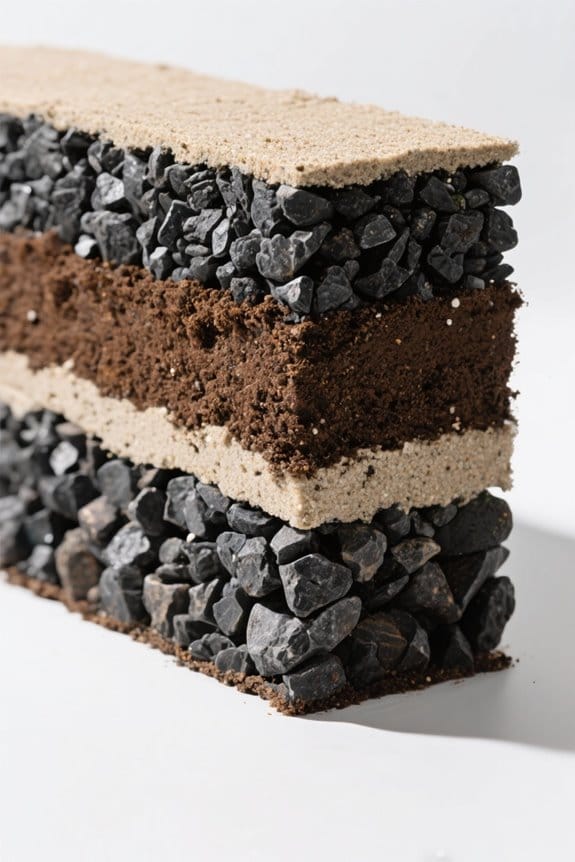
Active substrates, like ADA Aqua Soil, enrich tanks with essential nutrients, support beneficial bacteria, and help maintain softer, lower pH water. However, they may cause harmful ammonia spikes and require regular replacement. In contrast, inert substrates provide a stable, neutral environment, but lack nutrients, needing constant external fertilization. They are lightweight and easier to manage. Evaluating both options’ advantages and drawbacks is vital for creating a healthy planted tank environment. Discover additional tips for your selection process.
Key Takeaways
- Active substrates are nutrient-rich and support healthy plant growth, while inert substrates require regular external fertilization for nutrients.
- Active substrates can lead to initial ammonia spikes harmful to aquatic life, in contrast, inert substrates do not release ammonia.
- Active substrates lower pH and soften water, making them suitable for tropical fish, whereas inert substrates maintain stable water chemistry.
- Active substrates degrade over time and need replacement, while inert substrates provide a long-lasting solution without compromising stability.
- Active substrates enhance beneficial bacteria growth, while inert substrates do not effectively support the nitrogen cycle or microbial activity.
Understanding Active Substrates

Active substrates play an essential role in establishing a thriving planted aquarium. These nutrient-rich materials, such as ADA Aqua Soil, provide essential minerals that support fish and aquatic plants. They help maintain favorable water chemistry, often lowering pH and softening water, ideal for tropical fish and specific plants. Active substrates promote the growth of beneficial bacteria, enhancing biological filtration that breaks down fish waste. However, upon initial setup, they may release ammonia, which can cause ammonia spikes if not managed through fishless cycling or careful monitoring. For aquariums with rooted plants, utilizing root tabs like API ROOT TABS is recommended, as liquid nutrients may not be effective. To sustain peak growth, regularly use root tabs as nutrients deplete over time. Proper maintenance guarantees a healthy environment, crucial for flourishing aquarium plants. Choose active substrates to facilitate vibrant aquatic ecosystems.
Benefits of Active Substrates

For those looking to create an ideal aquatic environment, the benefits of using an active substrate are substantial. Active substrates, like ADA Aqua Soil, are enriched with essential nutrients and organic content critical for promoting healthy plant growth. Their porous structure supports beneficial bacteria, which enhances the nitrogen cycle, crucial for maintaining water quality in planted aquariums. Additionally, these substrates can lower the pH and soften water, catering to many tropical fish species that favor softer conditions. Active substrates facilitate root feeding by providing minerals in readily absorbable forms, unlike inert options. While typically more expensive, they reduce the need for frequent fertilization, leading to a more self-sustaining environment that can thrive for about 18 months before replenishment is needed. Moreover, using a durable construction CO2 reactor alongside active substrates can further enhance plant growth and maintain optimal CO2 levels in the aquarium.
Drawbacks of Active Substrates

While active substrates offer numerous advantages for planted tanks, they also present certain drawbacks that aquarists must consider. Importantly, initial ammonia spikes can occur during setup, potentially harming aquatic life if not managed. In addition, active substrates typically break down over time, necessitating regular replacement to maintain ideal nutrient levels, which increases maintenance costs. Additionally, while they promote plant growth, these substrates can lower pH and create soft water, making conditions unsuitable for specific fish species that thrive in harder, more alkaline environments. Also, the initial cost of quality active substrates can be significant, discouraging budget-conscious enthusiasts. Regular monitoring of water parameters is essential, complicating maintenance compared to inert alternatives, which tend to be more straightforward and stable. Active substrates such as volcanic soils are enriched with minerals that benefit plant health, but their lightweight nature can lead to compaction issues over time.
Exploring Inert Substrates

Inert substrates serve as a reliable foundation for aquariums, providing a stable environment for both plants and aquatic life. Composed of materials like sand or gravel, they are chemically stable and do not decompose over time. While inert substrates, such as CaribSea Eco-Complete and Seachem Flourite, lack nutrients for plants, they are easy to manage, allowing for simple replanting without destabilizing the tank environment. Aim for a grain size of approximately 2mm, as materials that are too fine or coarse can hinder root growth or cause compaction. For ideal plant health, plan for external fertilization, since these substrates do not supply essential nutrients for heavy root-feeding plants, ensuring effective water quality management. Inert substrates are chemically stable and do not alter the pH levels of the aquarium, maintaining a consistent environment for aquatic life.
Advantages of Inert Substrates

Choosing to utilize an inert substrate in an aquarium can greatly enhance the maintenance experience for both novice and seasoned aquarists. Inert substrates, such as standard aquarium gravel or sand, offer long-lasting stability; they do not break down over time. This durability allows for easy management with external fertilization needed to provide nutrients for plants, essential for beginners. Their lightweight nature simplifies the process of replanting and rescaping planted tanks without disrupting the ecosystem. Furthermore, a variety of colors and textures allows aquarists to customize the aesthetic appeal while maintaining a natural look. Finally, the neutral nature of inert substrates guarantees they do not markedly alter water chemistry, promoting a stable environment beneficial for fish and plant health. The ideal particle size for aquarium sand should be between 0.5 mm and 1.2 mm to enable optimal root penetration.
Disadvantages of Inert Substrates
Although inert substrates can provide a stable base for planted tanks, they come with several notable disadvantages that aquarists should consider. First, inert substrates lack essential nutrients, requiring regular external fertilization to support plant growth. This can be particularly challenging for heavy root-feeding plants, which may not thrive without constant nutrient inputs. Additionally, inert substrates do not release ammonia or other nutrients over time, potentially hindering plant health. Maintenance is further complicated, as these substrates can trap debris, necessitating frequent cleaning to maintain water quality. Furthermore, inert substrates provide minimal support for beneficial microbes crucial for nitrogen cycling. Finally, plant root establishment may be difficult, as these substrates often fail to bind effectively to roots, risking uprooting during routine maintenance. An important consideration is that substrate characteristics like texture and nutrient composition directly impact plant health and water quality, as seen with the various aquarium soil substrates.
Choosing the Right Substrate for Your Aquarium
Selecting the right substrate for an aquarium is essential for fostering a thriving aquatic environment. Active substrates, such as ADA Aqua Soil, provide nutrients and lower pH for planted tanks, but may cause harmful ammonia spikes initially. In contrast, inert substrates like gravel and sand offer minimal nutrients, requiring supplemental liquid fertilizers for effective plant growth. Carefully evaluate the specific needs of your plants and fish; some thrive in nutrient-rich environments, while others prefer inert materials. Consider a combination of substrates for both aesthetic appeal and nutrient balance, like capping soil with gravel. Additionally, assess budget considerations; active substrates are pricier, but pairing inert options with fertilization can yield vibrant growth without overspending. It is important to note that nutrient availability is crucial for plant health and growth in any aquatic setup.
Frequently Asked Questions
What Is the Best Substrate for a Planted Aquarium?
In the pursuit of thriving aquatic flora, selecting the best substrate hinges on nutrient availability and pH stability. Ideal options balance substrate weight, water retention, and maintenance frequency, offering eco-friendly solutions with cost effectiveness in mind.
What Is the Difference Between Inert Substrate and Substrate?
Substrate types differ in nutrient absorption capabilities, influencing root development and aesthetic appeal. Inert substrates maintain pH stability without altering water chemistry, while active options enhance plant growth, requiring more maintenance and typically incurring higher costs.
Can Plants Grow in Inert Substrate?
Plants can indeed grow in inert substrate, benefiting from careful nutrient absorption through fertilizers. This promotes root development, while selected plant types thrive with proper water chemistry. Maintenance requirements include monitoring algae growth and considering substrate layering for better results.
Is Activated Carbon Bad for Planted Aquariums?
Activated carbon can negatively impact planted aquariums due to its effects on substrate absorption capabilities and nutrient retention issues, despite offering water clarity benefits. Its chemical leaching risks may hinder plant root growth, posing aquascaping considerations.