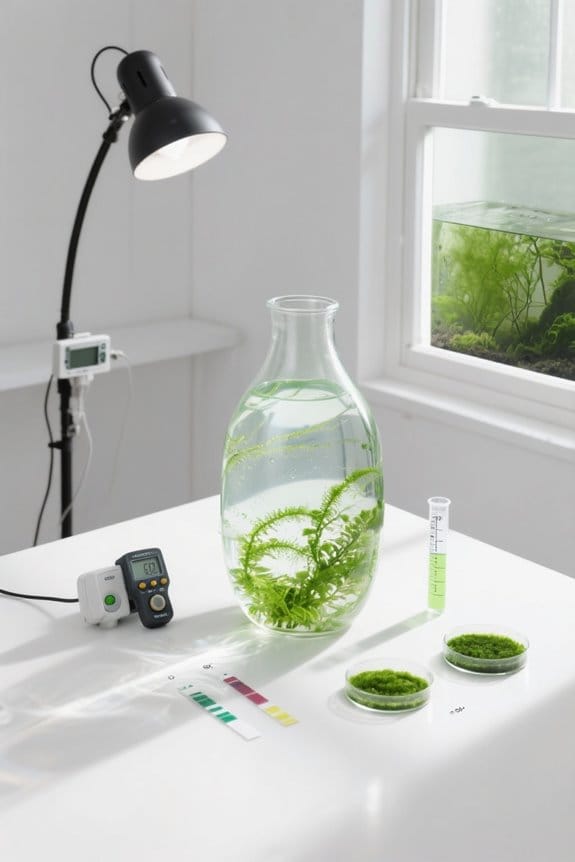
To safely lower pH in an aquarium, use peat moss in a mesh bag within the filter, or add driftwood to release tannins; aim for a pH between 6.3 and 7.2. To raise pH, incorporate crushed coral or limestone, preferably in the filter. Always make gradual adjustments to avoid stressing fish. Conduct regular water changes of 25% using conditioned water, and consistently monitor pH levels with reliable kits, such as the API Freshwater Master Test Kit, for ideal stability. Explore further methods for keeping your aquarium thriving.
Key Takeaways
- Use peat moss in a mesh bag in your filter to gradually lower pH levels safely.
- Incorporate driftwood to release tannins that naturally lower pH without stressing fish.
- Add crushed coral to the substrate or filter for a slow increase in pH without sudden changes.
- Utilize reverse osmosis or deionized water during changes to maintain desired pH levels consistently.
- Regularly test water parameters to monitor and make incremental adjustments, avoiding sudden fluctuations.
Understanding Ph Levels and Their Importance in Aquariums

In the domain of aquarium care, understanding pH levels is fundamental to guaranteeing the well-being of fish. pH, a measure of how acidic or alkaline water is, greatly influences fish health and behavior. For freshwater aquariums, maintaining a pH between 6.3 and 7.2 is essential, as stability is more beneficial than frequent adjustments. Sudden pH changes can stress aquarium fish, making consistency critical for ideal health. Regular testing of both tank and source water helps secure water quality, allowing for effective pH management. Various factors, such as tank size, fish species, and decor, can impact pH levels. For better results, always aim to replicate natural habitats, ensuring fish thrive in an environment that boosts their health and happiness. Regular pH monitoring can prevent stress and health issues in fish, promoting a balanced and safe aquatic environment.
Natural Methods for Lowering Ph Safely

Natural methods offer effective strategies for safely lowering pH levels in aquariums, promoting a stable and healthy environment for fish. One approach is to incorporate peat moss in a mesh bag within the filter; this can help lower pH when replaced regularly. Additionally, adding driftwood not only enhances the tank’s appearance but releases tannins, contributing to a natural pH reduction. Utilizing reverse osmosis or deionized water for regular water changes can guarantee consistent quality and lower pH effectively. Remember, gradual adjustments are vital—avoid sudden changes, as they can stress fish. Regularly test water parameters to confirm that pH levels remain safe throughout the process, maintaining a thriving aquatic ecosystem for all inhabitants. Incorporating substrates like Fluval Bio Stratum not only supports vigorous plant growth but also naturally improves water quality, aiding in the stabilization of pH levels.
Techniques for Raising Ph Without Stressing Fish
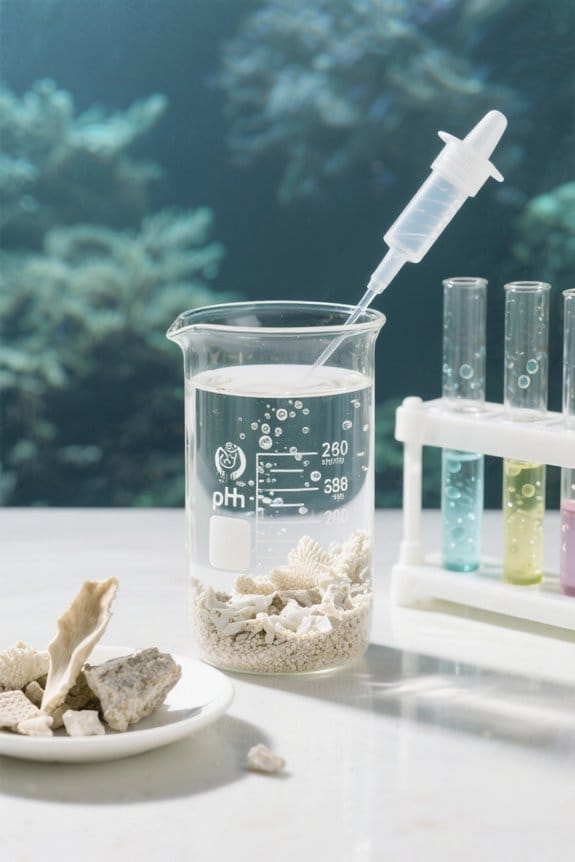
Raising pH levels in an aquarium can be accomplished with care and precision, ensuring that fish remain healthy and stress-free throughout the process. To safely raise pH, incorporate calcium carbonate materials like crushed coral or dolomite gravel into the substrate; they dissolve slowly, promoting gradual changes. Alternatively, place crushed coral in a mesh bag within your filter, buffering water over time. Adding limestone or coral rock can also enhance your tank’s aesthetic while contributing to pH elevation. Consistently using reverse osmosis (RO) or deionized (DI) water at the desired pH during water changes helps maintain stability. Finally, regularly monitoring water parameters allows for careful adjustments, ensuring a healthy environment for your fish throughout the pH-raising process. Using a CO2 diffuser can also assist in managing pH levels by optimizing carbon levels in the tank, contributing to a balanced aquatic environment.
The Role of Water Changes in Ph Management
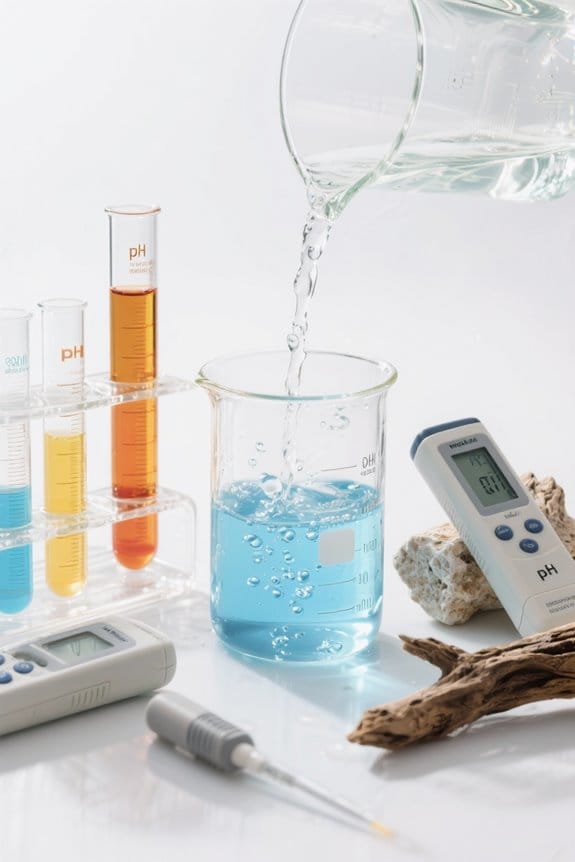
Regular partial water changes, ideally around 25% of the tank volume, play an essential role in managing pH levels in aquariums. These changes help dilute harmful substances, replenish essential minerals, and prevent the accumulation of waste and toxins. Consistently perform water changes about twice a month for peak aquarium health. When using tap water, make sure it matches the existing pH and hardness of the tank; sudden shifts in chemistry can stress fish. Always test both the aquarium water and new water parameters before changes. Additionally, utilize conditioned water to avoid chlorine or harmful chemicals, which can negatively impact fish health. By following these guidelines, enthusiasts can maintain stable pH levels and support a thriving aquatic environment. Regular nitrite testing is also crucial for preventing fish loss and maintaining a healthy aquatic environment, as it ensures harmful nitrite levels are kept in check.
Monitoring and Testing Ph Levels Effectively
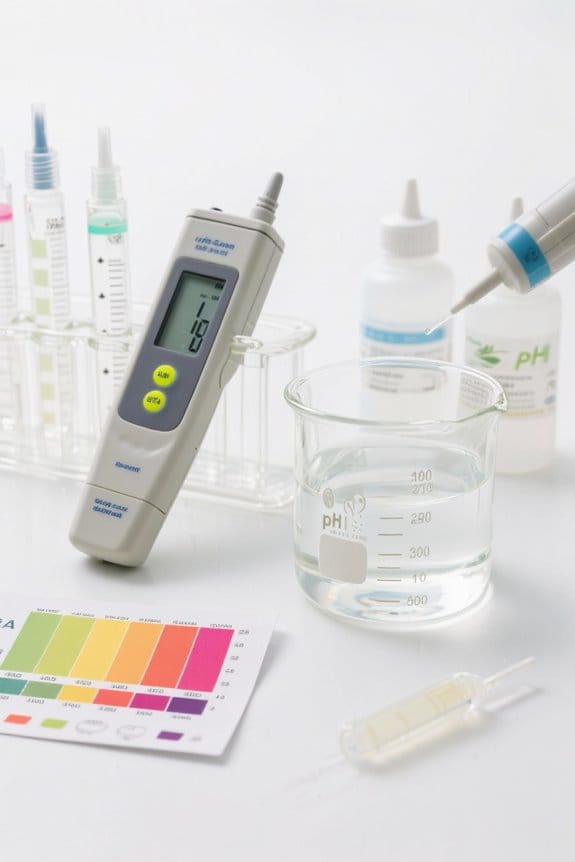
Effective monitoring and testing of pH levels is essential for maintaining a healthy aquarium environment. Regularly test both tank and source water to guarantee pH consistency, as this helps identify sudden changes that can stress fish. Utilize reliable test kits, such as the API Freshwater Master Test Kit, to obtain accurate pH measurements alongside other critical water parameters like ammonia and nitrates. It is advisable to monitor pH levels at different times of day, particularly before lights on and off, to detect potential fluctuations. Observe fish behavior, since signs like red gills or surface swimming may indicate stress from poor water quality. Document pH readings over time to understand trends, guiding any necessary adjustments for your aquatic life’s well-being. Consider using multi-parameter test kits that can measure various water parameters, offering comprehensive insights into your aquarium’s ecological balance.
Common Causes of Sudden Ph Fluctuations
Sudden pH fluctuations in aquariums can be detrimental to fish health, leading to stress or even death. Overpopulation in tanks increases waste, which raises ammonia levels, adversely impacting water quality and maintaining pH stability. Overfeeding further adds to organic waste, causing unwanted pH drops. To prevent these issues, regularly check and adjust feeding amounts. Additionally, neglecting tank maintenance, such as infrequent water changes and using inadequate filtration, allows decaying materials to accumulate, which can destabilize aquarium pH. When introducing new fish or plants, guarantee proper acclimation to avoid disrupting the existing water chemistry. Finally, always test tap water before use, as it may contain variable pH levels or harmful contaminants that alter the aquarium’s pH unexpectedly. To ensure a pristine tank environment, using phosphate removers with clear usage instructions can help maintain water quality and stability.
Incorporating Community Insights for Better Ph Stability
Community insights play a pivotal role in achieving better pH stability within aquariums, particularly when maneuvering the complexities of fish care. Many aquarists recommend using natural materials like driftwood and peat moss to safely lower pH levels, promoting long-term stability without causing stress to fish. Regular monitoring and testing are essential, especially during water changes, to maintain pH levels within fish tolerance limits. Consider mixing tap water with reverse osmosis (RO) water to balance conditions effectively. Additionally, careful acclimation, using drip methods over several hours, can help delicate species like shrimp adjust to varying pH levels without adverse effects. Engaging in community discussions fosters shared knowledge that enhances pH management strategies tailored for specific aquatic needs. Furthermore, incorporating porous bio media such as ceramic rings can improve water quality and clarity, helping to support a stable environment conducive to maintaining optimal pH levels.
Frequently Asked Questions
How to Bring Ph Down in Fish Tank Without Chemicals?
In the aquatic domain, gentle waves whisper secrets of balance. Natural methods like substrate selection, strategic plant effects, routine water changes, and aeration techniques can harmoniously lower pH, nurturing a serene environment for fish to thrive.
How to Safely Increase Ph in an Aquarium?
To safely increase pH in an aquarium, utilize coral sand as substrate, add driftwood for natural buffering, consider baking soda for quick adjustments, and enhance aeration with an aquarium air stone for stability.
Can I Lower Ph Without Chemicals?
Lowering pH without chemicals is like gently swaying in a calm breeze. Natural methods include substrate selection, using driftwood benefits, water aging, and occasionally vinegar usage, ensuring a gradual and safe adjustment for aquatic environments.
How Will Fish Act if Ph Is Too High?
When pH is too high, fish exhibit stress through behavior changes like increased surface swimming and lethargy. Consequently, breeding issues may arise, leading to altered feeding habits and heightened disease susceptibility due to weakened immune systems.