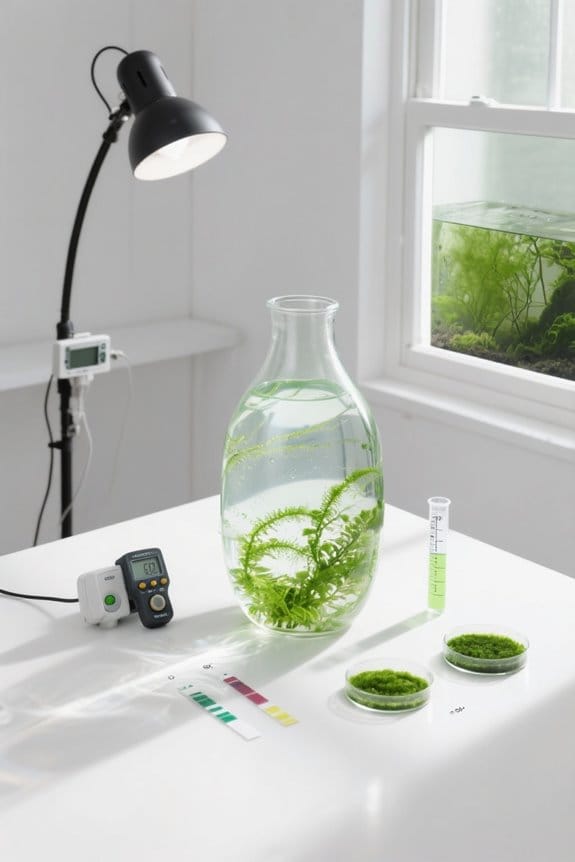
Re-test aquarium water at least 24 hours after making changes, allowing parameters to stabilize for accurate results. Testing too soon can lead to misleading data due to gas exchange affecting pH levels. Conduct routine tests weekly for reliable monitoring, focusing on pH, ammonia, nitrates, and hardness levels. Utilize kits like the API Freshwater Master Test Kit for thorough assessments. Be attentive to fish behavior changes, as these can indicate water quality issues that require timely attention. More insights on effective maintenance await.
Key Takeaways
- Wait at least 24 hours after making water changes before retesting to ensure parameter stabilization.
- Test water immediately if fish show signs of stress, such as lethargy or gasping.
- Conduct routine weekly tests to monitor chemical balance and detect fluctuations early.
- Retest water after implementing algae control measures to evaluate their effectiveness.
- Use reliable testing kits for accurate measurements when assessing water quality changes.
Importance of Timing for Water Testing

When maintaining an aquarium, understanding the importance of timing for water testing is essential for ensuring the health of aquatic life. It is vital to wait at least 24 hours after a water change before testing water parameters, as this allows time for stabilization. Testing immediately post-water change may yield inaccurate results; gas exchange can skew pH levels. Establish a routine for weekly testing to monitor water quality consistently. However, pay attention to changes in fish behavior. If lethargy or loss of appetite occurs, test water parameters immediately instead of waiting. By testing in response to visible changes, or before and after water changes, aquarium enthusiasts can accurately assess the ecosystem’s condition and implement necessary adjustments. User-friendly options such as Tetra EasyStrips can provide quick assessments without sacrificing accuracy, making them a valuable tool for regular monitoring.
Effects of Light During and After Water Changes

While aquarium owners often turn off lights during water changes to minimize stress, it is essential to recognize that fish can adapt to various lighting conditions. Fish usually tolerate light during these changes and often seek hiding spots, but they do not exhibit significant stress when lights remain on. After water changes, the intensity of lighting is less vital since fish naturally sleep in darkness and do not need specific moonlighting. Corals, too, thrive with these natural dark periods, allowing them to flourish even if the aquarium lights are off. Standard aquarium lighting schedules for corals typically range from 8 a.m. to 8 p.m., incorporating gradual ramp-up and ramp-down to mimic natural sunlight cycles. Heaters with adjustable temperature ranges typically maintain optimal conditions (59 to 93°F), which is crucial for fish and corals to thrive in a stable environment.
Recommended Frequency for Water Testing

Regular water testing is vital for maintaining a healthy aquarium environment. Ideally, aquarists should test the water at least once a week to monitor chemical balance and detect any fluctuations. After a water change, it is critical to test the water 24 hours later, allowing time for parameters to stabilize. This practice helps prevent health issues among fish and plants. Additionally, if any unusual behaviors arise, such as lethargy or loss of appetite, an immediate water test guarantees swift identification of potential toxins or imbalances. Consistent use of ammonia detoxifiers helps maintain water stability and should be part of routine care. Establish a routine for testing; consistent monitoring aids in recognizing drastic changes over time, thereby protecting the delicate ecosystem within the aquarium. Prioritize these practices to nurture and sustain aquatic life effectively.
Behavioral Indicators That Prompt Testing

Certain behavioral changes in fish serve as critical indicators of water quality issues, necessitating immediate testing of the aquarium environment. For instance, lethargy can signal stress, often due to deteriorating water conditions—test parameters without delay. Fish losing their appetite may also indicate poor water quality, prompting urgent checks. If fish are gasping at the surface, this could suggest low oxygen levels or toxicity in the aquarium water, which requires quick action. Additionally, unusual behaviors like erratic swimming or hiding should raise alarms; immediate water tests are crucial to guarantee the health and safety of aquatic life. Monitoring these behaviors and responding promptly can help maintain a thriving aquarium, preventing further health declines and promoting overall well-being. Regular testing is essential as it can prevent ammonia poisoning and associated health issues in fish.
Algae Growth and Its Relation to Water Quality

Algae growth serves as a visible indicator of potential water quality issues in an aquarium, prompting careful monitoring and action. Excessive algae often signals high nitrate or phosphate levels, which can harm aquatic life. To address this, regularly test water parameters, aiming for nitrates below 20 ppm and phosphates under 0.5 ppm. Ascertain light exposure is balanced, as excessive lighting promotes algae growth; limit it to 8-10 hours daily. After implementing algae control measures, such as enhancing filtration or reducing nutrient inputs, re-test water to evaluate the effectiveness of these changes. Any noticeable shifts in algae presence should trigger immediate testing of water quality parameters, guiding necessary adjustments to restore ecological balance and maintain a healthy environment for aquatic inhabitants. Incorporating red mangrove seedlings, known for enhancing water quality, can further aid in controlling nutrient levels, thereby reducing algae growth.
Best Practices for Water Sample Collection
Taking proper water samples is essential for accurate testing and understanding aquarium health, and following best practices guarantees reliable results. Always use clean, sterilized containers, such as glass or food-grade plastic, to avoid contamination that could skew results. Collect samples from the middle of the water column, steering clear of debris and substrate to represent the aquatic ecosystem’s overall conditions accurately. If testing for gases like ammonia, take samples immediately post-water change and test promptly, as gases can dissipate rapidly. Minimize exposure to open air to prevent evaporation, which can concentrate elements and distort readings. Mark each sample with the time and location, ensuring consistent tracking of changes and observing management practices’ effects on aquarium health effectively. Regularly testing phosphate levels is crucial to monitor changes in water conditions and validate the effectiveness of phosphate removers.
Techniques and Tools for Testing Water Parameters
Effective water testing is essential for maintaining a healthy aquarium environment, and various techniques and tools can streamline this process considerably. Utilize test strips for quick, on-the-spot results directly in the tank, as they provide immediate insights into water parameters. For greater accuracy, maintain clean test tubes and adhere to strict timing during testing procedures to minimize errors. Conduct periodic spot checks to monitor stability; however, perform thorough testing regularly to detect potential issues early. Choose high-quality testing kits tailored to your aquarium’s needs, focusing on specific parameters for sensitive species. This approach guarantees reliable results, helping maintain ideal water quality and promoting a thriving aquatic ecosystem. Always address any irregularities discovered through testing promptly. Regular testing is vital to prevent toxic buildup and ensure a healthy aquatic environment for fish.
Adjusting Aquatic Environment Based on Test Results
Once water testing has been conducted, the next step involves adjusting the aquatic environment based on the results. If any significant changes are detected, such as altered pH or ammonia levels, immediately retest to evaluate the effectiveness of adjustments. Aim for stable pH levels around 6.5 to 7.5, as fluctuations can harm aquatic pets. After performing water changes, wait at least 24 hours before testing again; this allows parameters to stabilize. Establish a routine testing schedule, ideally weekly, to monitor water quality effectively. If fish display signs of distress, such as lethargy or loss of appetite, increase testing frequency. These measures enable swift identification of water quality issues and promote a healthy environment for aquatic pets. Regular testing of GH and KH levels is vital to ensure the overall balance and health of the aquarium ecosystem.
Overall Maintenance Strategies for a Healthy Aquarium
A well-maintained aquarium is essential for fostering a healthy aquatic environment. Regularly perform water changes of 10-20% each week, as this practice helps in maintaining a healthy balance of water parameters and reduces the risk of toxic buildup. Test water quality parameters, such as pH, ammonia, and nitrate levels, at least once weekly to identify fluctuations that could impact fish health. Comprehensive kits, like the API Freshwater Master Test Kit, offer insights into various water quality aspects, allowing for timely corrective actions. Additionally, observe fish behavior for signs of distress, such as lethargy or altered appetite, which signal potential water quality issues. After any significant changes, like equipment adjustments or water modifications, establish a routine testing schedule. Finally, avoid disturbing the substrate during maintenance to prevent releasing accumulated toxins, ultimately ensuring a healthier ecosystem for aquatic life.
Frequently Asked Questions
When Should I Test Water After a Water Change?
Testing techniques recommend waiting at least 24 hours after a water change before testing to guarantee accurate readings. Immediate testing may provide misleading results, so patience is key in evaluating the aquarium’s water quality accurately.
How Long to Wait After a Water Change to Test?
Test timing suggests allowing a gracious 24-hour pause following a water change. This wait fosters a harmonious equilibrium, ensuring accurate results and promoting the well-being of the aquatic community, guiding vigilant observers toward routine evaluations.
When to Check Salinity After Water Change?
After a water change, one should check salinity immediately to guarantee it aligns with aquarium requirements. A follow-up salinity test after 24 hours allows for accurate readings, as mixing may impact initial results.
How Long Should Water Sit to Dechlorinate?
Dechlorination timing typically requires water to sit for at least 24 hours to allow chlorine to evaporate. Aeration can hasten this process, but using a water conditioner offers immediate neutralization, hence bypassing the waiting period.