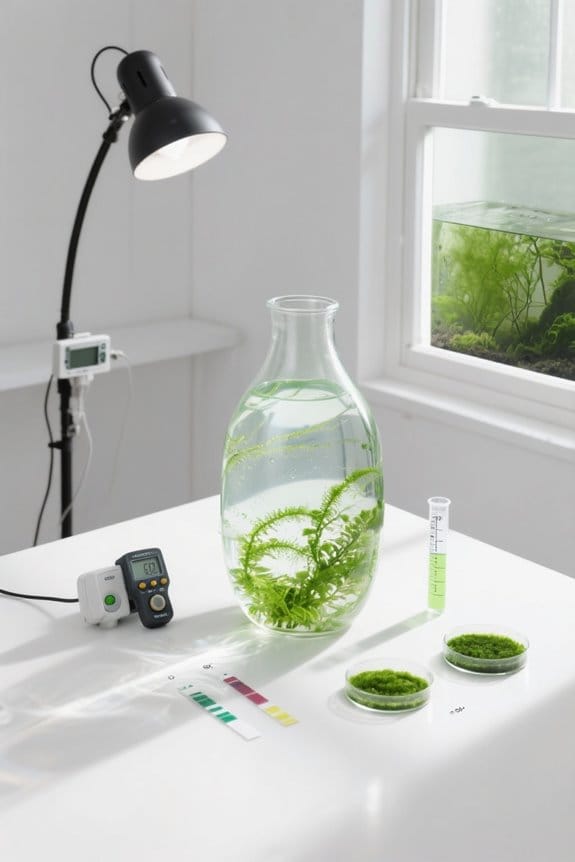
Test aquarium water daily for ammonia, nitrite, and nitrate levels when setting up new tanks. Once established, check weekly during fish introduction, then every 2-4 weeks. For mature tanks, reduce testing to monthly, emphasizing nitrate, pH, GH, and KH. Aim for ammonia and nitrite at 0 ppm and nitrate below 20 ppm for health. If signs of fish distress appear, return to frequent testing. Understanding these practices helps guarantee a favorable aquatic environment, leading to further insights.
Key Takeaways
- New tanks require daily testing for ammonia and nitrite levels to monitor cycling progress and prevent toxicity.
- Nitrate levels should be tested every 2-4 weeks in established tanks to keep them below 50 ppm for fish and plants.
- Regularly check pH, GH, and KH levels at least monthly in mature tanks to maintain stable aquatic conditions.
- Increase testing frequency if any signs of fish distress or illness are observed to quickly address potential problems.
- Once stable, mature tanks can typically be tested once a month unless any changes occur.
Importance of Testing Aquarium Water

While many aquarium enthusiasts may overlook the importance of regular water testing, it is crucial for maintaining a vibrant and healthy aquatic environment. Water quality directly impacts fish health; therefore, water parameters such as ammonia, nitrite, and nitrate levels must be monitored closely. Ideally, ammonia and nitrite should always register at 0 ppm, while nitrate levels should remain below 50 ppm for well-being and at least 20 ppm for plant growth. Use reliable test kits to check these levels frequently. Additionally, pH levels should range between 6.5-8.0. Monitoring water hardness and alkalinity is important, with GH around 4-8 dGH and KH above 3 dKH to maintain stability. Regular testing helps identify problems early, enhancing care and preventing stress among aquatic life. Consider using comprehensive testing kits like API Pondcare or 7-in-1 Test Kit to ensure optimal fish health.
Testing Methods for Accurate Results

Accurate water testing methods are essential for ensuring a healthy aquarium environment. Employ liquid test kits for reliable results, particularly for critical parameters such as pH, ammonia, and nitrite levels. These kits provide precise measurements important for maintaining water quality. Test strips, while convenient, allow for quick checks but might lack accuracy in critical situations. Test water daily in new tanks to monitor ammonia and nitrite levels during the cycling process until stabilization occurs. Following this, conduct regular water tests for nitrate levels every 2-4 weeks, ensuring they remain below 50 ppm to promote freshwater fish health. Additionally, when fish display signs of illness, test all water parameters immediately to identify potential quality issues that may affect their wellbeing. User-friendly options like Monitor Nitrite Test Kit and Aquarium Test Strips 9 in 1 are ideal for beginners who require straightforward testing processes.
Recommended Testing Frequencies for New Tanks

How often should water parameters be tested in a new aquarium? In a new tank, it is essential to test water on a daily basis for ammonia, nitrite, and nitrate. This helps prevent toxic buildup that can harm fish. During the initial setup and while introducing new fish, assess water parameters weekly or even more often. Utilizing test strips can simplify this process. Once the aquarium fully cycles and stabilizes, it is advisable to shift testing to every 2-4 weeks, with a particular focus on ensuring nitrate levels remain below 20 ppm. Additionally, if there are signs of illness, such as unusual swimming behavior or lack of appetite, test all relevant parameters immediately to diagnose and address potential problems swiftly. Frequent use of ammonia test kits supports proactive care for aquatic ecosystems, ensuring the health and safety of the aquarium inhabitants.
Adjusting Testing Frequency for Mature Tanks

As aquarists shift from new setups to mature tanks, it is essential to adjust water testing frequencies accordingly. For mature tanks, reduce water testing to once a month, provided parameters remain stable. Focus primarily on nitrate levels, as they can accumulate and threaten fish health if not managed. Continue to monitor pH, GH (General Hardness), and KH (Carbonate Hardness) monthly to guarantee ideal living conditions for aquatic life. Additionally, remain observant for visual signs of distress or illness in fish, as these may indicate potential water quality issues. If such signs arise, resume regular testing to maintain ecosystem balance. Remember, consistent observation combined with occasional checks is crucial for sustaining healthy aquariums. Regular testing can prevent invisible water issues, such as algae blooms and water quality problems, allowing aquarists to maintain a thriving environment for their aquatic life.
Common Parameters to Monitor

Understanding the critical parameters to monitor in an aquarium is essential for maintaining a healthy aquatic environment. In a freshwater aquarium, test ammonia and nitrite levels daily when new fish are introduced, as these toxins can spike rapidly during cycling. Regularly check nitrate levels, keeping them below 20 ppm for fish health; if they exceed 50 ppm, plant growth may suffer. Maintain stable pH between 6.5 and 8.0 to minimize stress for aquatic life. Monitor hardness by ensuring general hardness (GH) is within 4-8 dGH and carbonate hardness (KH) is at least 3 dKH. For mature tanks, test ammonia, nitrite, and nitrate every 2-4 weeks, alongside periodic evaluations of pH and hardness to sustain ecosystem balance. Consider using multi-parameter test strips for versatile monitoring and quick results to ensure the health of your aquarium.
Signs Indicating the Need for Increased Testing
When is it essential to ramp up water testing in an aquarium? Increased testing becomes vital when fish exhibit signs of illness, such as unusual behavior or visible distress—immediate water parameter evaluation can aid diagnosis. Furthermore, if healthy plant growth declines, withering leaves may suggest nutrient imbalances. In these cases, promptly test the water for nitrate levels to restore balance. Environmental changes, like sudden temperature fluctuations, also demand increased testing to protect aquatic life. In addition, when introducing new fish or plants, monitor for ammonia spikes as they acclimate. Finally, persistent algae blooms signal underlying nutrient issues, requiring regular testing of nitrate and phosphate levels to maintain a thriving ecosystem in your fish tank. For comprehensive assessments, selecting kits that test a variety of parameters can provide insights into various water quality aspects, allowing for timely corrective actions.
Frequently Asked Questions
How Often Should I Test Water in a New Tank?
In a new tank, testing should occur daily during initial cycling to monitor ammonia levels and nitrate spikes. Regular checks guarantee pH stability, while effective test kits are essential for maintaining ideal water parameters and guaranteeing fish compatibility.
How Long Can Water Sit in a Tank Before It Goes Bad?
Like a ticking clock, water quality degrades rapidly in unfiltered tanks; within 24 hours, the nitrogen cycle falters, risking fish health. Tank maintenance must guarantee proper chemical balance, filtration systems, and temperature to prevent algae growth.
What Are Common Mistakes in a New Aquarium Set Up?
Common mistakes in a new aquarium setup include neglecting the cycling process, choosing inappropriate tank size, mismatching fish compatibility, inadequate filtration system, poor substrate choice, and improper plant selection, all leading to ammonia spikes and algae growth.
How Often Should I Change the Water in a New Fish Tank?
In a new tank setup, water change frequency should be 10-15% weekly to maintain water quality, control ammonia levels, and reduce nitrate buildup. Following this practice supports fish health throughout the tank cycling process and maintenance schedule.