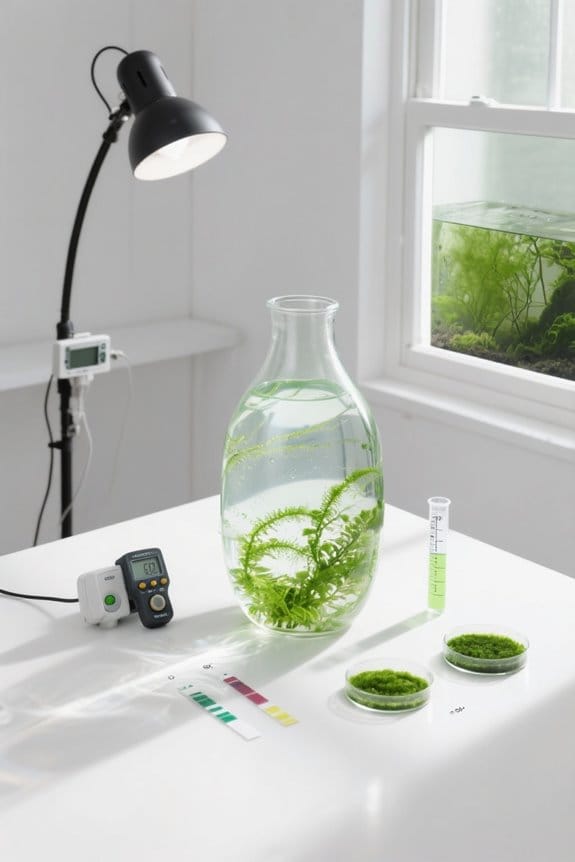
New aquariums often face water parameter issues, including unstable pH, KH, and GH levels. To avoid these problems, regularly test with high-quality kits weekly, targeting pH 6.5-8.0, KH 4-8 dKH, and GH 4-8 dGH. Conduct 10-20% water changes bi-weekly to reduce pollutants. Always treat tap water with conditioners to eliminate harmful chemicals. Gradually adjust any imbalances to prevent fish shock. By reinforcing these practices, enthusiasts can create a stable environment for their aquatic life. More guides await to enhance your aquarium experience.
Key Takeaways
- Ensure the aquarium is fully cycled before adding fish to avoid toxic ammonia and nitrite spikes.
- Regularly test water parameters weekly to monitor pH, ammonia, nitrite, and nitrate levels effectively.
- Use water conditioners to neutralize harmful chemicals when filling the tank with untreated tap water.
- Conduct 10-20% water changes every 1-2 weeks to manage pollutants and maintain stable conditions.
- Gradually adjust pH and hardness to prevent shock to fish during changes in water parameters.
Understanding Water Parameters: Ph, KH, and GH
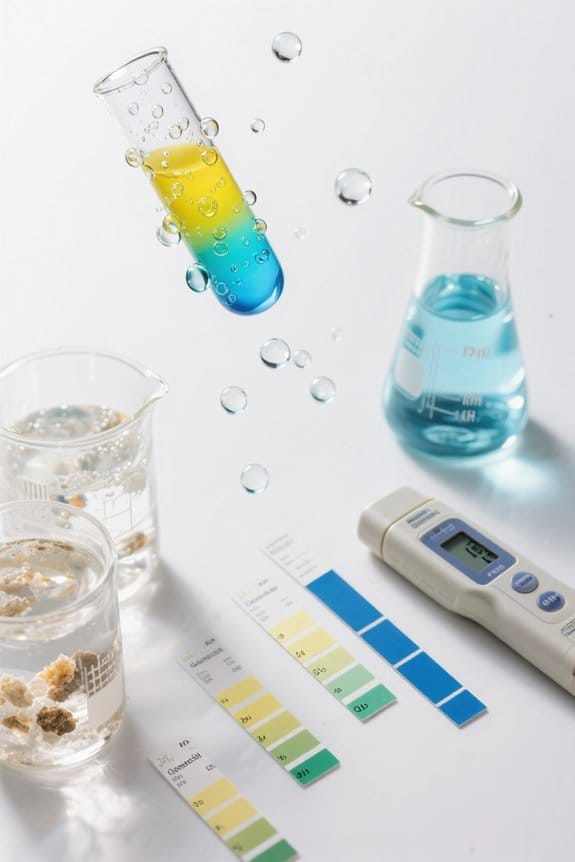
In aquarium management, understanding water parameters like pH, KH (Carbonate Hardness), and GH (General Hardness) is essential for maintaining a healthy environment for aquatic life. pH, which measures the acidity or basicity of water on a scale from 0 to 14, ideally sits between 6.5 and 8.0 for most freshwater fish; sudden changes can stress fish and other organisms, so it is vital to monitor this regularly. KH indicates the water’s buffering capacity, with ideal levels ranging from 4 to 8 dKH to prevent abrupt pH swings. GH measures calcium and magnesium concentration, with optimal levels between 4 to 8 dGH for fish health and plant growth. Adjustments should be gradual using methods like RODI-filtered water or crushed coral. For pipefish health, maintaining stable salinity and temperature is crucial, with salinity ideally between 1.020 and 1.025 specific gravity and temperatures between 74-78°F.
Importance of Regular Water Testing

Regular water testing acts as the backbone of effective aquarium management; hobbyists must prioritize this practice to safeguard the health of their aquatic life. Regular water testing enables the monitoring of vital parameters like pH, ammonia, nitrite, and nitrate, which can fluctuate considerably in new aquariums. Use high-quality test kits weekly to detect potential disruptions early. Toxic ammonia and nitrite levels can spike in uncycled tanks, posing serious threats to fish. Premium titanium alloy probes ensure precise measurements with error rates maintained below 2%, which is essential for accurate water quality assessment. Maintain a log of your readings, allowing for trend analysis and better understanding of water chemistry stability. This practice also assesses water changes and filtration efficacy, ensuring the aquatic ecosystem’s needs are met. Fundamentally, regular testing is key to preventing crises and maintaining a vibrant aquarium.
Strategies for Maintaining Stable Water Conditions

Maintaining stable water conditions is vital for the health of an aquarium’s inhabitants, as fluctuations can lead to stress and disease among fish. Regularly test water parameters, including pH, ammonia, nitrite, and nitrate, using high-quality test kits to guarantee consistency. It’s important to use test kits that can detect ammonia levels as low as 0.25 ppm for effective monitoring. Perform routine water changes of 10-20% every 1-2 weeks to dilute pollutants and replenish beneficial minerals. To avoid drastic water chemistry changes, condition new water to match your aquarium’s temperature, pH, and hardness before introducing it. Employ a filtration system suitable for your tank size and species, which effectively removes waste. Additionally, introduce new fish gradually, allowing beneficial bacteria time to adjust and stabilize against increased bioload, thereby minimizing the risk of ammonia spikes.
Common Mistakes in Water Quality Management
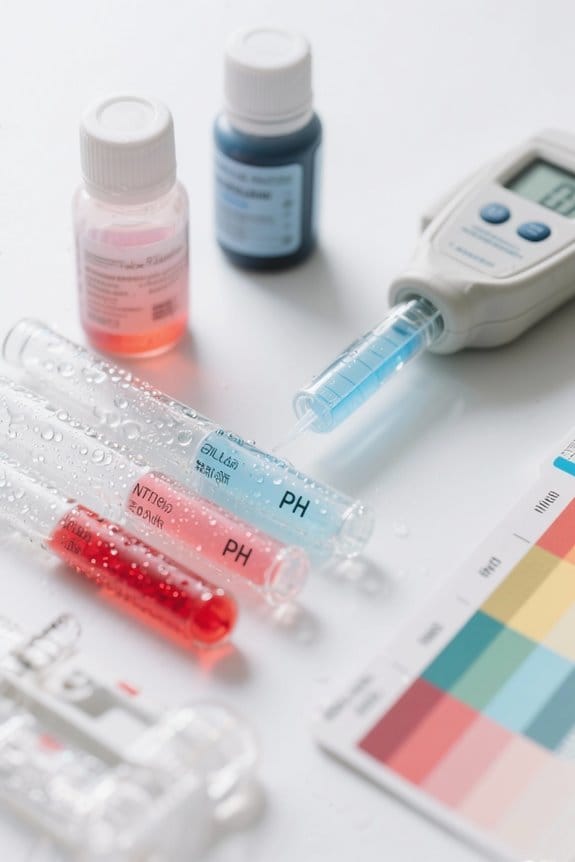
How often do inexperienced aquarists overlook critical steps in water quality management? Common mistakes include skipping the cycling process, which can lead to toxic ammonia and nitrite spikes, harming fish health. Additionally, using untreated tap water puts fish at risk due to harmful chemicals like chlorine; as a result, always use a dechlorinator to treat new water. Insufficiently monitoring water quality is another issue; testing pH, ammonia, nitrite, and nitrate weekly is essential for early detection of problems. Regular use of water conditioners is essential for maintaining fish health, with precise dosage guidelines crucial for effective application. Irregular water changes can stress fish, so commit to regular water changes of 10-20% every 1-2 weeks. Finally, avoid poor filtration systems by selecting appropriately sized filters and maintaining them regularly. Prioritizing these steps will create a stable aquatic environment.
Steps to Correct Water Parameter Issues

Addressing water parameter issues promptly is essential for maintaining a healthy aquarium environment. Regularly test water quality, including pH, ammonia, nitrite, and nitrate levels, at least once a week. This early detection allows for timely corrective actions. Use water conditioner products, such as Prime or Seachem Safe, to neutralize harmful chemicals like chlorine in tap water before adding it. Implement a consistent water change regimen, performing 10-20% bi-weekly water changes to stabilize parameters effectively. Gradually adjust pH and hardness using diluted solutions or buffering agents, avoiding sudden shifts that could shock aquatic life. Finally, monitor temperature closely; fluctuations can stress fish and disrupt beneficial bacteria vital for ecosystem health. For comprehensive monitoring, consider using API Freshwater Master Test Kit to ensure accurate testing of critical parameters.
Frequently Asked Questions
What Are Common Mistakes in a New Aquarium Set Up?
Setting up a new aquarium is like planting a garden; mistakes can stifle growth. Common errors include neglecting the cycling process, poor substrate selection, and inadequate equipment choices, all jeopardizing the aquatic environment’s stability and health.
Which Parameter Is Considered the Most Harmful to Fish in an Aquarium?
Ammonia toxicity is considered the most harmful to fish in an aquarium. Addressing pH imbalance effects and implementing nitrate buildup solutions are vital for maintaining a healthy environment and preventing devastating impacts on aquatic life.
How Long Does New Tank Syndrome Last in a Fish Tank?
New tank syndrome typically lasts from a few weeks to a couple of months. Effective tank cycling processes, proper fish acclimation techniques, and maintaining stable conditions are essential in minimizing risks during this challenging period.
What Should My Aquarium Water Parameters Be?
Ideal water parameters for aquariums include a pH of 6.5-8.0, 0 ppm ammonia, 0 ppm nitrite, nitrates below 20-40 ppm, and GH and KH between 4-8. Regular testing equipment facilitates necessary parameter adjustments for peak health.