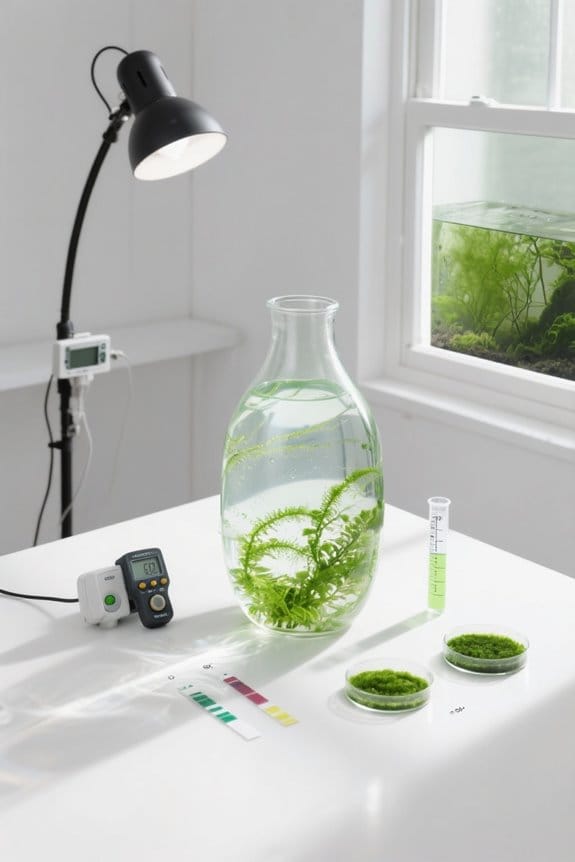
Aquarium water parameters are vital for fish health. Maintain a pH level of 6.5 to 7.5, using liquid test kits for regular checks. Guarantee KH (carbonate hardness) stays between 4 to 8 dKH to stabilize pH. Monitor GH (general hardness) levels, aiming for 4 to 8 dGH for peak growth. Regularly test ammonia and nitrate levels, keeping ammonia below 0.02 ppm and nitrates under 20 ppm. Implement 20-30% water changes three times a week for better water quality, and continue exploring these key aspects for a thriving aquarium.
Key Takeaways
- pH levels range from 0 to 14, with 6.5 to 7.5 ideal for most freshwater fish.
- KH stabilizes pH levels, and maintaining a range of 4-8 dKH prevents harmful fluctuations.
- GH measures calcium and magnesium; aim for 4-8 dGH for healthy fish growth.
- Monitor ammonia and nitrate levels regularly to avoid toxicity and promote a safe environment.
- Conduct weekly pH tests and monthly KH/GH assessments for optimal aquarium health.
Understanding Ph and Its Importance

The stability of pH in aquarium water is essential for the health and well-being of fish, reflecting both the environment’s balance and the significance of consistent care. pH measures how acidic or basic the water is on a scale from 0 to 14, where 7.0 indicates neutrality. Most freshwater fish thrive in a pH range of 6.5 to 7.5; consequently, regular testing is vital. Use liquid test kits or pH strips weekly to monitor for fluctuations that can compromise fish health. Abrupt pH changes stress fish, affecting respiration and digestion. Gradual water changes can help maintain stable conditions while substances like crushed coral can raise the pH. Ensuring the accuracy of pH test kits is crucial, as it allows for precise monitoring of water conditions to prevent stress and disease in aquatic life. Adhering to a maintenance routine will support the nitrogen cycle, ensuring a healthy aquarium environment.
Exploring KH (Carbonate Hardness)

Understanding KH, or carbonate hardness, is important for maintaining a healthy aquarium environment, as it plays a significant role in stabilizing pH levels. KH measures the concentration of bicarbonate and carbonate ions, essential for controlling pH swings. In a freshwater aquarium, ideal KH levels range from 4 to 8 dKH, offering sufficient buffering capacity to maintain stable conditions. Low KH can lead to harmful pH fluctuations, stressing fish and plants, while high KH tends to support species like African cichlids, which thrive in stable environments. Regular testing of KH is necessary; sudden changes can jeopardize tank health. Adjust KH using sodium bicarbonate to raise levels, or select natural substrates to lower carbonate concentrations, achieving a balanced environment. Consistent monitoring can optimize the frequency of replacements, contributing to long-term tank health.
Understanding GH (General Hardness)

General Hardness (GH) is a critical aspect of aquarium water chemistry, representing the concentration of calcium and magnesium ions. GH levels are measured in degrees of GH (dGH) or parts per million (ppm), with ideal settings for freshwater aquariums generally between 4 to 8 dGH. Fish health can suffer in low GH conditions, leading to slow growth and diminished appetites. While some species, like livebearers, thrive in hard water with GH levels of 12-20 dGH, softer water fish prefer lower levels. Utilize test kits to monitor GH regularly, ideally monthly, ensuring stable conditions. Frequent water changes can also help maintain the desired hardness, supporting the overall ecosystem and enhancing aquatic life wellness in your aquarium. Monitoring plant responses helps guide lighting adjustments, ensuring optimal health for aquatic plants within the aquarium ecosystem.
The Significance of the Nitrogen Cycle

As fish inhabit an aquarium, they produce waste that leads to the formation of toxic ammonia, making it crucial to grasp the importance of the nitrogen cycle. This cycle involves beneficial bacteria converting ammonia into nitrite and finally into nitrate. Ammonia levels above 0.02 ppm can endanger fish health, while nitrite toxicity increases above 1 ppm. Regularly testing water conditions using reliable test kits is imperative for maintaining a healthy ecosystem. Nitrate should be kept below 20 ppm to prevent algae growth and protect delicate fish. To assist in managing these nitrogen compounds, perform regular water changes and consider introducing live plants. Amazon Sword plants can improve water quality through natural filtration processes and enhance oxygen levels. Understanding KH and GH levels further contributes to stabilizing water parameters, essential for achieving a thriving aquarium environment.
Regular Monitoring and Testing Practices

Regular monitoring and testing of aquarium water parameters is essential for maintaining fish health and ensuring a balanced ecosystem. To safeguard freshwater fish, routinely test the pH level, aiming for a range of 6.5 to 7.5, along with KH between 4-8 dKH, and GH between 4-8 dGH. Test water weekly for pH stability, as fluctuations can stress fish. Monthly assessments of KH and GH support plant growth and fish development. It’s important to frequently check ammonia and nitrate levels, especially in new setups. Implement regular water changes—20-30% three times a week—to manage nutrient levels effectively and enhance overall water quality. By following these practices, aquarists can keep their aquatic environments thriving. Additionally, consider high-quality options for aquarium backgrounds, as durable, visually appealing materials can enhance both the aesthetic and the functionality of your aquarium environment.
Frequently Asked Questions
How Often Should I Change My Aquarium Water?
A typical water change frequency is 10-20% weekly for smaller tanks, adjusting based on nitrate levels, algae growth, and seasonal changes. Regular changes benefit fish health, improve clarity, and boost oxygen levels, considering tank size factors.
What Types of Test Kits Are Available for Beginners?
Beginners can utilize various test kits, including pH testing, ammonia levels, nitrite testing, and nitrate testing. Additional essentials include hardness kits, alkalinity testers, phosphate measurements, chlorine detection, oxygen level checks, and conductivity meters for thorough monitoring.
Can I Use Tap Water for My Aquarium?
Using tap water for an aquarium is possible, but one must consider tap water quality, chlorine levels, pH balance, and water hardness. Dechlorination options and filtration systems are essential for maintaining a healthy environment for fish species.
What Are Acceptable Temperature Ranges for Freshwater Fish?
Tropical fish thrive in warm, stable environments between 75-82°F, avoiding thermal shock. Coldwater species prefer 60-75°F. Heater installation and monitoring devices guarantee ideal conditions, promoting species compatibility and reducing stress amid temperature fluctuations in aquariums.
How Do Plants Affect Aquarium Water Parameters?
Plants positively influence aquarium water parameters through nutrient uptake, oxygen production, and nitrate reduction. They control algae growth, stabilize pH, modify water hardness, enhance biodiversity, improve aesthetics, and provide natural filtration, fostering a healthier environment.