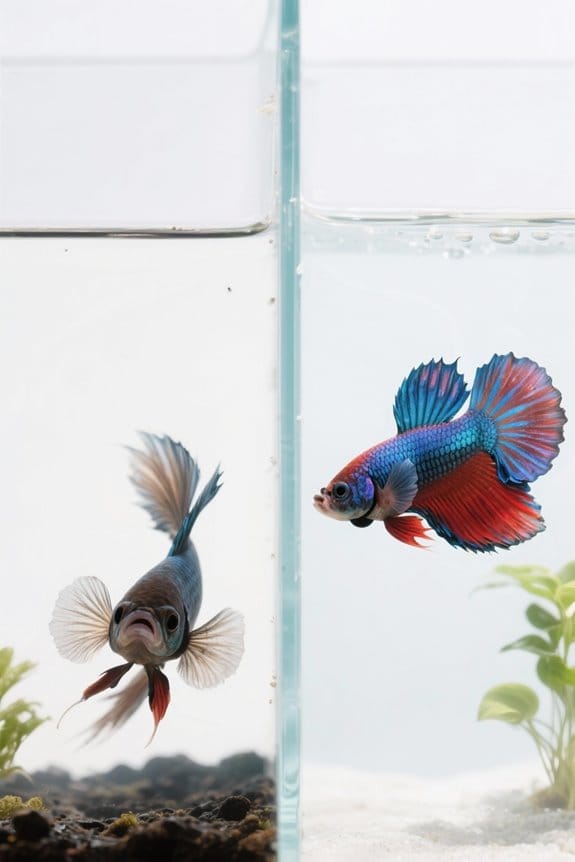
A beginner’s guide to betta fish care begins with choosing a minimum 5-gallon tank to guarantee a stable environment. Use a gentle filter and a reliable heater to maintain water temperatures of 75-80°F. Test and adjust water quality regularly, keeping pH levels between 6.5 and 7.5. Feed your betta high-protein pellets and remove uneaten food promptly. Acclimate new fish slowly to reduce stress. To understand the detailed steps for maintaining your betta’s health, explore further insights.
Key Takeaways
- Choose a tank size of at least 5 gallons to provide a stable environment and reduce stress for your betta fish.
- Maintain water temperature between 75°F and 80°F using a reliable heater, and regularly check with an aquarium thermometer.
- Perform regular water changes of 10-25% every 2-4 weeks and ensure proper water conditioning to maintain water quality.
- Feed high-protein betta fish pellets and provide dietary variety while promptly removing uneaten food to avoid water contamination.
- Acclimate new bettas slowly by floating them in their sealed bags and gradually mixing in tank water to prevent shock.
Understanding Betta Fish: Background and Characteristics

When exploring the world of betta fish, it becomes evident that they possess unique characteristics that make them fascinating pets. Known scientifically as Betta splendens, these Siamese fighting fish originate from Thailand, thriving in shallow waters. Distinctively, male betta fish are larger than female bettas and exhibit territorial behavior, necessitating solitary housing to prevent aggression. They display an array of vibrant colors and long fins, a result of modern breeding, unlike their drab ancestors. As labyrinth fish, they can breathe air from the surface, eliminating the need for an air pump, yet they still require careful attention to water quality and temperature. Properly cared for, bettas can live up to five years and reach about 2.5 to 3 inches in length. Feeding high protein content foods, such as those containing Black Soldier Fly Larvae, can enhance their vibrant colors and promote healthy skin.
Choosing the Right Aquarium Size for Your Betta

Choosing the right aquarium size for a betta fish is essential for ensuring its health and happiness. A minimum tank size of 5 gallons is recommended, as smaller tanks do not provide sufficient swimming room. While a 2-gallon aquarium may be acceptable, larger aquariums up to 10 gallons create a more stable environment. Stability is important for reducing stress and promoting the betta’s well-being. A spacious habitat also decreases aggression, especially in a community setting with potential tank mates. Consequently, investing in a gallon or larger tank is prudent to enhance your betta fish care experience. Keep an eye out for sales, as larger tanks are often available at reduced prices, making adherence to these guidelines more accessible. Additionally, integrating a submersible aquarium heater with an automatic shut-off mechanism can help maintain optimal water temperature and contribute to the overall health of your betta.
Essential Equipment for Betta Fish Care

Essential equipment plays a crucial role in maintaining a healthy environment for betta fish. Begin with a minimum tank size of 5 gallons, which provides ample space and reduces maintenance frequency. A reliable water heater is critical, keeping temperatures between 75-80°F, as bettas thrive in warmer conditions. Incorporate a gentle water filter that can process tank water 3-5 times per hour, avoiding strong currents that can stress the fish. Use a water conditioner to guarantee that tap water is dechlorinated, removing harmful substances. Additionally, add aquatic plants, either live or silk, to create hiding spots and enhance water quality. Furthermore, choosing a tank with effective lighting features can simulate natural cycles, promoting health and enhancing the aesthetic appeal of the tank. Finally, provide high-quality betta fish food, such as pellets or freeze-dried options, to meet their dietary needs and maintain overall health.
Water Quality and Preparation: Best Practices

Maintaining ideal water quality is a key aspect of betta fish care that directly influences their health and well-being. Tap water may not be safe initially, containing harmful toxins like chlorine; using a reliable water conditioner, such as Fritz Complete, is essential. Test pH levels, aiming for a range between 6.5 and 7.5 for best betta health. Implement regular water changes of 10-25% every 2-4 weeks, utilizing an aquarium filter to maintain clarity. Avoid complete water changes to preserve beneficial bacteria; a siphon vacuum is effective for removing waste during partial changes. Allow water to sit overnight before adding it to the tank, but remember that chloramine requires a conditioner for safe preparation. Regular ammonia testing is vital for accurate water quality monitoring, helping to prevent ammonia poisoning and ensure a healthy environment for your betta fish.
Maintaining Water Temperature: The Importance of Heaters

While betta fish enjoy warm environments, it is vital to monitor and maintain their water temperature within a range of 75°F to 80°F (24°C to 27°C). A heater is essential for achieving stable water temperatures, particularly since room temperatures can drop below this range, leading to lethargy and health issues in bettas. Select a heater that provides approximately 5 watts of power per gallon of water to guarantee proper heating. An adjustable heater with a built-in thermostat allows for accurate temperature control, reducing the risk of abrupt fluctuations that stress the fish. Regularly monitor the water temperature using an aquarium-safe thermometer to maintain optimum health, thereby fostering a thriving environment for your betta fish without strong currents that may disrupt them. Consider using explosion-proof quartz glass heaters to enhance safety and durability within the aquarium environment.
Creating a Suitable Habitat: Decor and Plants
A well-decorated aquarium greatly enhances the betta fish’s habitat, fostering their health and well-being. Include hiding places, such as caves or dense live plants, to reduce stress and replicate their natural habitat. Java fern and Anubias are excellent live plant choices, as they provide oxygen and improve water quality. If using plastic plants, select silk varieties with smooth edges to prevent fin tearing. Anubias Nana is recommended for beginners, growing between 4-6 inches tall, which makes it an ideal choice for a betta tank. Incorporate a substrate of 1-2 inches, like gravel or sand, to create a natural setting and support beneficial bacteria. Finally, rinse all decor items with lukewarm water before adding them to the aquarium, ensuring harmful residues are removed. This careful setup creates a thriving environment for betta fish.
Feeding Your Betta: Diet and Schedule
Feeding a betta fish requires attention to their specific dietary needs and habits, ensuring ideal health and vibrant colors. Use high-quality pellets or flakes specifically formulated for bettas, offering 1-2 pellets or flakes 1-2 times daily to meet their nutritional needs. Supplement their diet occasionally with freeze-dried or frozen treats like brine shrimp, daphnia, or bloodworms, adding variety and enhancing overall health. To prevent overfeeding, remove any uneaten food after a few minutes; excess food can lead to bloating and swim bladder issues. Given that a betta’s stomach is about the size of its eye, careful portion control is essential for maintaining a healthy digestive system and preventing obesity. Monitor their acceptance of new foods to adjust their diet accordingly. Premium fish meals serve as primary protein sources, supporting energy, growth, and overall vitality in bettas.
Cleaning and Maintenance: How to Keep Your Tank Healthy
Maintaining a clean and healthy tank for a betta fish involves regular upkeep to promote a vibrant aquatic environment. Perform water changes weekly, replacing 20%-40% in larger tanks, while smaller tanks may need a full 100% change every 2-3 days to prevent toxin buildup. Regularly test water parameters—like pH and ammonia levels—to guarantee they remain safe for your betta. When it’s time to clean the tank, use warm water only, avoiding soaps or detergents that can harm your fish. Employ a siphon vacuum for effective waste removal, assuring uneaten food and debris are cleared. Also, replace filter media as necessary, maintaining proper water flow for a healthy environment while minimizing stress on your betta fish. A well-fitted glass canopy can prevent evaporation and minimize water loss by up to 50%, contributing to a stable aquatic environment.
Acclimating Your New Betta Fish to Its Tank
Ensuring a smooth introduction for a new betta fish into its tank requires careful attention to detail. First, turn off the tank lights to reduce stress during the acclimation process. Next, float the sealed bag or cup containing the betta in the aquarium for about 15 minutes to equalize the water temperature. Then, gradually mix small amounts of aquarium water into the bag over 5-10 minutes to help the fish acclimate. After this, use a soft fish net to gently remove the betta, avoiding contaminants from the original water. Finally, transfer the betta into its new home and observe it for about 15 minutes before turning the lights back on, checking for any signs of stress or discomfort. Additionally, maintaining optimal flow rates ensures a healthy environment for the betta and supports their overall well-being.
Monitoring Betta Health: Signs of Illness and Care Tips
Monitoring a betta fish’s health is vital for maintaining its well-being and longevity. Healthy bettas display bright coloration and active swimming patterns. Conversely, signs of illness include dull colors, lethargy, and decreased appetite, necessitating immediate attention. Regular water changes are important; they mitigate poor water quality that can lead to stress and illness. Pay close attention to abnormal fin behavior or clamped fins, as these symptoms may indicate underlying disease. Bettas are prone to parasitic and bacterial infections, often treated with aquarium salt or medications like Melafix. When introducing new bettas, acclimate them slowly to avoid shock, as rapid changes can disrupt their health. By observing these guidelines, one can guarantee a thriving betta environment. Ensure that betta fish pellets have at least 40% protein to support growth and overall health.
Frequently Asked Questions
How to Take Care of a Betta Fish for Beginners Step?
To care for a betta fish, maintain a suitable tank size with hiding spots, monitor water temperature, establish a feeding schedule, perform regular water changes, observe behavior, and verify compatible tankmates to prevent health problems.
What Do You Need for a Betta Fish for the First Time?
What essentials are necessary for a betta fish? A minimum tank size of 5 gallons, proper water temperature, filtration system, suitable substrate, engaging decor options, a feeding schedule, compatible tank mates, and a diligent maintenance routine guarantee health monitoring.
What Do Betta Fish Like in Their Tank for Beginners?
Betta fish thrive in a spacious tank with soft décor, ideal water temperature of 76°F to 82°F, silk plants, gentle filters, proper substrate, adequate lighting, and peaceful companions, while avoiding stress factors for best well-being.
How to Set up a Betta Tank for Beginners?
To set up a betta tank, choose a minimum 5-gallon size, include a gentle filtration system, maintain water temperature at 75-80°F, select appropriate substrate, provide safe decor, and establish a consistent maintenance schedule and feeding routine.