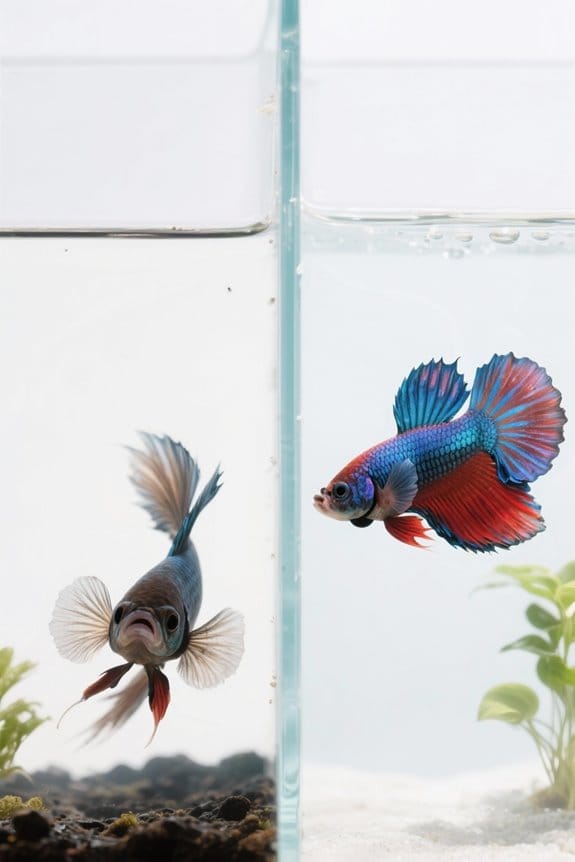
To improve betta fish digestive health, implement a weekly fasting day, ideally on Sunday. This practice enhances digestive function and prevents issues like constipation, ensuring a cleaner tank by reducing uneaten food. Monitor your betta for signs of bloating or decreased appetite, indicating a need for fasting. After fasting, introduce food gradually, starting with 3-4 pellets. This approach promotes effective digestion and nutrient absorption, setting the stage for a healthier aquatic environment. More details follow.
Key Takeaways
- Designate a fasting day each week, like Sunday, to reset your betta’s digestive system and promote overall health.
- Observe your betta for signs of bloating or decreased appetite, indicating a need for a fasting day.
- Maintain a clean tank environment by eliminating uneaten food, which fasting helps achieve.
- Gradually reintroduce food post-fast, starting with small portions to assess digestive response.
- Monitor water conditions closely during fasting, ensuring stable temperatures and quality to reduce stress.
Benefits of Fasting for Betta Fish

Fasting, even just one day each week, can markedly enhance the health of betta fish. This practice promotes better digestive health by allowing their systems to reset, which helps prevent constipation and bloating. By eliminating uneaten food from the tank, fasting maintains a cleaner environment, vital for the betta’s overall wellbeing. Additionally, a scheduled fasting day supports ideal nutrient absorption, especially when paired with a balanced diet of high-quality pellets like New Life Spectrum or Hikari. Bettas can safely go without food for up to 14 days, making fasting an effective, manageable technique for maintaining health. Incorporating fasting into their feeding routine guarantees bettas thrive, mitigating risks associated with overfeeding while enhancing their digestive efficiency. Maintaining stable water parameters such as pH and temperature is also crucial for fish health and should be aligned with any dietary practices.
Recommended Fasting Schedule

To guarantee ideal health for betta fish, it is essential to establish a consistent fasting schedule. Designate one day each week, usually Sunday, for fasting. This practice promotes effective digestion and prevents constipation, enhancing overall digestive health. Observe your betta fish closely during fasting days; ideally, they should display interest in food without appearing bloated or uncomfortable. It’s recommended to fast every 7-10 days, as necessary, depending on your betta’s dietary needs and weight condition. After the fasting period, gradually reintroduce food in smaller portions, starting with a pinch to avoid overfeeding. Visit your local pet store for high-quality food, ensuring the health and happiness of your betta. Following this simple schedule can greatly improve your fish’s well-being. Consider incorporating nutritionally balanced foods to minimize waste and maintain a cleaner environment in the tank.
Signs Your Betta Needs a Fasting Day

When observing your betta fish, several clear indicators may suggest the need for a fasting day. If the betta has a visibly swollen belly or displays signs of bloating, this may indicate digestive issues requiring immediate attention. Furthermore, a decrease in appetite, shown by a lack of interest in food, can signal the necessity for a fasting day to support proper digestion and prevent constipation. Additionally, if your betta has recently been overfed, which leads to uneaten food lingering in the tank, implementing a fasting day can help reset its digestive system. Finally, frequent lethargy or reduced swimming activity may also warrant a fasting day to improve overall health and promote natural digestive processes in your betta. Consider that higher protein content in betta foods, such as those with 40% protein from sources like Black Soldier Fly Larvae, contributes to vibrant colors and healthy skin, supporting overall digestive health.
Maintaining Optimal Tank Conditions During Fasting

Creating a suitable tank environment during a betta’s fasting period is crucial for maintaining its health and well-being. To achieve ideal tank conditions, maintain a stable water temperature between 76°F and 82°F; this supports metabolic function. Make certain water quality is measured regularly, with pH levels between 6.5 and 7.5, as fluctuations can stress your betta. Conduct routine water changes of 20%-40% to keep the environment clean, removing uneaten food particles that could lead to issues. Foster a low-stress environment by minimizing disturbances and providing hiding spots, helping your betta feel secure. Additionally, use aquarium salt at recommended levels, as it can help reduce stress and promote healing during fasting, consequently enhancing overall well-being. When setting up the tank, consider using suction cups or mounting options to ensure heaters are securely installed, providing a safe and cozy environment for your betta.
Post-Fasting Feeding Guidelines

After the fasting period, it’s important to approach feeding thoughtfully to guarantee the betta’s digestive system adjusts smoothly. Begin by offering 3-4 pellets to assess the betta fish’s appetite and digestive response. Gradually increase the number of pellets by 1-2 daily, ensuring not to exceed 5-8 pellets total within a day. Monitor your betta for any signs of distress or bloating after reintroducing food, adjusting amounts as necessary to prevent overeating. Feed your betta high-quality foods, such as North Fin Betta Bits or occasional live treats, to enhance nutrients and support digestive health. Consistently follow feeding schedules to reinforce proper eating habits, further aiding in your betta’s overall well-being post-fasting. Incorporating natural driftwood into your betta’s aquarium can help maintain optimal water quality and provide a comfortable habitat, further supporting their digestive health.
Frequently Asked Questions
Is Fasting Good for Betta Fish?
Fasting benefits betta fish by improving digestion, promoting overall fish health, and preventing bloating. A regular feeding frequency, including fasting days, aids in effective aquarium maintenance, ensuring ideal well-being for these vibrant aquatic creatures.
How Long Should You Fast a Bloated Betta?
In the domain of aquatic care, a bloated betta might benefit from a fasting duration of 1-3 days. Observing betta behavior and symptom identification guides effective feeding techniques, ensuring health recovery and ideal bloating relief thereafter.
Can a Betta Go Three Days Without Food?
Yes, a betta can go three days without food. This fasting benefits fish health by helping maintain nutritional balance, alleviating digestive issues, and promoting a proper betta diet, ensuring ideal digestion and overall well-being.
Is Fasting Good for Aquarium Fish?
Fasting acts like a gentle tide for aquarium fish, offering numerous benefits. Regular fasting frequencies enhance betta health, boost fish digestion, and positively influence betta behavior, leading to improved overall well-being in aquatic ecosystems.