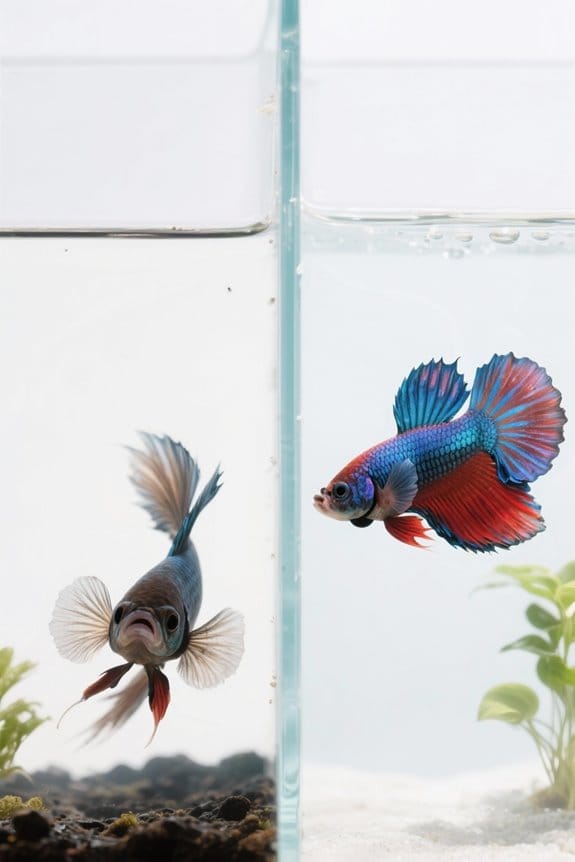
Betta fish are aggressive, especially males, requiring careful selection of tank mates. Suitable companions include Ember Tetras, which thrive in groups of five to six, and Cory Catfish, kept in groups of three to six. Avoid aggressive or territorial fish like Tiger Barbs, Cichlids, and Angelfish, which can harm bettas. Maintain stable water conditions (pH 6.5-7.5, temperature 78-82°F) and observe behavior during introductions. For more tips on creating a harmonious community tank, continue exploring.
Key Takeaways
- Safe tank mates for bettas include Ember Tetras, Harlequin Rasboras, Cory Catfish, Kuhli Loaches, and Mystery Snails.
- Avoid adding Tiger Barbs, Cichlids, Angelfish, Goldfish, and nippy Tetras to a betta’s tank.
- Female bettas can live in sororities, while male bettas should not share tanks with other males.
- Monitor fish behavior closely during introductions to ensure compatibility and prevent stress.
- Maintaining stable water conditions and providing dense plant cover helps create a harmonious tank environment.
Understanding Betta Fish Behavior

Understanding Betta fish behavior is essential for anyone looking to create a harmonious aquarium environment. Betta fish, particularly male bettas, are known for their aggressive and territorial nature; consequently, careful introductions to tank mates are imperative. A male betta fish should never share a tank with another male, while female bettas can coexist in sororities if managed properly. Behavior monitoring is crucial during these introductions, as stress manifests in flaring and hiding. Choosing compatible species reduces stress and promotes healthy tank dynamics. A well-planned community tank, featuring suitable tank mates, can enhance social interaction and enrich a betta’s environment, ultimately leading to a thriving aquarium. Always prioritize the individual needs and behaviors of all fish in the tank. Incorporating natural aquarium decoration can further reduce stress for bettas by mimicking their natural habitat, providing hiding spots, and enhancing the overall aesthetic of the tank.
Best Tank Mates for Betta Fish

When selecting the best tank mates for betta fish, it’s essential to take into account compatibility and behavior. Great tank mates include small schooling fish like Ember Tetras, which thrive in groups of five to six, enhancing the community dynamic. Harlequin Rasboras, another peaceful option, grow to 2 inches and also enjoy swimming in schools. For the tank bottom, consider Cory Catfish, requiring groups of three to six for effective scavenging. Kuhli Loaches, at about 3.5 inches long, are excellent bottom-dwellers, scavenging for uneaten food. Additionally, a mystery snail serves as a beneficial algae eater, helping maintain tank cleanliness. These betta fish companions not only coexist safely but also contribute to a vibrant, healthy aquarium environment. When considering tank setup, ensure you have a temperature range between 72°F to 78°F, as it is ideal for many aquatic species, including Harlequin Shrimp, to thrive.
Fish to Avoid for Betta Compatibility

To create a harmonious environment for betta fish, it is essential to avoid certain species that can disrupt their peace and safety. Never include Tiger Barbs in a betta fish tank; their fin-nipping behavior can seriously injure bettas. Cichlids are also unsuitable due to their territorial nature, posing aggression risks. Likewise, Angelfish exhibit aggressive behavior that can lead to conflict in a community betta tank. Avoid Goldfish, as they thrive in cooler water, creating harmful temperature discrepancies. Nippy Tetras, such as Serpae and Black Skirt Tetras, can stress bettas with their aggressive tendencies. Apistogramma cichlids, known for their territorial behavior during breeding, are also not recommended as tank mates for bettas. Consider only gentler schooling fish as tank mates for betta. Ensuring compatibility is crucial for maintaining a peaceful aquatic environment rich in live plants and safe interactions.
Creating a Community Tank Environment

Creating a community tank for betta fish requires careful selection of tank mates to guarantee compatibility in water parameters, temperament, and size. Start by choosing the best tank mates known for their peaceful nature, such as Ember Tetras and Cory Catfish. These species should be kept in a school of at least five to six fish, creating a dynamic environment that eases the betta’s stress. Ascertain the small aquarium is well-planted with a heavy planted tank setup, which enhances aesthetics and mimics natural habitats. Focus on maintaining stable water conditions for all inhabitants. Mystery snails are peaceful tank mates that can coexist well with bettas, contributing to a harmonious aquarium. By prioritizing species with distinct nature and easily care, you promote a thriving community tank environment that benefits both the betta and its companions.
Monitoring and Maintaining Tank Dynamics

Monitoring the dynamics of a betta fish tank is essential for maintaining a peaceful and healthy environment. Regularly observe fish behavior to spot signs of stress or aggression, especially during initial introductions, which should be monitored for at least 72 hours. Guarantee water parameters—such as pH levels between 6.5 and 7.5, temperature around 78-82°F, and hardness of 5-15 dGH—are consistent for all tank mates. Adjust feeding routines by offering varied diets to minimize competition. Maintain the cleanliness of the tank, checking the aquarium filter and conducting water changes as needed. Stay vigilant about population growth, particularly with live-bearing species like guppies, to prevent overcrowding and disruptions in tank dynamics. Regular inspections and cleaning of equipment, as emphasized in air line management, can also help in maintaining a healthy aquarium environment. Monitor interactions closely to guarantee harmonious coexistence.
Frequently Asked Questions
What Tank Mates Should Betta Fish Avoid?
Betta fish should avoid aggressive fish, fin nippers, and territorial species. Additionally, brightly colored fish, large fish, and too many fish can cause stress. Small, peaceful community members or the same species are safer alternatives.
What Is the Shocking Truth About Betta Fish?
In a vibrant underwater kingdom, the betta fish demands careful stewardship; its colors fade without proper tank conditions. Understanding betta behavior, aggression, and needs is essential for vibrant health, ensuring a long, harmonious life in its habitat.
What Betta Fish Can You Not Put Together?
Male betta fish cannot be housed together due to aggressive species behavior, while aggressive larger fish or fin-nippers stress them. Peaceful options may vary based on gender differences, color variations, and fish compatibility in suitable tank sizes.
What Is Toxic to Bettas?
Betta fish are vulnerable to toxins from chemical exposure, harmful plants, and aggressive species. Poor water quality, high pH levels, and unsuitable medications also contribute to stress factors, leading to dietary concerns and health issues.