
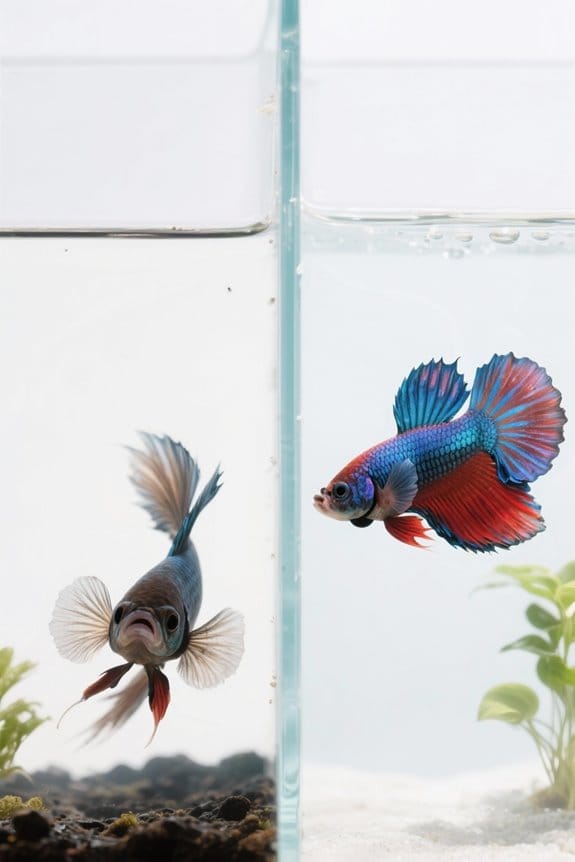

To determine if a betta is stressed or happy, observe its colors, fins, and behavior. Vibrant colors indicate health, while faded hues suggest stress. Check fin condition; clamped fins can signal poor water quality. Assess activity levels and eating habits; a happy betta swims and eats enthusiastically. Inactivity or hiding may indicate distress. Pay attention to abnormal swimming patterns as well, as these can signify discomfort. Understanding these signs will enhance your betta’s quality of life.
Key Takeaways
- Healthy bettas display vibrant colors, while faded hues often indicate stress or potential health issues.
- Active swimming and interaction with the environment suggest happiness; lethargy and excessive hiding indicate stress.
- Clamped fins can signal stress from poor water quality; healthy fins are long and flowing.
- Enthusiasm during feeding is a sign of well-being; refusal of food for over a day indicates possible stress or illness.
- Providing hiding spots and a varied environment enhances betta happiness and reduces stress levels.
Observing Color Changes in Bettas

How can observing color changes in bettas provide insights into their health and well-being? Healthy bettas typically showcase vibrant colors—deep blues, rich reds, and vivid greens. However, when a betta experiences environmental stress, such as poor water quality or fluctuating temperatures, its colors may fade, indicating a need for immediate attention. Regularly observing these color changes is crucial; dull hues often signal health issues. Conversely, when a betta experiences contentment and happiness, its colors may intensify, reflecting peak well-being. As a result, monitor your betta’s coloration frequently; doing so can help detect early signs of stress and guarantee your fish remains vibrant and healthy. Quick interventions based on color observations can greatly enhance your betta’s quality of life. Incorporating a high-quality needle valve in your aquarium setup can help maintain stable CO2 levels, potentially reducing stress factors for your betta and promoting a healthier environment.
Evaluating Fin Condition

Evaluating the condition of a betta’s fins provides important insights into its health and overall well-being. Healthy fins are typically long, flowing, and spread out while swimming. In contrast, clamped fins often indicate stress due to factors like poor water quality or environmental disturbances. Inspect for torn or damaged fins, which may result from aggression by tank mates or sharp decorations. The texture and color of the fins are also vital; vibrant color and a smooth surface signal a healthy betta. Regularly observe fin behavior while swimming for signs of abnormal movements, as these can reveal underlying health issues. Maintaining ideal tank conditions is essential for preserving the betta’s fin condition and overall happiness. Fish foods with high levels of vitamins and minerals can enhance fish health and contribute to vibrant fin coloration.
Assessing Activity Levels

Activity levels in a betta aquarium serve as essential indicators of its health and emotional well-being. A healthy betta fish will swim normally throughout its tank, showcasing curiosity and confidence by flaring its fins. Active bettas engage with their owners, often swimming to the glass in anticipation of interaction or feeding. In contrast, if a betta appears lethargic, spending excessive time at the bottom or hiding among decorations, it may indicate stress or health issues. Monitor for prolonged inactivity or clamped fins, as these signs warrant immediate attention. Confirm the tank size is appropriate—at least 5 gallons is ideal—for promoting active behavior. Prioritize providing a stimulating environment to support a good activity level. Incorporating adjustable flow features into the tank setup can help simulate natural currents, enhancing the betta’s environment and encouraging active behavior.
Monitoring Eating Habits

Monitoring a betta’s eating habits is essential for evaluating its health and overall well-being. Healthy bettas enthusiastically swim towards food, demonstrating excitement during feeding. If a fish might ignore food for over one or two days, it may indicate stress or health issues, often related to poor water quality. To make your betta thrive, offer a varied diet, including high-quality pellets and occasional treats such as bloodworms or brine shrimp to stimulate appetite. Observe how quickly the betta consumes its food; ideally, meals should be finished within a few minutes. Overfeeding can lead to digestive complications, so provide appropriate portion sizes and avoid leaving residual food in the tank to maintain ideal health and fin behavior. Additionally, ensure you are providing high protein content flake foods, as they promote vibrant colors and healthy skin in your betta.
Identifying Inactivity and Hiding Behavior

A betta that frequently hides or remains inactive can signal underlying issues affecting its well-being. Inactive bettas often sit at the bottom of the tank, indicating potential stress or poor water quality. A healthy betta, in contrast, typically swims actively, exploring its environment. If a betta is hiding consistently, it may be experiencing environmental stress due to unsuitable water conditions or insufficient tank stimulation. Observing clamped fins or a lack of interest in food alongside hiding behavior can further suggest health concerns. Monitor your betta regularly, noting changes in activity levels. Address any identified stressors promptly to maintain ideal conditions, including checking water parameters like pH and ammonia levels, ensuring the habitat supports a healthy lifestyle for your betta. In addition, ensuring your aquarium has stable water conditions is vital for the overall health and happiness of your betta, similar to the care requirements for cherry shrimp.
Watching for Abnormal Swimming Patterns
Observing abnormal swimming patterns is vital for understanding a betta’s health status. Healthy bettas glide gracefully, but signs of struggle—such as erratic movements or clamped fins—indicate potential stress. Monitor swimming behavior regularly, as prolonged inactivity at the tank’s bottom or excessive hiding can signal poor water quality impacting the fish’s well-being. Watch for sideways movements or difficulty maintaining buoyancy, as these abnormal swimming patterns may reflect an underlying health issue needing immediate attention. Additionally, if the betta exhibits flashing behavior, it might be reacting to irritation from poor water conditions or parasites. By staying vigilant and addressing these behaviors promptly, tank owners can guarantee a healthier environment for their bettas. When assessing water quality, using a 4 in 1 TDS Meter can provide rapid and accurate measurements to ensure the aquatic environment remains safe and conducive for your betta’s health.
Recognizing Signs of Stress or Illness
How can one discern whether a betta is experiencing stress or illness? A stressed or unhealthy betta often shows dull or faded colors, indicating potential environmental distress. Watch for clamped fins, where the betta keeps its fins close to its body; this can signal high ammonia levels or lurking parasites. Prolonged lethargy, such as frequent bottom-sitting or excessive hiding, may reflect poor water quality or health issues. In addition, observe the betta’s eating habits; a refusal to eat for over a day suggests underlying problems. Finally, monitor abnormal swimming patterns, like flashing against tank walls or struggling to swim, as these behaviors indicate discomfort or health concerns that fish require proactive investigation. Ensuring your betta is fed high-protein sources and natural color enhancers can help maintain vibrant coloration and overall health.
Importance of a Healthy Environment
Creating a healthy environment is essential for the well-being of bettas, as their health and happiness greatly depend on their surroundings. To keep your betta thriving, provide a minimum of five gallons of tank water, ensuring it is clean and well-filtered. Maintain a consistent water temperature between 76°F and 82°F (24°C to 28°C), as fluctuations can stress them and weaken their immune system. Establish good water quality by performing regular water changes and incorporating beneficial bacteria to help prevent certain diseases. Adjustable temperature ranges from 59°F to 93°F found in many aquarium heaters can help maintain optimal conditions for your betta. Include hiding spots and enrichment objects in the aquarium to reduce stress and give your betta security. By adhering to these guidelines, you create a comfortable space for your betta, promoting their overall happiness and health.
Frequently Asked Questions
Is My Betta Happy or Stressed?
Determining a betta’s happiness involves observing its swimming patterns, social interactions, and feeding habits. A lively betta displays vibrant colors, unruffled fins, while signs of stress manifest in lethargy and avoidance of tank conditions or triggers.
What Do Betta Fish Do When They’re Happy?
When betta fish are happy, they exhibit vibrant color changes, engage in tail flaring, create bubble nests, display active swimming patterns, enthusiastically show positive feeding habits, and interact socially, indicating their comfort and well-being.
How Do You Calm a Stressed Betta Fish?
To calm a stressed betta fish, guarantee a proper tank setup with stable water temperature, appropriate lighting, compatible tank mates, an established feeding schedule, and ample environmental enrichment to promote comfort and security in its habitat.
What Does an Unhealthy Betta Look Like?
An unhealthy betta exhibits faded colors, clamped fins, and lethargic behavior. It may show unusual swimming patterns, abnormal eating habits, and excessive hiding, indicating potential distress or health problems requiring immediate attention.


