Every beginner aquarium kit requires essential equipment for success. Start with a reliable aquarium filter, such as a canister or hang-on filter, to maintain water quality. Add a heater rated at 5 watts per gallon to keep the temperature stable between 74-80°F. Use a high-quality water conditioner to remove harmful chemicals from tap water. Choose suitable substrate, like gravel or sand, and include cleaning tools such as a gravel vacuum. Explore further to discover additional tips and tools for your aquarium setup.
Key Takeaways
- Aquarium Filter: Essential for maintaining water quality and should process the tank’s volume 4-5 times per hour for optimal performance.
- Aquarium Heater: Required to maintain a stable temperature of 74-80°F; choose one rated at 5 watts per gallon for efficiency.
- Water Conditioner: Crucial for treating tap water by eliminating harmful chemicals like chlorine and ammonia during setup and water changes.
- Substrate: Recommended at 1 pound per gallon; choose gravel or sand to support plant growth and enhance aquascaping.
- Cleaning Tools: Include a gravel vacuum for waste removal and an algae scraper to keep the aquarium glass clear.
Key Equipment for a Successful Aquarium Setup

To establish a thriving aquarium, one must prioritize essential equipment designed to guarantee ideal conditions for aquatic life. An aquarium filter is vital for maintaining water quality; consider a hang-on power filter for smaller tanks or a canister filter for larger setups. Next, install an aquarium heater, sized at 5 watts per gallon, to keep water temperatures between 74-80°F. Use a high-quality water conditioner to eliminate harmful chemicals from tap water, especially during initial setup and water changes. Select appropriate substrate, such as gravel or sand, at 1 pound per gallon to support plant growth. Finally, have cleaning tools on hand, like a gravel vacuum for efficient debris removal and algae scrapers to maintain crystal-clear water, ensuring a healthy environment for fish. Consider using a Tetra Whisper IQ Power Filter to ensure quiet and efficient filtration for tanks up to 45 gallons, as it operates under 40 dB and has a self-priming motor for easy startup.
Essential Maintenance Tools

Maintaining an aquarium requires a set of tools that support ongoing water quality and overall tank health. A gravel vacuum is essential for siphoning debris and waste from the substrate during water changes, ensuring ideal conditions. Use an algae scraper or pad to clear algae buildup on glass surfaces, enhancing visibility. An aquarium thermometer allows for accurate readings of water temperature, which should ideally stay between 74 to 77 degrees Fahrenheit for most freshwater fish. Employ multi-test strips or liquid test kits to regularly check ammonia, nitrite, nitrate, and pH levels, critical for evaluating tank health. Finally, an aquarium net is necessary for safely catching fish during maintenance, and having two nets simplifies the process, reinforcing ease of handling in a beginner aquarium. It’s also crucial to select an aquarium heater thermostat that matches the size of your tank, ensuring that the water temperature remains stable and suitable for your aquatic life.
Water Quality Management Supplies

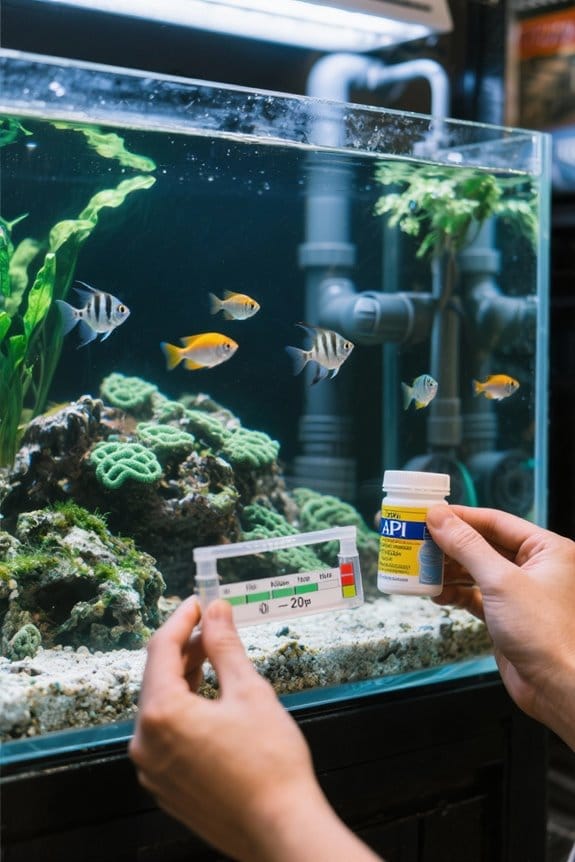
Water quality management supplies form the backbone of a healthy aquarium and are essential for maintaining an ideal living environment for fish. Start with a high-quality water conditioner to eliminate harmful substances like chlorine, ammonia, and heavy metals, guaranteeing safe water for your aquatic life. Regularly utilize test kits, such as the API Fresh Water Master Testing Kit, to monitor levels of ammonia, nitrite, and nitrate. Maintaining water quality requires conducting partial water changes every 1-2 weeks to reduce waste. Additionally, during the cycling phase of your aquarium, consistently check parameters to avoid toxic spikes. Liquid reagent kits provide more accurate results than test strips, making them a reliable choice for monitoring essential parameters. Continued monthly assessments of water quality will help guarantee a stable environment, supporting fish health and enhancing overall aquarium maintenance.
Heating and Temperature Control Devices

Creating a stable environment for tropical fish requires careful attention to heating and temperature control devices. Select a heater rated at 5 watts per gallon to maintain the ideal temperature range of 74 to 80 degrees Fahrenheit. Choose heaters equipped with built-in thermostats; these promote accurate temperature regulation and prevent overheating, essential for maintaining temperature stability. Regularly check heater displays for accuracy, as unreliable readings can lead to fluctuating temperatures that stress fish and compromise aquarium health. Additionally, use glass thermometers placed inside the tank for easy monitoring and accurate readings of water temperature. Consistent temperature control is important for fish wellbeing, as sudden changes can adversely affect their health and overall quality of life in the aquarium. It’s crucial to have user-friendly design features such as large backlit displays and one-button operations to enhance ease of use when monitoring and regulating the aquarium environment.
Filtration System Options

An effective filtration system is essential for sustaining a healthy aquarium environment, complementing the heating and temperature control measures previously discussed. Beginners can choose from several options, including canister filters for larger tanks and convenient hang-on filters for smaller setups. Sponge filters offer both mechanical and biological filtration, making them particularly suitable for novice aquarists. Biowheel hang-on filters elevate biological filtration, promoting beneficial bacteria growth to break down harmful ammonia. Regular maintenance is critical; clean or replace filter media every 4-6 weeks to prevent clogs. Choose a filter with appropriate flow rates, ideally processing the tank’s total volume 4-5 times per hour. This guarantees peak water quality and keeps the tank clean, benefiting the fish. For aquarists with larger setups, canister filters with heaters provide efficient multi-stage filtration and temperature control, ensuring optimal water conditions.
Decorations and Aquascaping Essentials
Decorations and aquascaping elements play a critical role in shaping both the aesthetic appeal and the functional aspects of an aquarium. To create a natural environment, integrate decorations like driftwood and rocks, which provide hiding spots and territorial boundaries for fish. Choose a suitable substrate, such as smooth gravel or aquarium sand, to support plant growth and enhance your aquascape’s overall look. Incorporate a mix of tall plants for visual appeal and shorter plants for ground coverage; this promotes depth and invites exploration. Always rinse all decorations thoroughly to eliminate dust and residues that could harm aquatic life. Ascertain that all decorations and plants are aquarium-safe and non-toxic to safeguard your fish’s health effectively. Driftwood can also lower pH levels due to tannin release, so it’s important to monitor water parameters regularly to ensure the well-being of your aquatic life.
Frequently Asked Questions
What Is Fish Tank Syndrome?
Fish Tank Syndrome, a delicate plight for aquatic life, arises from inadequate water quality during tank cycling, leading to stress and disease. Effective filtration systems, proper fish care, and mindful habits can prevent such misfortunes.
What Is the Best Fish Tank Setup for a Beginner?
For beginners, the best fish tank setup includes a 20-gallon tank, hang-on or canister filters, appropriate substrate, compatible fish, consistent water temperature, LED lighting, decorative elements, a maintenance schedule, and completing the cycling process efficiently.
Is It Okay to Put Legos in a Fish Tank?
Legos, while durable, pose toy risks in fish tanks due to potential harmful chemicals and sharp edges. Their impact on water chemistry can compromise the aquatic environment, so caution is essential when considering creative setups for aquarium decoration.
What Equipment Do I Need for My Fish Tank?
To set up a fish tank, essential equipment includes reliable aquarium filtration systems, fish tank heaters, varied lighting options, suitable substrate, decorations, water test kits, aquatic plants, maintenance supplies, conditioners, and a proper cycling process.