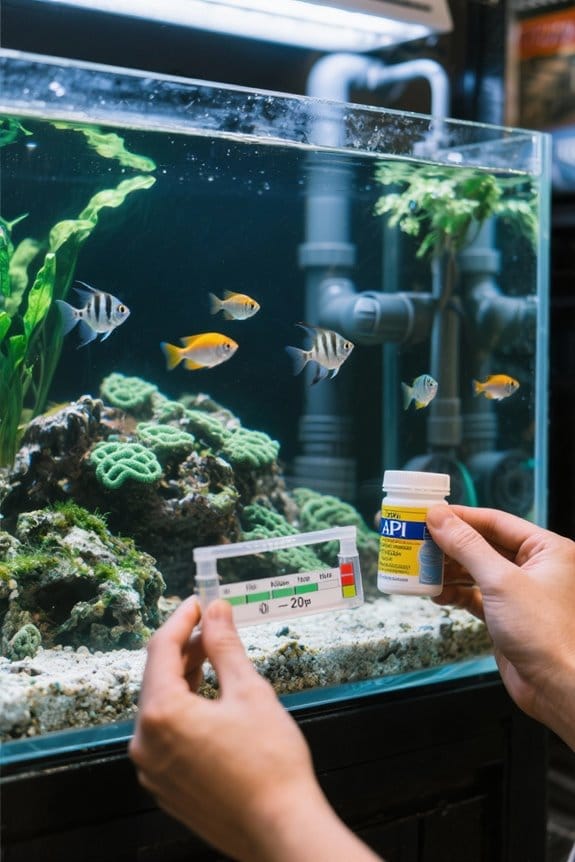
To set up your first aquarium kit, start by selecting a tank of at least 20 gallons for stability. Choose a secure stand, avoid direct sunlight, and position it near power sources. Equip your tank with a reliable filter, heater, and LED lighting. Wash substrate and decorations, then fill the tank with treated water. Cycle the aquarium for beneficial bacteria, then introduce fish gradually while monitoring water quality. Continue to follow this guide for a successful aquarium.
Key Takeaways
- Choose an appropriate tank size (at least 20 gallons) and a stable location for easy access and temperature management.
- Wash and prepare gravel, decorations, and substrate thoroughly before placing them in the tank.
- Fill the aquarium with water, add a conditioner, and check for leaks after letting it sit for 24 hours.
- Cycle the tank using fishless or Fish-In methods to establish beneficial bacteria for a healthy environment.
- Introduce fish gradually, ensuring proper acclimation and monitoring water quality for the first few weeks.
Choosing the Right Aquarium Size and Location

When deciding on the right aquarium size and location, it is essential to contemplate both the practicalities of maintenance and the needs of the aquatic inhabitants. Larger tanks, particularly those 20 gallons or more, offer better water quality stability and a wider range of fish options than smaller 10-gallon tanks. Assess the available space in your home to guarantee the aquarium stand can support the tank securely and is free from direct sunlight, which promotes algae growth. Position the aquarium for easy accessibility for maintenance tasks, like cleaning and water changes, and near electrical outlets and water sources. Finally, consider temperature stability, keeping the tank sheltered from drafts to reduce stress on the fish and maintain their health. Additionally, 3D aquarium backgrounds can enhance the visual appeal of your tank, creating a realistic underwater oasis for your aquatic friends.
Essential Equipment for Your Aquarium Setup

To guarantee a successful aquarium setup, selecting the essential equipment is paramount for maintaining a healthy environment for aquatic life. First, invest in a reliable filter, as sponge filters are beginner-friendly and efficient. A heater is also essential, maintaining tropical temperatures between 74-80°F. Incorporate LED lighting, which promotes plant growth and enhances visibility. An aquarium lid prevents evaporation, protects fish, and stabilizes tank temperature. Select an appropriate substrate, such as gravel or sand, based on your species, and rinse it thoroughly to avoid cloudiness. For effective water quality management, use water dechlorinators and aquarium test strips to monitor parameters. Finally, consider regular maintenance tools like an aquarium siphon for efficient waste removal, ensuring a clean and healthy aquarium. For larger setups, consider a multi-stage filtration system to effectively remove impurities and maintain water clarity.
Preparing the Aquarium and Substrate

Preparing the aquarium and substrate is a critical step in establishing a thriving aquatic environment. Begin by washing the aquarium gravel, rocks, and decorations with warm water—do not use soap or detergents, as these are toxic to fish. Rinse the substrate thoroughly in a colander over a pan until the water runs clear, which helps prevent cloudiness. Fill the aquarium one-third with room temperature water, then add a water conditioner like Tetra AquaSafe to dechlorinate it. Afterward, evenly spread the substrate at the bottom of the tank, followed by adding any desired plants and decorations. Finally, fill the tank completely and allow it to sit for 24 hours, checking for leaks and ensuring all equipment, like filters and heaters, is operational.
Cycling Your Aquarium for a Healthy Environment

Establishing a healthy aquarium environment requires the essential process of cycling, where beneficial bacteria are cultivated to effectively break down harmful ammonia produced by fish waste. This cycling process can take 1 to 3 months, utilizing the nitrogen cycle, which converts ammonia into nitrite and then nitrate. Two common methods are Fishless Cycling, where ammonia sources like pure ammonia or decaying fish food are used, and Fish-In Cycling, which adds fish gradually while closely monitoring water quality. Regular testing for ammonia, nitrite, and nitrate levels is vital to safeguard plant life and reduce fish stress. Additionally, incorporating established filter media or live bacteria starters may expedite cycling, but control over ammonia levels remains paramount for a truly healthy environment. Proper storage of test strips in a cool, dry environment extends their effectiveness in maintaining accurate water quality monitoring.
Introducing Fish to Your New Tank

Following a successful cycling process, introducing fish to a new tank requires careful planning and execution. First, utilize a quarantine tank for any new fish, keeping them separate for at least two weeks to avoid disease spread. Next, start the acclimation process; float the transport bag in the brand-new aquarium for 15-20 minutes before gradually adding tank water to the bag over an hour. This helps fish adapt to water parameters. Be cautious during the initial fish introduction; add no more than 1 inch of fish per gallon of tank water to maintain water quality. Finally, regularly monitor water parameters, including ammonia and nitrite levels, for several weeks after introducing fish to guarantee their health and the stability of the ecosystem. Consider lighting preferences when setting up the aquarium as moderate lighting is ideal for many coral and fish species.
Ongoing Maintenance and Water Quality Management
Maintaining a thriving aquarium requires regular attention and diligent water quality management. Perform weekly water changes of at least 50% to manage nitrate levels and create a healthy environment. Use water test strips to monitor ammonia, nitrite, and pH levels, as these are essential for fish health. It’s beneficial to utilize a freshwater aquarium master test kit that measures pH, ammonia, nitrite, and nitrate levels, providing long-lasting value with over 950 tests. Treat tap water with a water dechlorinator to detoxify harmful chemicals like chloramine before adding it to the tank. Implement an automatic siphon for efficient substrate vacuuming, removing fish waste and reducing harmful buildup. Establish biological balance by introducing beneficial bacteria during the cycling process. These bacteria break down fish waste, supporting water quality stability and contributing to a thriving aquatic ecosystem. Regular checks guarantee long-term success.
Frequently Asked Questions
How to Set up a Fish Tank for Beginners Step by Step?
A beginner should focus on substrate selection, secure decor placement, and choose appropriate filtration systems. Monitoring water chemistry, establishing aquarium cycling, implementing algae control, and adhering to fish compatibility and feeding schedules guarantee successful tank maintenance.
How Long Should I Wait Before Putting a Fish in a New Tank?
He compared setting up an aquarium to baking a cake; rushing yields a messy result. Waiting 1-2 weeks allows beneficial bacteria to establish, ensuring stable water chemistry, lower ammonia spikes, and stronger fish compatibility, reducing stress.
What Is the Best Fish Tank Setup for a Beginner?
The best fish tank setup for beginners includes a 10-gallon tank, reliable water filtration, a heater, gravel substrate, live plants, appropriate lighting, compatible fish types, and adherence to the cycling process and maintenance schedule.
How to Fill up a Fish Tank for the First Time?
To fill a fish tank for the first time, maintain appropriate water temperature, verify proper substrate depth, add water additives for dechlorination, and monitor pH levels, preparing for cycling and future maintenance to confirm fish compatibility.