
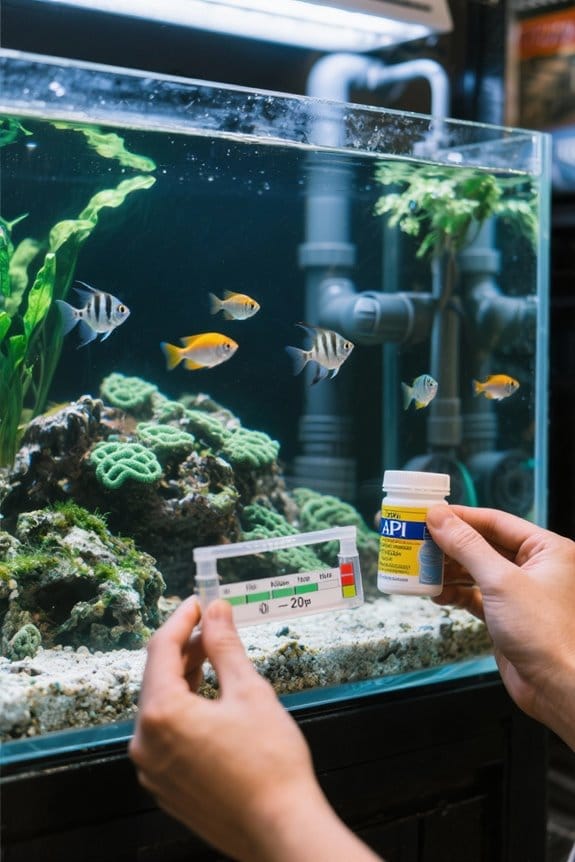

Cycling a new aquarium typically takes four to six weeks before adding fish. During this time, beneficial bacteria develop to convert toxic ammonia from fish waste into safer nitrate. Monitor ammonia levels, aiming for below 0.25 ppm, and nitrite levels below 0.5 ppm to guarantee a healthy environment. Testing water weekly aids in tracking progress and confirms when cycling is complete. Following this guidance establishes a stable ecosystem, paving the way for successful fish introduction and ongoing care.
Key Takeaways
- Cycle a new aquarium typically takes between 4 to 6 weeks before introducing fish for a stable ecosystem.
- Monitor ammonia and nitrite levels; zero readings indicate a completed nitrogen cycle, making it safe for fish.
- Regular weekly water tests track progress and ensure beneficial bacteria have developed properly.
- Avoid adding fish until ammonia and nitrite levels stay at zero consistently for several days.
- Gradual fish introduction is recommended to maintain bio-load and prevent spikes in ammonia and nitrite levels.
Understanding the Cycling Process

Understanding the cycling process is vital for creating a healthy aquarium environment. This process establishes nitrifying bacteria that convert toxic ammonia, produced from fish waste, into less harmful nitrates. The cycling typically takes several weeks, allowing time for ammonia-oxidizing and nitrite-oxidizing bacteria to develop. Monitoring ammonia and nitrite levels is important; they must reach zero before introducing fish to guarantee a safer habitat. During cycling, bacterial populations fluctuate based on available food, necessitating regular water quality checks. Patience is key, as rushing can lead to dangerous spikes in ammonia and nitrite, greatly jeopardizing fish health. Fluval Cycle is effective in promoting beneficial bacteria growth and enhancing biological filtration, which can support a stable and nurturing environment for aquatic life. By adhering to these guidelines, aquarium enthusiasts can foster a stable and nurturing environment for aquatic life.
The Role of Beneficial Bacteria

Beneficial bacteria form the backbone of a stable aquarium ecosystem, performing the essential task of converting harmful ammonia from fish waste into safer nitrate. These beneficial bacteria, primarily ammonia-oxidizing and nitrite-oxidizing types, thrive during the nitrogen cycle, which typically takes several weeks to complete. Their growth is contingent on consistent ammonia sources, so maintain this input for effective multiplication. Ideal conditions, such as a pH between 7.4 and 8.0 and proper aeration, further promote their development. Regularly monitor ammonia and nitrite levels; both must reach zero before considering fish introduction. Until sufficient bacterial populations are established, adding fish may lead to harmful spikes in toxicity, jeopardizing the aquarium’s overall health and stability. Incorporating Brightwell Aquatics MicroBacter7 into your routine can enhance water quality and promote healthier fish by reducing harmful substances.
Importance of Ammonia and Nitrite Monitoring

Monitoring ammonia and nitrite levels is essential in the cycling process of an aquarium, as even minor elevations can pose a significant risk to fish health. Ammonia levels above 0.25 ppm and nitrite levels above 0.5 ppm can create toxic conditions. Conduct weekly water tests to track the nitrogen cycle‘s progress and verify beneficial bacteria are thriving. These bacteria rely on ammonia and nitrites for sustenance, so confirming their establishment is critical before introducing fish. Regular testing allows for early identification of water quality issues, ensuring the aquarium environment remains safe for aquatic life. If spikes in ammonia or nitrite are detected, take immediate action by performing partial water changes or using ammonia neutralizers to safeguard aquatic life. When readings consistently show zero for both ammonia and nitrite, it indicates the nitrogen cycle is complete, allowing for safe fish introduction.
Fish-in Cycling vs. Fishless Cycling

While deciding on the best cycling method for an aquarium, one must weigh the advantages and disadvantages of fish-in cycling versus fishless cycling. Fish-in cycling involves keeping fish in the tank during the nitrogen cycle, which can lead to ammonia spikes and stress for the fish. This method typically takes six to eight weeks. Conversely, fishless cycling uses ammonia sources without fish, ensuring a safer environment for aquatic life as beneficial bacteria develop. This approach generally results in clearer water and a healthier setup. Due to its lower risks, community consensus tends to favor fishless cycling, allowing aquarists to avoid unnecessary stress on fish while effectively establishing a stable ecosystem. Choose wisely to promote long-term aquarium health. Incorporating red mangrove seedlings can further enhance water quality, promoting a balanced ecosystem in both aquariums and hydroponic gardens.
Common Challenges During Cycling

Cycling an aquarium presents several common challenges that aquarists must address to create a stable environment. Ammonia and nitrite spikes are primary concerns, as these toxins can stress or harm fish. Monitor levels closely and avoid feeding fish excessively, as uneaten food elevates ammonia levels, complicating the establishment of good bacteria. Cloudy water may occur due to bacterial blooms; this is typically harmless, indicating beneficial bacteria are forming. Provide ample hiding places to alleviate fish stress, as they may display hiding behavior during cycling. Importantly, avoid water changes early in the process, as this can disrupt the good bacteria needed for cycling success. Consistency in monitoring will help guarantee a balanced and thriving aquarium ecosystem. Ensuring your aquarium filter operates at less than 35 dB is important for maintaining a quiet home environment while effectively managing your tank’s water quality.
Ideal Timing for Adding Fish
To successfully add fish to a newly cycled aquarium, it is essential to carefully consider the timing and conditions within the tank. Begin by allowing at least 48 hours after setup for conditions to stabilize. Cycling typically takes 4 to 6 weeks to establish beneficial bacteria capable of converting ammonia and nitrite to nitrate. It is vital to test water parameters regularly; only introduce fish when ammonia and nitrite levels are at zero, often achievable between the 15 to 30-day mark. During cycling, feed any fish sparingly, ensuring food is consumed within 2 minutes to prevent ammonia spikes. For optimal fish health, consider programmable feeding schedules to ensure consistent and proper nutrition, as this feature can help prevent overfeeding and maintain a stable environment. Monitor water conditions continuously, as adding too many fish too quickly can disrupt the nitrogen cycle and jeopardize tank health.
Simulating Bio Load
Simulating bio load in a new aquarium enhances the establishment of beneficial bacteria necessary for maintaining water quality. To do this, introduce organic matter like fish food or ammonia to mimic the waste produced by future inhabitants. Consider fishless cycling, which allows for bio load simulation without the stress of live fish. Be cautious not to overfeed, as excessive waste can cause ammonia spikes, overwhelming beneficial bacteria and harming the ecosystem. A quarantine system can help monitor the effects of organic additions more effectively, providing a controlled environment for bacterial growth assessment. This process not only accelerates cycling but also prepares the aquarium for a stable introduction of fish, ensuring a healthier aquatic environment in the long run. For a successful reef setup, remember that Acropora corals require optimal flow rates and stable water parameters to thrive.
Effects of Water Quality on Cycling
Water quality plays an essential role in the successful cycling of an aquarium. Establishing beneficial bacteria is critical for converting harmful ammonia and nitrite into less toxic nitrate, so monitoring parameters like these is essential. Maintain a pH range of 7.4 to 8.0, as this encourages ideal bacterial activity. Guarantee regular water changes of 20-50% during cycling to manage toxic levels without disrupting beneficial bacteria, creating a balanced ecosystem. Additionally, promoting high levels of dissolved oxygen in the water enhances bacterial growth; use aeration methods such as air stones to facilitate this. By prioritizing water quality, one can greatly improve the cycling process, preparing the aquarium for future fish inhabitants while ensuring their safety and health. Incorporating silicone rubber diaphragms in check valves can add an extra layer of safety by preventing backflow, which aids in maintaining stable water conditions during the cycling process.
Signs of Cycling Completion
Once consistent ammonia and nitrite levels reach zero, a clear indication of cycling completion emerges, allowing fish to be added to the aquarium safely. Additionally, the presence of nitrate suggests beneficial bacteria have successfully converted ammonia and nitrite into less harmful substances. Observe the pH levels; a stable range between 7.4 and 8.0 further confirms healthy bacterial growth. Clear water conditions following initial cloudiness from bacterial blooms signal that cycling is nearing its end. It is essential to regularly test water parameters using reliable test kits, such as API Master Test Kit, to guarantee accurate readings. For optimal results, porous bio media like ceramic rings can enhance bacterial growth, supporting a healthy aquarium environment. Once all these indicators align, the aquarium is ready for fish introduction, protecting their health and enhancing the aquatic environment.
Strategies for Successfully Cycling With Fish
Successfully cycling an aquarium with fish requires careful management and strategy to guarantee a safe environment for aquatic inhabitants. Begin by introducing fish gradually, such as starting with a single betta fish in a 20-gallon tank. Monitor ammonia and nitrite levels closely using test kits, performing water changes if free ammonia exceeds 0.2 ppm. Feed fish small amounts of food, just enough for them to consume within two minutes, preventing ammonia spikes. Provide ample hiding places and keep lights off to reduce stress during the cycling period. As beneficial bacteria establish, which usually takes about 4 to 8 weeks, increase feeding amounts to support your fish while maintaining a balanced ecosystem. Consider using high-quality products that list protein sources first and avoid harmful fillers to ensure optimal health for your fish. This method balances fish health with effective cycling.
Best Practices for Fish Introduction
Introducing fish into a newly set up aquarium requires patience and careful consideration to create a stable environment. Wait at least 48 hours before adding suggested beginner fish, like Danios or Tetras, to allow beneficial bacteria to begin establishing. Introduce only a few new fish at once, as adding too many can lead to spikes in ammonia and nitrite levels. For the first few days, keep aquarium lights off, helping shy fish adjust without added stress. Monitor water quality regularly, checking ammonia and nitrite levels; add new fish only when these levels are consistently zero. Gradually introduce additional fish over several weeks, ensuring that the beneficial bacteria can effectively manage the bio-load from your new aquatic inhabitants.
Resources for Ongoing Aquarium Care
Ongoing aquarium care requires a combination of reliable resources and community support to guarantee a thriving aquatic environment. Engage with local aquatic communities and online forums for valuable insights on fish care, as fish can consume specific nutrients from their surroundings that may require monitoring. Subscribe to newsletters from reputable aquarium supply companies like Aquatic-Store or Marine Depot for expert tips and product recommendations. Utilize detailed guides focusing on essential aspects such as water quality, employing test kits like API Freshwater Master Test Kit. Follow social media groups dedicated to aquarium keeping for troubleshooting advice and success stories, while attending workshops held by local aquarist clubs can provide hands-on guidance, ensuring ongoing education and improved fish health management.
Frequently Asked Questions
How Long Does a Tank Need to Cycle Before Adding Fish?
A tank must endure a lengthy, suspenseful saga of at least 4 to 6 weeks of tank cycling to cultivate essential beneficial bacteria. Rushing this transformative process risks catastrophic consequences for any future fish inhabitants.
How Soon Can You Add Fish to a New Tank?
Adding fish to a new tank depends on its readiness, ideally after the cycling process, which can take weeks. Fishless cycling is an effective method to guarantee the tank is adequately prepared for fish introduction.
What Are Common Mistakes in a New Aquarium Set Up?
Common mistakes in new aquarium setups include poor substrate choice, inappropriate lighting setup, inadequate filter selection, neglecting tank size considerations, and overlooking plant options; all affecting water quality and ultimately the health of aquatic life.
How Do I Know if My Tank Is Properly Cycled?
To determine if a tank is properly cycled, one must regularly test water parameters. Ammonia levels should read zero, indicating beneficial bacteria have established, with nitrates present, suggesting a completed cycling process and a healthy environment.


