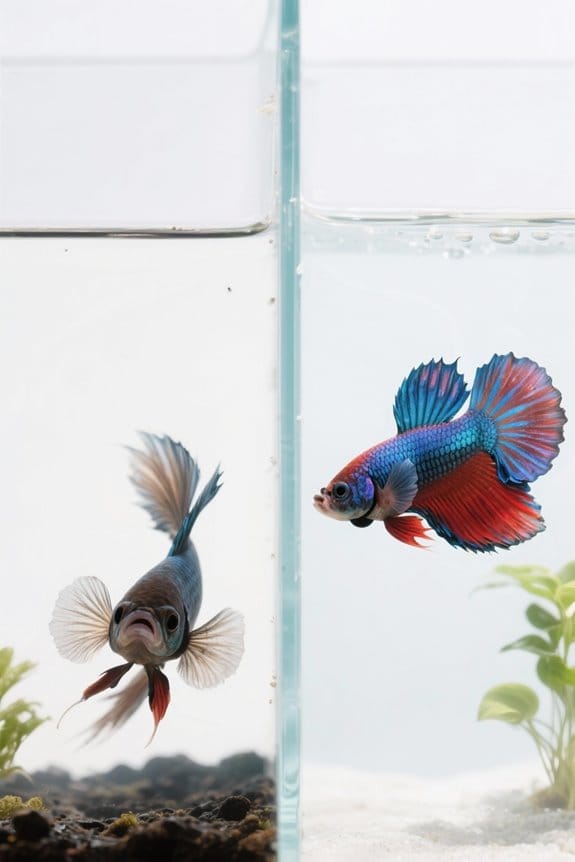
Avoid feeding betta fish harmful foods like bacon bits, candy, onions, and processed meats. Bacon bits and processed meats often contain high fats that disrupt digestion. Candy, especially gummy varieties, contains sugars and preservatives, toxic to bettas. Onions introduce lethal compounds leading to lethargy. Additionally, citrus fruits like lemons and oranges upset their delicate digestive systems. Instead, provide quality betta pellets, freeze-dried brine shrimp, or leafy greens for balanced nutrition. There are more options to explore for ideal betta health.
Key Takeaways
- Bacon Bits can cause severe digestive issues due to high saturated fat and salt content, also threatening fish well-being.
- Candy offers no nutritional value and its high sugar content disrupts bettas’ digestive balance, potentially leading to health complications.
- Onions and all Allium family members are toxic, causing lethargy and severe digestive problems in bettas.
- Processed Foods, including hot dogs and hamburgers, contribute to obesity and digestive problems, while also polluting aquarium water.
- Garlic, even in minimal amounts, leads to digestive issues and can negatively affect water quality if used improperly.
Bacon Bits

When considering a suitable diet for betta fish, it is essential to avoid bacon bits entirely. These processed snacks are high in saturated fat, which can lead to severe digestive issues in betta fish. While bacon bits may seem enticing due to their strong flavor, the high salt content exacerbates the problem further. Instead of boosting health, they introduce toxins that threaten the fish’s well-being. A balanced diet for betta fish should primarily comprise high-protein pellets specifically designed for them, which can support their dietary needs effectively. High-protein foods are essential for promoting Betta fry growth, ensuring they thrive and maintain optimal health. Always prioritize quality over gimmicks, as what might appeal to a human palate can be detrimental to betta fish. Hence, steer clear of bacon bits and prioritize their health with appropriate food options.
Candy

Candy is another type of food that should never be included in a betta fish’s diet. Gummy candies, in particular, contain sugars and preservatives that are toxic to bettas, posing serious health risks. These processed candies provide no nutritional benefits, leading to potential issues like digestive complications. With high sugar content, candy disrupts the delicate balance of a betta’s digestive system, which can result in harmful consequences. Instead of candy, focus on a healthy diet by offering safe alternatives, such as fruits like cantaloupe. These options promote overall health without the dangers associated with sugary treats. Keep betta fish thriving by prioritizing nutritious, wholesome foods and eliminating candy entirely from their feeding routine. Betta fish should be fed flake food twice a day to maintain a balanced diet and prevent overfeeding.
Onions

Onions are unequivocally harmful to betta fish and should be completely avoided in their diet. This includes all forms of onions, such as shallots, spring onions, and leeks. Toxic compounds found in onions can cause serious health issues, including lethargy and digestive problems in bettas. In severe cases, consumption can even lead to death. The high sulfur compounds present in onions are particularly intolerable for bettas, making them unsuitable as fish food. Instead, opt for safe alternatives like plain leafy greens, which provide necessary nutrients without the risks. To guarantee the well-being and longevity of betta fish, never include onions in their meals, and prioritize a balanced diet tailored to their needs. Additionally, maintaining a balanced aquatic ecosystem is crucial for the health of all aquarium inhabitants, including bettas, and helps to prevent overgrowth of harmful substances.
Meat

Feeding meat to betta fish should be approached with caution, as many types can be detrimental to their health. Avoid processed meats like hamburger, pepperoni, and hot dogs, which are high in fat and lack essential nutrients. These fish foods can lead to serious issues, including obesity and digestive problems. Instead, think about their natural diet—bettas prefer small insects and brine shrimp in the wild. Adopting such alternatives is vital for their well-being. Additionally, unsuitable meats can disrupt their delicate digestive systems and pollute the aquarium water, creating an unhealthy environment. Overall, maintain a balanced diet for bettas by steering clear of these meats, ensuring they thrive in captivity and remain vibrant. When selecting a diet for carnivorous fish like bettas, consider foods that contain stabilized vitamin C for immune support, as this is crucial for their overall health.
Lemons

Lemons, in all their forms, are unequivocally harmful to betta fish. The high acidity of lemons can disrupt a betta fish’s digestive system and irritate their gills, leading to serious health issues such as lethargy and potential death. Additionally, lemon juice can negatively alter the tank’s pH balance, creating an unsuitable environment. To guarantee their well-being, it is important to provide betta fish with a proper diet that excludes all citrus fruits. Betta fish eat protein-rich foods like pellets and frozen or live insects, which support their health considerably better. Always remember to avoid any food that can harm your fish. Follow manufacturer directions for ideal feeding practices to ensure that your betta fish receives a balanced and healthy diet. By adhering to these guidelines, you can maintain a healthy and thriving betta fish environment.
Seasoning
While many pet owners enjoy seasoning their meals, it is crucial to remember that betta fish must never be subjected to such flavor enhancements. Seasoning is unhealthy for betta fish and can lead to various health issues, including digestive problems. Even safe food items, like frozen or live brine shrimp, become dangerous when seasoned. Betta fish do not require seasoning; they are attracted to the natural flavors of their food. Consequently, maintain a strict diet free from any herbs, spices, or flavorings. By avoiding seasoned meals, owners can prevent disruptions in the fish’s digestive system and guarantee their overall health remains ideal. Prioritize their well-being by offering plain, high-quality pellets or flakes designed specifically for bettas. Additionally, choosing sustainable brands with responsible sourcing practices ensures the food’s quality and supports environmental conservation efforts.
Dairy
Dairy products should be completely excluded from a betta fish’s diet. Betta fish lack the enzyme lactase, which means they cannot properly digest dairy products such as milk, cheese, or ice cream. Consumption of these items can lead to severe digestive issues, including bloating and potential health complications. Additionally, uneaten dairy can pollute the aquarium water, creating an unhealthy environment that affects not only the fish but also water quality. Furthermore, many specialized betta foods are formulated with color enhancement properties which are essential for maintaining the fish’s vibrant appearance. To guarantee ideal health and a clean tank, prioritize a diet consisting of high-quality pellets or specialized betta food rich in protein. Always monitor feeding practices and adhere strictly to these guidelines, ensuring no harmful substances such as dairy enter the aquatic habitat of the betta fish.
Chocolate
Chocolate poses a significant risk to the health of betta fish and should be completely excluded from their diet. The high sugar content and theobromine found in chocolate make it toxic to these fish. Even small amounts can disrupt their digestive systems, leading to serious health issues. Additionally, many chocolate products contain dairy, which is harmful because bettas cannot digest lactose. It is crucial to understand that the toxicity from chocolate makes it one of the worst food options possible. As a result, never feed your betta fish chocolate in any form, whether as a treat or an accidental offering. Keep this harmful substance far from their feeding options to promote their well-being and longevity. Prioritize safe, appropriate foods instead. CO2 enhances photosynthesis, which is vital for aquatic plant growth and ecosystem health, similarly to how suitable diets are crucial for the health of betta fish.
Garlic
Garlic, often considered a healthy food for humans, can be quite hazardous for betta fish. Betta owners should never feed their betta whole garlic cloves, as these can lead to severe digestive issues and lethargy. The toxicity of garlic extends beyond individual fish health, potentially impacting overall tank water quality as well. If garlic must be used, strict caution is required; opt for garlic juice in minimal amounts to reduce risks. However, even this method is generally discouraged. It’s advisable to avoid garlic entirely when it comes to aquariums, focusing instead on safe, formulated fish foods that guarantee peak health for bettas. Proper food choices contribute to a vibrant and thriving aquatic environment. Regular replacement of activated carbon every 2-4 weeks is crucial for maintaining optimal water quality, as it helps in the effective removal of impurities and odors.
Oranges
While offering a varied diet is important for betta fish, it is essential to understand that certain foods, such as oranges, should be completely avoided. Oranges are harmful due to their acidic nature, which can negatively impact a betta’s digestive system and disrupt the tank’s pH balance. Consumption of oranges may lead to serious health issues, including lethargy and digestive disturbances. All parts of the orange are toxic to betta fish, making this fruit unsuitable for their diet. In addition, citrus fruits like oranges can induce significant stress, potentially exacerbating health complications. Consequently, to maintain the overall health and wellbeing of betta fish, it is vital to refrain from offering oranges and any citrus fruits. Using non-toxic materials in the aquarium is crucial for ensuring the safety and health of aquatic life.
Other Harmful Foods
What kinds of foods should betta fish absolutely avoid? Betta fish are particularly sensitive to harmful foods such as processed meats, including pepperoni and hot dogs, which contain unhealthy fats and preservatives that can lead to health issues. Also, avoid gummy candies; their sugar content and preservatives are toxic to a betta’s digestive system. Citrus fruits like lemons and oranges disrupt digestion and alter water pH due to their acidity. Onions and related Allium family members may cause lethargy and severe digestive complications, risking the fish’s life. Finally, steer clear of dairy products, including milk and cheese, as they are indigestible for bettas and can pollute aquarium water. Prioritize a safe, balanced diet for ideal betta fish health.
Healthy Alternatives for Betta Fish
To guarantee maximum health and liveliness, betta fish require a diverse diet that includes both staple foods and occasional treats. First, high-quality betta pellets, designed specifically for their nutritional needs, should form the core of their daily diet, ensuring balanced protein and vitamins. Additionally, consider feeding your betta fish safe treats like freeze-dried brine shrimp or bloodworms, which mimic their natural diet and provide essential nutrients. Leafy greens, like spinach, can introduce fiber without the dangers of harmful foods. Offering a variety of protein sources, such as daphnia or small insects, keeps bettas engaged. Regularly monitor their behaviors to adjust feeding routines, enhancing overall health and well-being with these healthy alternatives for betta fish.
Frequently Asked Questions
What Foods Are Toxic to Betta Fish?
Toxic plants and harmful additives pose significant threats to betta fish. Examples include foods high in salt, sugars, and preservatives, as well as certain vegetables and citrus fruits that disrupt their digestive health and overall wellbeing.
What Food Can You Feed a Betta Fish?
A betta fish thrives on high-quality pellets, which are among the best betta foods available. A feeding schedule of 2 to 4 pellets, once or twice daily, supports their health and vigor effectively.
What Is the Shocking Truth About Betta Fish?
Could it be that betta behavior reveals more than mere beauty? Surprisingly, these fish thrive in intricate habitats, yet their needs and vulnerabilities often remain overlooked, profoundly affecting their health and overall well-being in captivity.
How to Avoid Overfeeding Betta?
To avoid overfeeding bettas, implement portion control by feeding 2 to 4 pellets once or twice daily. Establish a consistent feeding schedule and monitor their physical condition while removing uneaten food to guarantee water quality.