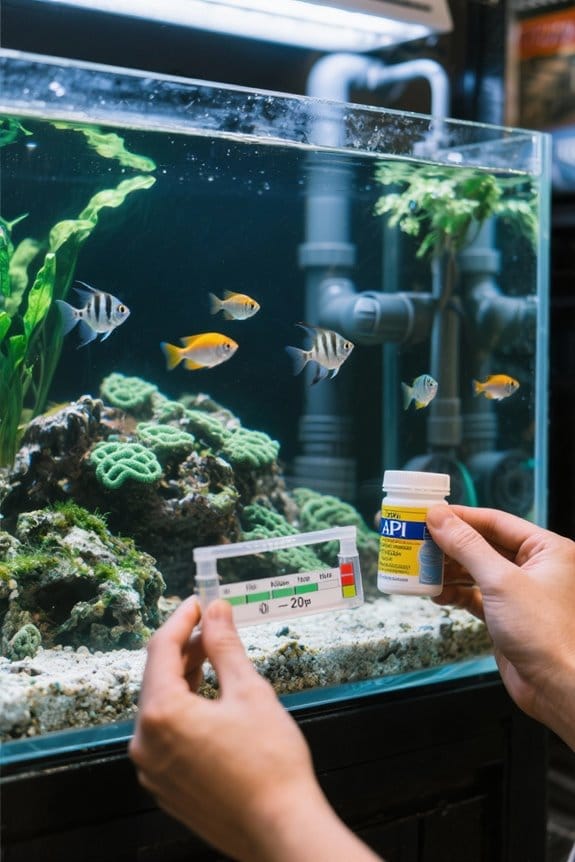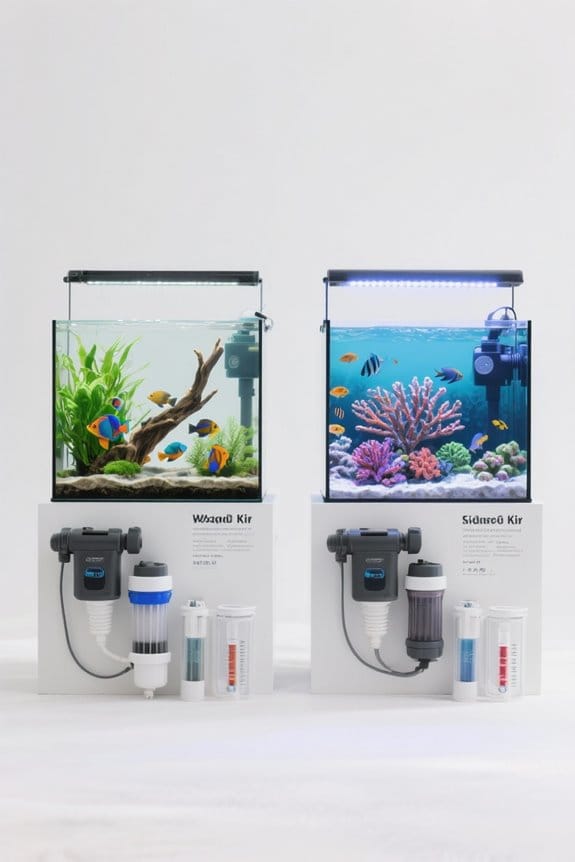

Freshwater aquariums are generally easier for beginners than saltwater options. They typically cost around $100 to set up and require simpler maintenance, such as less frequent water testing. Freshwater fish like Neon Tetras and guppies are hardy and affordable, usually priced between $1 and $10. In contrast, saltwater tanks need advanced equipment, starting at $300, and sensitive care, often involving regular testing of parameters like salinity and pH. Discover the unique features that both types offer.
Key Takeaways
- Freshwater aquariums are generally easier for beginners, requiring less complex water chemistry and maintenance.
- Initial setup costs for freshwater kits start around $100, making them more budget-friendly.
- Freshwater fish options are often hardier and more resilient to environmental fluctuations than saltwater species.
- Saltwater aquariums demand rigorous water testing and monitoring due to sensitive species and ecosystems.
- Beginners may find the visual appeal and easier stocking options of freshwater tanks more approachable than saltwater setups.
Understanding Freshwater Aquariums

Understanding freshwater aquariums requires an awareness of their distinct advantages, especially for beginners enthusiastic to commence on this rewarding hobby. Freshwater tanks, often easier to maintain than saltwater setups, require basic equipment like filters and heaters available in most pet stores. Initial costs are usually lower for freshwater systems, making it feasible for those on a budget. Selecting colorful fish such as Neon Tetras or guppies provides vibrant, engaging ecosystems without extensive investment. Additionally, freshwater tanks necessitate less time for maintenance, with fewer water changes required. By creating heavily planted environments, enthusiasts can cultivate lush underwater gardens that enhance visual appeal while simplifying upkeep. Substrates like Fluval Stratum are beneficial for freshwater aquariums as they support the growth of plants and beneficial bacteria, contributing to a healthy ecosystem. Therefore, the journey into freshwater aquariums is inviting and manageable for newcomers.
Advantages of Freshwater Aquariums

Freshwater aquariums offer a multitude of advantages, especially for beginners entering the aquatic hobby. They typically require simpler water chemistry management, making them easier to maintain compared to saltwater setups. Initial setup and ongoing maintenance costs for freshwater tanks are generally less expensive, with equipment and common freshwater fish, like neon tetras, readily available in pet stores. Additionally, these freshwater fish tend to be hardier and more forgiving of environmental fluctuations, reducing beginner losses. Heavily planted freshwater tanks can create appealing displays that thrive with minimal lighting and maintenance needs, which is attractive to novice aquarists. Moreover, these setups allow for various decorative options, providing flexibility in creating diverse aquatic environments without the added complexities of marine ecosystems. Some freshwater aquariums also utilize glass petri dishes for plant germination and cell cultures, adding a scientific element to the hobby.
Key Equipment for Freshwater Setups

Equipping a freshwater aquarium with the right tools is essential for ensuring a thriving aquatic environment. Start with a reliable filtration system, such as a hang-on-back or canister filter, to effectively maintain water clarity and quality. These filters come in a range of prices, making them accessible for beginners. Next, install a heater to provide a stable temperature, opting for adjustable models to suit various fish species. Consider LED lighting systems, as they not only provide adequate illumination for plant growth but are also energy-efficient and long-lasting. Finally, choose suitable substrate options, like gravel or sand, which can enhance the aquarium’s aesthetic while supporting beneficial bacteria vital for a healthy ecosystem. Each component plays a significant role in successful freshwater setups. Additionally, quiet operation is a valuable feature in filtration systems, ensuring a peaceful environment for both aquarists and aquatic life.
Exploring Saltwater Aquariums

Although saltwater aquariums can initially seem intimidating, they offer a vibrant glimpse into underwater ecosystems when set up correctly. A marine aquarium usually requires a minimum size of 75 gallons for improved stability. Begin with essential equipment, including a protein skimmer, to handle waste. Familiarize yourself with water chemistry; test for salinity, pH, calcium, and magnesium regularly. Unlike maintaining a freshwater setup, saltwater environments need careful monitoring to support delicate fish species and corals. Be patient during the cycling process, which can take weeks. Gradually introduce fish to minimize stress and guarantee a stable environment. Understanding these basics helps transform initial apprehension into a rewarding, colorful aquatic display that captures the beauty of life beneath the waves. Many saltwater enthusiasts opt for multi-stage filtration systems to ensure effective cleaning and maintain water clarity in their marine tanks.
Benefits of Saltwater Aquariums

Saltwater aquariums present a multitude of advantages that appeal to both novice and seasoned aquarists alike. First, saltwater tanks require a diverse array of colorful marine fish, corals, and invertebrates, creating stunning ecosystems. This biodiversity introduces unique behaviors and complex relationships, enhancing the viewing experience. For instance, observing clownfish interacting with anemones showcases these fascinating dynamics. Additionally, the need for specialized equipment, such as protein skimmers, improves water quality and overall tank health, facilitating a thriving marine environment. While higher investment in equipment and maintenance is necessary, the fulfillment derived from establishing a balanced ecosystem makes it worthwhile. Providing education on marine life, these aquariums can be both engaging and rewarding for all levels of aquarists. Moreover, maintaining stable salinity and temperature is crucial for the health of marine life, emphasizing the importance of consistent water conditions in saltwater aquariums.
Essential Equipment for Saltwater Tanks
To create a thriving saltwater aquarium, obtaining the right equipment is essential for maintaining a healthy environment. Start with a high-quality filtration system, as this supports biological filtration processes key for water quality. Next, invest in a protein skimmer; it effectively removes dissolved organic compounds, ensuring clarity and a stable ecosystem. Utilize accurate testing kits, like the Red Sea Marine Care Test Kit, to monitor important water chemistry parameters, including pH and ammonia levels. Additionally, a reliable heater helps maintain stable temperatures, crucial for sensitive marine organisms. Finally, consider proper lighting, particularly specialized reef lighting, which supports photosynthetic corals and invertebrates by providing the correct intensity and spectrum necessary for their growth. For optimal performance, regular cleaning of the protein skimmer pump and components is necessary to maintain efficiency and extend the lifespan of the equipment.
Comparing Maintenance Requirements
When selecting an aquarium type, it is essential to evaluate the differences in maintenance requirements. Freshwater aquariums generally offer simpler maintenance, requiring less frequent testing of water parameters. Tasks such as water changes are less complicated, allowing beginners to focus on care rather than constant adjustments. In contrast, saltwater tanks demand rigorous and regular testing for parameters like salinity, pH, and alkalinity. Furthermore, the delicate nature of marine organisms increases the complexity of routine maintenance, making tasks time-consuming. Beginners may find themselves overwhelmed by these requirements. Regular water change frequency is essential to maintain fish health and reduce toxins, and this can be less intensive in freshwater setups. As a result, for novices seeking an easier and less time-intensive setup, freshwater aquariums present a more accessible option, providing resilience against environmental fluctuations and forgiving novice mistakes.
Cost Considerations for Freshwater vs. Saltwater
Cost considerations play a critical role in the decision-making process for selecting between freshwater and saltwater aquariums. Freshwater aquarium setups generally require a lower initial investment, with starter kits costing around $100. In contrast, a saltwater setup typically starts at $300 or more, demanding a larger upfront expense. Ongoing costs also differ, as freshwater tanks necessitate less expensive equipment and maintenance compared to high-tech saltwater gear. Additionally, freshwater fish often range from $1 to $10, whereas saltwater species can cost between $20 to over $100. Be mindful that while heavily planted freshwater tanks may incur extra costs, saltwater tanks often demand continuous investment in equipment like protein skimmers, making them pricier over time. To ensure ideal temperature for goldfish in freshwater setups, consider the additional cost of heaters if you live in colder climates, which can impact your overall budget.
Stocking and Compatibility in Aquariums
Selecting the right fish for an aquarium involves a fundamental understanding of stocking and compatibility. For both freshwater and saltwater aquariums, it is crucial to research the potential aggression levels of various species. In freshwater tanks, some aggressive fish like piranhas may thrive, yet similar behaviors in saltwater species can present complex acclimation challenges. Moreover, consider that some marine fish may not coexist well with their own kind, highlighting the significance of group dynamics. Additionally, compatibility extends beyond fish; in saltwater tanks, certain species may prey on corals, disrupting ecological balance. Thus, understanding aggression management across fish and coral species is essential for achieving a thriving, harmonious fish tank environment. Careful planning guarantees a successful aquarium setup. Moss carpets can also play a role in creating hiding spots and promoting breeding conditions, contributing to a balanced ecosystem within the aquarium.
Factors to Consider When Choosing Your Aquarium
Choosing an aquarium requires careful consideration of various factors that can greatly affect both the setup process and the ongoing enjoyment of the hobby. Beginners should focus on experience level, as freshwater aquaria typically require less maintenance time and possess simpler water chemistry. Consider cost considerations, since freshwater tanks generally have lower initial and ongoing expenses for equipment and livestock. Another critical factor is livestock hardiness; freshwater species are more forgiving of environmental changes. Finally, assess biodiversity and visual appeal—while freshwater options boast lush plants and resilient fish, saltwater aquariums offer vibrant marine life and colorful corals. Evaluating these factors will help newcomers confidently select the right aquarium for their interests and lifestyle. For those interested in displaying their tanks, high-definition, UV-resistant acrylic can enhance the clarity and durability of the aquarium setup, allowing for an attractive presentation of aquatic life.
Frequently Asked Questions
Is It Easier to Have a Freshwater or Saltwater Tank?
It is easier to have a freshwater tank due to its numerous benefits, including simpler maintenance, more forgiving fish compatibility, and lower challenges compared to the intricate setups and constant monitoring required for saltwater aquariums.
What Is the Easiest Fish Tank for Beginners?
The easiest fish tank for beginners typically features hardy species, simple tank maintenance, and stable water quality. Options like Neon Tetras offer forgiving environments, making species selection straightforward for aspiring aquarium enthusiasts.
Are Saltwater Tanks Hard for Beginners?
Saltwater tank challenges can pose initial setup difficulties for beginners, primarily due to costly equipment and intricate maintenance routines. However, choosing the correct equipment and learning about hardy species can simplify the process considerably.
Which Aquarium Fish Is Best for Beginners?
For beginners, hardy species like Neon Tetras, Guppies, and Zebra Danios are excellent choices. These community fish thrive in various tank sizes and exhibit high compatibility, enhancing both enjoyment and success for novice aquarists.