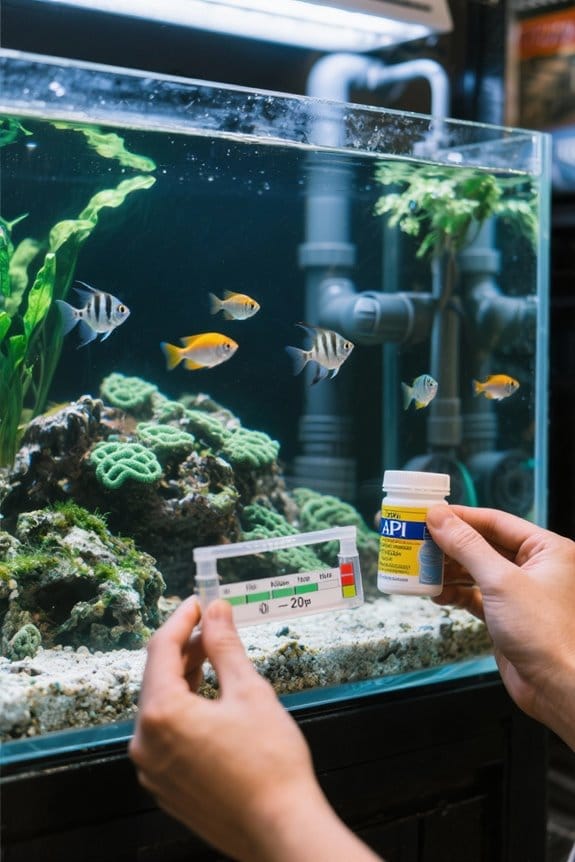
To safely move an established aquarium, first conduct a 25% water change and fast the fish for 24 hours. Use a fish net to transfer fish into insulated containers, employing battery-operated air pumps for oxygenation. Drain the tank to 1-2 inches of water, keeping beneficial bacteria. At the new location, refill with a mix of old and conditioned water, and reintroduce fish slowly. Monitor water quality and fish behavior post-move for a month. Learn more about efficient moving techniques.
Key Takeaways
- Conduct a 25% water change and stop feeding fish 24 hours before the move to reduce waste and stress.
- Use leak-proof containers for fish, and employ a siphon hose to drain the tank safely.
- Keep beneficial bacteria alive by minimizing disturbance of substrate and decorations during the moving process.
- Acclimate fish gradually in their temporary containers to avoid shock before reintroducing them to the new tank setup.
- Monitor water quality for ammonia and nitrite spikes after the move, adjusting routines as necessary for fish health.
Preparation for the Move

Preparation for moving an aquarium requires careful planning and organization to guarantee the health of the aquatic inhabitants and the integrity of the equipment. First, assess the weight and size of the tank to confirm the new place can support it. Gather sturdy containers for your fish and plants, and quality water conditioners to maintain ideal conditions. Create a detailed timeline for the move, notifying family members, while designating a safe space for the aquarium during transport. Prior to moving, conduct a 25% water change and refrain from feeding your fish 24 hours beforehand to minimize waste and reduce stress. Additionally, prepare at least 25% of the tank’s volume of conditioned water at the new location for a smooth setup after moving an aquarium. Consider using temperature controllers to ensure stable conditions during the transition, as they can help maintain optimal temperatures for your aquatic life.
Essential Equipment for Moving a Fish Tank

Moving an aquarium successfully requires specific equipment that guarantees both the safety of the fish and the integrity of the tank and its decorations. Start by using a fish net to catch and transfer fish into leak-proof temporary containers, such as plastic buckets or tubs with lids, ensuring minimal water spillage. Prepare a siphon hose to efficiently drain water from the tank, making it more manageable during transport. To ensure your fish continue to feed properly after the move, consider setting up designated feeding areas with feeding rings, which can help reduce food competition and waste. Protect fragile decorations by wrapping them in furniture blankets or bubble wrap. Additionally, utilize battery-operated air pumps to aerate the water in the temporary containers, essential for maintaining oxygen levels, particularly during long-distance moves or in warm weather. This preparation fosters a successful changeover for both fish and tank components.
Step-by-Step Guide to Moving an Aquarium

To guarantee a smooth relocation of an aquarium, it is essential to follow a systematic approach that prioritizes the well-being of the aquatic inhabitants and the integrity of the tank. Begin by performing a 25% water change and halting fish feeding 24 hours prior to minimize stress. Next, drain the aquarium with water to about 1-2 inches, then safely move a fish by capturing them with a net and transferring them to leak-proof buckets with conditioned water. Carefully remove decorations and substrate, keeping beneficial bacteria alive. Upon arrival, set the aquarium on a stable surface and refill with existing water mixed with conditioned new water. It is crucial to understand the compatibility with tank mates to ensure a harmonious environment in your aquarium after the move. Finally, slowly reintroduce the fish while monitoring for symptoms of New Tank Syndrome to keep your fish safe.
Transporting the Aquarium

While it might be tempting to rush through transporting an aquarium, careful attention to detail is essential for safeguarding both the tank and its residents. First, secure assistance when moving a fish tank, as large aquariums can weigh several hundred pounds. Remove most of the water using a siphon, leaving only 1-2 inches to cover the fish, which minimizes weight and stress. Next, transport the aquarium upright to prevent damage. Protect the tank using padded materials like blankets and bubble wrap, and guarantee all decorations and equipment are safely removed or secured in water-tight containers. It is crucial to ensure aquarium compatibility with any water changers used during the move, as specific systems may vary in suitability for large tanks and saltwater environments. These precautions help prevent shifting and breakage during short-distance moves, ensuring a smooth passage to the new home for both the aquarium and its inhabitants.
Temporary Housing for Aquatic Life

Creating temporary housing for aquatic life during an aquarium move is crucial for their well-being. Use multiple smaller tanks, like 10 or 20-gallon options, to house fish effectively. Alternatively, consider plastic Rubbermaid totes, as they provide easy handling and secure environments. Transfer substrate and a significant amount of water from the established aquarium to maintain beneficial bacteria, which helps reduce fish stress. Establish sponge filters in temporary tanks to guarantee proper filtration and oxygenation; these are essential for your aquatic life’s health during the shift. Additionally, run filters in the main tank for a few hours prior to the move, stabilizing water quality during the transfer. Regular testing of water parameters, such as calcium, magnesium, and alkalinity, ensures a healthy environment for aquatic life during transitions. Following these steps will promote a smoother shift for your aquatic companions.
Post-Move Setup and Monitoring
After relocating an aquarium, it is essential to set up the aquatic environment carefully to guarantee a smooth changeover for the fish. Start the post-move setup by filling the tank halfway with old water to maintain beneficial bacteria and reduce stress. Gradually reintroduce the remaining old water, plants, and livestock, allowing fish to acclimate without overwhelming them. Monitor water quality closely for ammonia or nitrite spikes, as New Tank Syndrome can affect even established tanks. Fish should not be fed for the first 24 hours to minimize waste production. Continuously observe fish health and behavior for at least one month after the move, making adjustments as necessary to manage any stress responses and promote a thriving freshwater environment. Consider using durable materials for any decorative backgrounds you might include in the aquarium to ensure longevity and visual appeal.
Weight Concerns and Floor Considerations
Moving an aquarium requires careful attention to weight concerns and the structural integrity of the floor. An aquarium filled with water can weigh approximately 300 lbs, demanding a supportive floor structure in the new location. Verify the orientation of floor joists; placing the tank parallel to the joists can elevate the risk of structural failure. Instead, position the aquarium to distribute its weight across multiple joists. Confirm that the new spot has a level floor capable of supporting heavy loads; consider reinforcing wooden floors if necessary. To mitigate risks, engage professionals experienced in aquarium relocation, as their expertise can guarantee the safety of both your aquarium and the flooring beneath it during this change. To ensure the safety of your aquatic life, consider using waterproof ratings like IP68 for any lighting features in your aquarium setup.
Community Advice and Support
When planning the relocation of an aquarium, tapping into the collective wisdom of online forums and supportive communities can greatly enhance the experience. Experienced aquarists often share valuable insights about using temporary housing, such as smaller tanks or Rubbermaid totes, to reduce fish stress. They recommend retaining old tank water during transport to maintain water quality. Before moving, document the current tank setup with photographs to facilitate reassembly. Additionally, when introducing fish to a new environment, carefully acclimating them is essential; float bags with fish in the tank for at least 30 minutes before release. Community support can be invaluable, offering solutions for potential challenges that arise during the moving process, from managing fish stress to ensuring water quality remains stable. Using drip acclimation kits can significantly reduce stress for aquatic pets during transitions, allowing them to gradually adapt to changes in temperature, pH, and salinity.
Moving Challenges and Solutions
Relocating an aquarium presents numerous challenges that require careful planning and execution. First, empty the tank of as much water as possible to minimize weight; a filled tank can exceed 300 lbs. Gather packing materials like leak-proof containers for fish and sturdy buckets for water. Verify the new location can support the tank’s weight, avoiding placement on unreinforced wooden floors. When moving a fish tank, maintain water quality by using air stones in temporary containers to keep oxygen levels stable. Only pack the fish at the last moment to reduce stress. After the move, position the tank on a stable surface, gradually reintroducing inhabitants while monitoring water quality to prevent New Tank Syndrome. Additionally, consider incorporating horned nerite snails to help manage algae levels and maintain a cleaner environment in the newly set-up aquarium.
Frequently Asked Questions
How Do I Move an Aquarium to a New House?
The average aquarium contains over 1,000 beneficial bacteria. When moving, gather packing supplies, guarantee secure fish transportation, utilize temporary housing, and focus on water chemistry for post move acclimation while minimizing fish stress and securing decorations.
Is It Okay to Move a Fish Tank With Water in It?
Moving a fish tank with water considerably increases water weight, jeopardizing tank stability during transportation. This can elevate fish stress and compromise water quality. It’s advisable to contemplate appropriate moving equipment based on aquarium size for safer transit.
Will Movers Move Fish Tanks?
Most movers shy away from tank transportation, fearing turbulence during transit. Aquatic equipment may be transported, but livestock handling often requires specialized aquarium packing. Ensuring fish safety involves meticulous temperature management and stress reduction measures for a smoother passage.
How to Keep Fish Alive While Moving?
To keep fish alive while moving, utilize portable containers, focus on water quality maintenance, and employ stress reduction techniques. Implement the fish acclimation process in a temporary tank setup, ensuring ongoing fish monitoring and emergency care as needed.