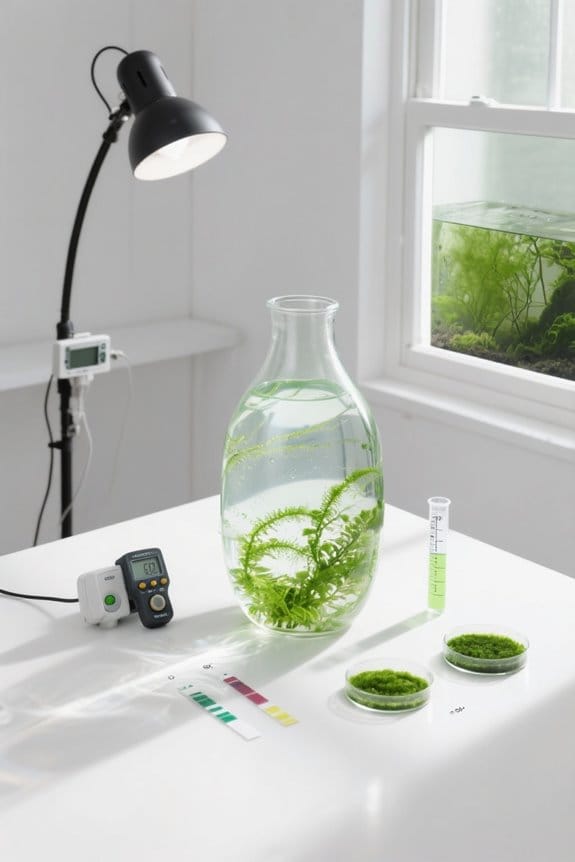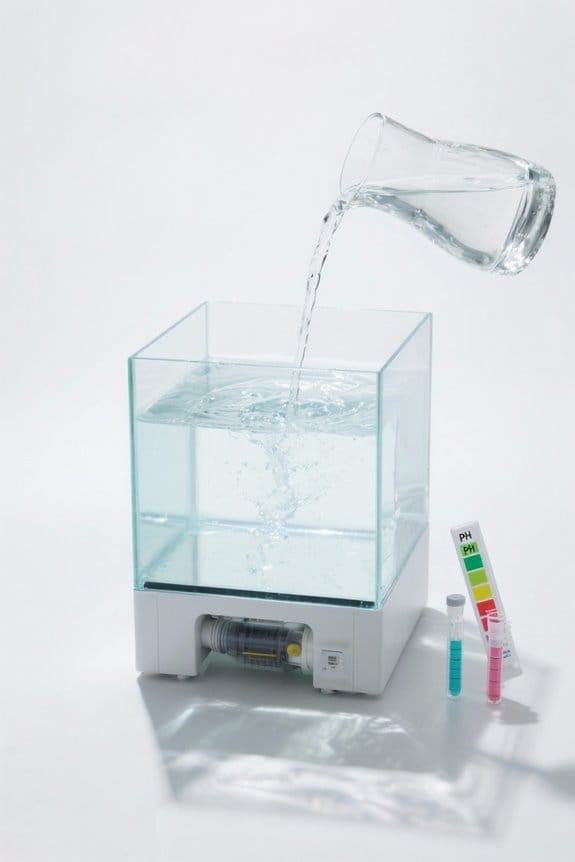

In a new aquarium, conduct water changes 2-3 times a week for the first month. Aim to replace 10-25% of the tank volume each time, which helps dilute toxins like ammonia and nitrite. Consistent changes support beneficial bacteria growth vital for a healthy ecosystem. After about two weeks, a 25% change can further stabilize toxin levels. Monitoring water conditions remains essential, ensuring a thriving environment for fish and plants—explore further practices for best aquarium care.
Key Takeaways
- Perform water changes 2-3 times a week during the first month to stabilize your new aquarium environment.
- After 15 days, aim for a 25% water change to manage toxin levels effectively.
- Heavily stocked tanks may require weekly changes of 30-50% to prevent ammonia and nitrite spikes.
- As the tank matures, reduce frequency to every 2-4 weeks based on water quality.
- Regularly monitor ammonia and nitrite levels to ensure they reach zero before making changes.
Importance of Water Changes in New Aquariums
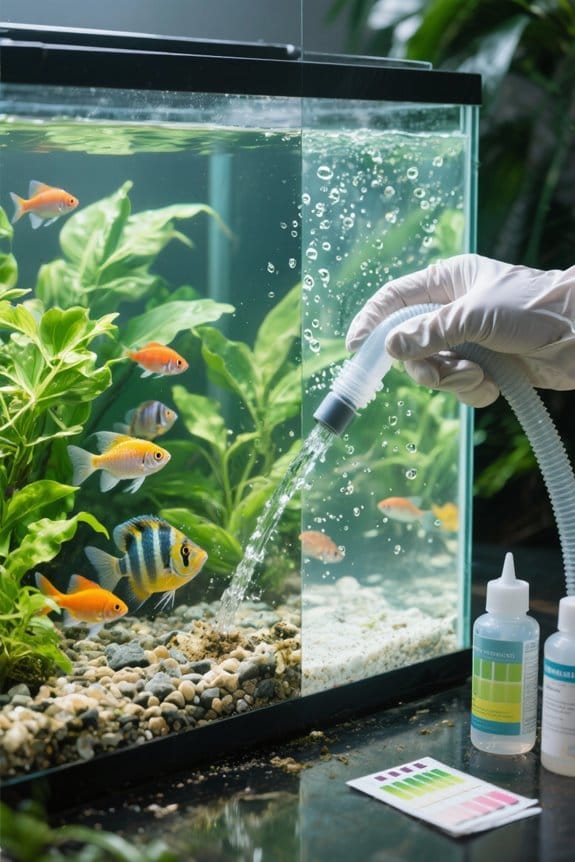
When establishing a new aquarium, understanding the importance of frequent water changes is essential for creating a stable aquatic environment. Initially, performing water changes 2-3 times a week helps prevent ammonia and nitrite spikes, critical during the cycling process. Aim for 10-25% of the tank volume with each change, tailored to the bio-load of your aquarium. This practice dilutes toxins while supporting the growth of beneficial bacteria. Regular water condition monitoring and following dosage instructions maximize bacteria product effectiveness, ensuring a healthier tank environment. Regular water changes also maintain ideal water quality by removing accumulated pollutants, ensuring a healthier habitat. Consistently monitor parameters such as ammonia and nitrates, as skipping these changes can lead to algae growth and fish stress, compromising their immune systems. Prioritize water changes to foster stability in the new tank ecosystem.
Recommended Frequency for New Tanks

Establishing a consistent water change routine is essential for the success of a new aquarium. During the first month, perform water changes 2-3 times a week to stabilize the tank environment. After the initial 15 days, conduct a 25% water change to assist in managing toxin levels as the nitrogen cycle progresses. For heavily stocked tanks, weekly changes of 30-50% may be necessary to prevent toxic ammonia and nitrite spikes. As the aquarium matures and established tanks develop, frequency can decrease to every 2-4 weeks, depending on the bioload. Always monitor ammonia and nitrite levels, introducing changes only when these values reach zero, ensuring a healthy, thriving aquatic environment. Additionally, submersible aquarium heaters with adjustable temperature ranges can help maintain optimal conditions for aquatic life.
Managing Ammonia and Nitrite Levels

Monitoring ammonia and nitrite levels should occur regularly, especially in the early stages of a new aquarium setup. Conduct water changes of about 25% every few days during this initial cycling phase to help manage potentially harmful spikes. After each water change, test for ammonia and nitrite levels; this step is vital, as fluctuations can lead to fish stress or harm. Consider using ammonia-neutralizing products, like Seachem Prime, to assist in maintaining safe levels before beneficial bacteria establish. Additionally, keeping the fish population light initially will help control ammonia and nitrite, preventing overload on the biological filtration system. Consistent water changes not only dilute harmful toxins but also support a stable nitrogen cycle, important for a healthy aquarium. Choose formulations high in stabilized vitamin C to boost immune systems, as highlighted in the best carnivorous fish foods, which can also support overall aquarium health.
Signs Your Tank Needs a Water Change
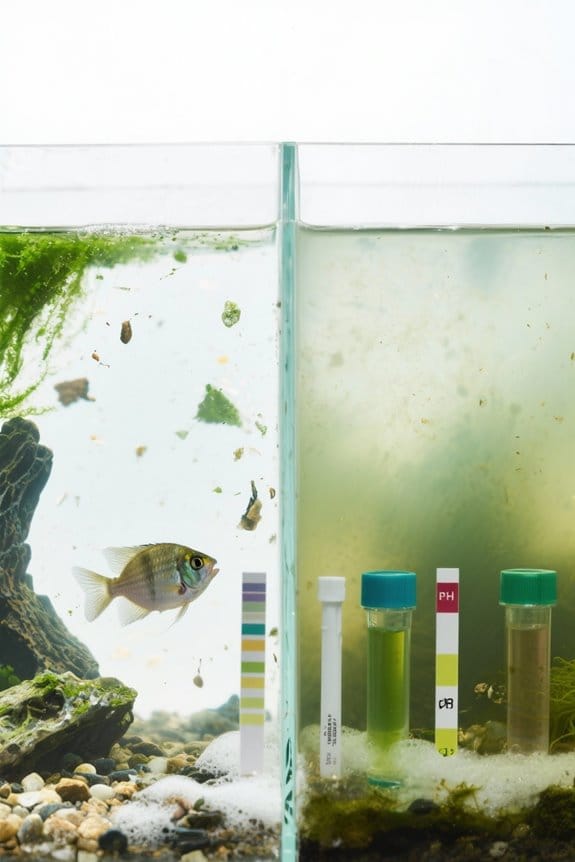
Recognizing the signs that a tank needs a water change is essential for maintaining a healthy aquarium environment. Elevated ammonia or nitrite levels above zero during water testing indicate a significant need for a change, as this can stress fish. Frequent algae blooms signal excess nutrients in the water, necessitating immediate action to restore balance. If the water appears cloudy, it may suggest bacterial blooms that require dilution to maintain aquatic health. A strong fish odor or visible debris on the substrate points to poor water quality and calls for a prompt water change. Keep an eye on fish behavior; lethargy or gasping at the surface can signal deteriorating conditions, urging a critical water change for their well-being. Regular testing is essential to maintaining optimal water conditions and preventing fish loss, highlighting the importance of consistent monitoring for a thriving aquatic ecosystem.
Equipment Needed for Water Changes
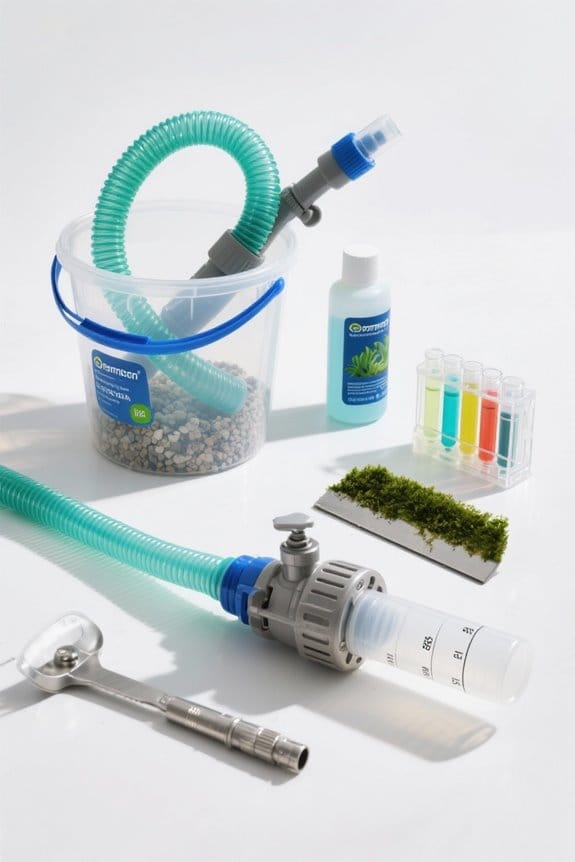
To maintain a healthy aquarium, having the right equipment for water changes is vital. Start with a large bucket, preferably around 5 gallons, to facilitate easy water removal and accurate volume measurements. A siphon or gravel vacuum is indispensable; it helps both remove old water and clean the substrate, effectively eliminating accumulated waste and toxins. Additionally, incorporate a dechlorinator to treat tap water before introducing it to the aquarium, neutralizing harmful chlorine. A water test kit is fundamental for monitoring important parameters like pH, ammonia, nitrite, nitrate, and GH/KH; this guarantees ideal water quality during and after changes. Finally, possessing a net helps remove plant debris or waste, promoting a cleaner environment throughout the process. Consider using multi-functional models that can handle water changes, gravel cleaning, and algae removal for comprehensive maintenance.
Step-by-Step Guide to Performing a Water Change
Performing a water change effectively begins with proper preparation, ensuring that all supplies are ready and that new water is suitable for the aquarium. First, dechlorinate the new water and allow it to settle for up to 24 hours. Next, turn off any exposed equipment, such as filters and heaters, to prevent damage. Using a siphon or gravel vacuum, remove approximately 25% of the old water while cleaning the substrate. This process eliminates accumulated waste and debris. After siphoning, gradually introduce the new water into the aquarium to minimize stress on the fish and avoid environmental disturbance. Finally, monitor the water parameters frequently post-change to maintain ideal conditions for fish health, ensuring a healthy aquarium ecosystem. Opt for siphon hoses made of durable, non-toxic PVC to ensure the safety of fish during the cleaning process.
Water Quality Testing and Monitoring
Ensuring ideal water quality is fundamental to maintaining a thriving aquarium ecosystem. Regular water quality testing is essential, especially during the initial stages of a new setup. Weekly tests should measure pH, ammonia levels, nitrite, nitrate, and hardness. Ammonia and nitrite levels must remain at zero; any fluctuations can stress fish and lead to health problems. Use water testing kits, like API Freshwater Master Test Kit, for accurate results. Record these parameters in a log to track changes over time, which helps inform adjustments in maintenance routines. Understanding specific requirements for both aquatic plants and livestock prevents chemical buildup and maintains stability, fostering a healthy environment for all inhabitants in the aquarium. Consistent use of ammonia detoxifiers helps maintain water stability in aquariums.
Dechlorination and Water Preparation
Water quality tests alone are not sufficient to guarantee a healthy aquarium environment; the preparation of new water for changes is equally important. Dechlorination is essential when using tap water for water changes, as chlorine can harm fish and beneficial bacteria. Always use a dechlorinator specifically designed for aquariums, ensuring it effectively neutralizes harmful chemicals without adversely affecting aquatic life. After dechlorination, allow the new tank water to sit for at least 24 hours; this process helps stabilize water parameters before introducing it to the aquarium. Additionally, match the temperature of the new water to that of the tank to prevent shocking the fish, ideally within a few degrees. Regularly test both tap water and aquarium parameters to maintain stability. It’s crucial to use non-toxic sealants when setting up the aquarium to ensure the safety and well-being of aquatic life.
Adjusting Water Change Frequency Over Time
Establishing the right water change frequency is crucial for maintaining a healthy aquarium environment over time. Initially, during the setup phase, conduct water changes 2-3 times a week to stabilize conditions and support the nitrogen cycle. As beneficial bacteria develop, shift to weekly changes, replacing 25-30% of water, enabling less care. In lightly stocked tanks or those with stable parameters, consider changing water every 2-4 weeks, depending on overall quality. For heavily stocked or sensitive species, increase changes to 50% weekly to maintain ideal water quality. Regularly monitor key parameters like ammonia and nitrate levels, adjusting water changes as necessary, using treated tap water to guarantee a balanced ecosystem that benefits both fish and plants. When establishing a new aquarium with frogspawn corals, it’s important to also maintain pH levels within the recommended range to ensure optimal coral health and growth.
Community Insights on Water Change Practices
As new aquarists immerse themselves in the hobby, they often seek guidance from experienced members of the community about effective water change practices. Many recommend performing water changes 2-3 times a week during the first month to aid the cycling process and establish stability. This frequency helps to manage ammonia and nitrite levels, which should drop to zero before decreasing water change frequency. Community insights emphasize adjusting practices based on fish behavior and water parameters. Some suggest smaller, frequent changes of 10-15% for less stress, while others advocate for larger changes, up to 50%, to quickly eliminate pollutants. Utilize a dechlorinator, ensuring tap water is safe for fish after changes, which reflects a widespread community consensus. Regular testing is essential to maintain optimal aquatic environments and ensure that water quality remains balanced and safe for aquatic life.
Frequently Asked Questions
How Often Should I Do Water Changes in a New Fish Tank?
Water change frequency in a new fish tank is vital; performing changes 2-3 times weekly supports ideal tank maintenance tips and guarantees fish health considerations, promoting stability and mitigating harmful toxin buildup during the cycling phase.
How Long Should a 10 Gallon Tank Cycle Before Adding Fish?
A 10-gallon tank typically requires a cycling duration of 4 to 6 weeks to develop beneficial bacteria. Fishless cycling is recommended for ideal conditions, ensuring ammonia and nitrite levels are stable before introducing fish.
How Long Until Tap Water Is Safe for Fish?
Timely tap water treatment transforms unsafe water into fish-friendly conditions almost instantly. Utilizing proper fish acclimation methods and effective water conditioning products guarantees a safe environment, essential for maintaining healthy aquatic life in any aquarium.
Are Water Changes Stressful for Fish?
Water changes can induce fish stress if not managed properly. Maintaining water quality during the acclimation process is vital; careful monitoring and gradual changes help mitigate stress and promote a healthier environment for the fish.