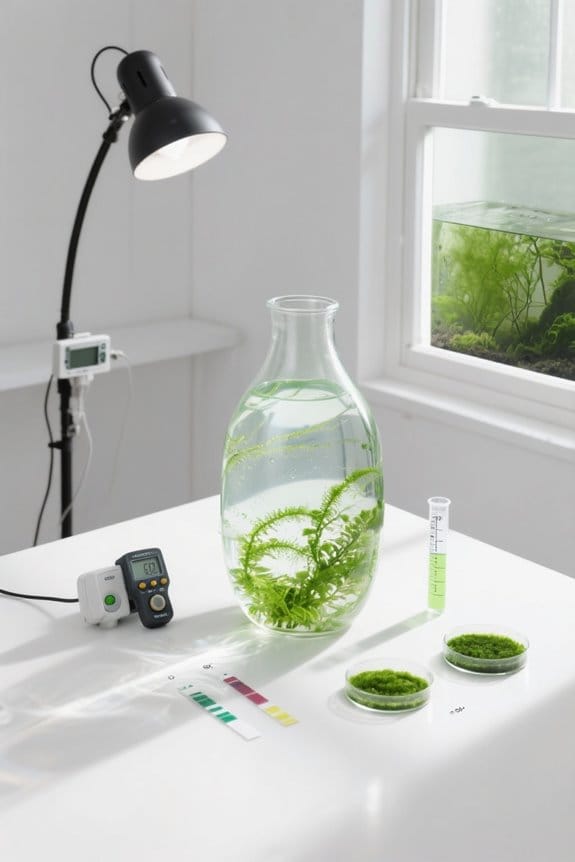
To safely perform large water changes in heavily stocked tanks, begin with a gravel vacuum to remove waste, followed by a 30-50% water removal each week. Guarantee the new water is dechlorinated and temperature matched within 2-3°F. Use a water test kit to monitor pH and ammonia levels, adjusting as required. Integrate gradual changes over several hours to minimize stress. Utilize tools like the Python No Spill Clean and Fill for efficiency; further details will provide additional insights.
Key Takeaways
- Perform 30-50% water changes weekly to manage high bioloads and maintain water quality.
- Use dechlorinated, temperature-matched water (max 2-3°F difference) to prevent stress on fish.
- Employ a reliable gravel vacuum to remove detritus and enhance substrate cleaning during water changes.
- Monitor water parameters like ammonia, nitrite, and nitrate before and after changes to ensure a stable environment.
- Gradually introduce new water over several hours to allow fish acclimation and maintain biological stability.
Importance of Regular Water Changes

The cornerstone of successful aquarium management is the practice of regular water changes. Weekly water changes are essential, especially in heavily stocked tanks, to prevent harmful nitrate accumulation. High bioloads require 30-50% water changes each week to maintain ideal water parameters. For newly established tanks, performing water changes 2-3 times weekly during the first month is vital for stabilizing water parameters and facilitating beneficial bacteria growth. In tanks with problematic tap water, a 10-20% weekly water change is advised to reduce risks associated with heavy metals and ammonia exposure. Consistent water changes greatly enhance tank health, promoting the well-being of both fish and aquatic plants, and therefore ensuring a thriving aquatic environment for all inhabitants. Regular testing of key parameters such as pH, ammonia, nitrite, and nitrate is important for early identification of water quality issues.
Assessing Tank Stocking Levels
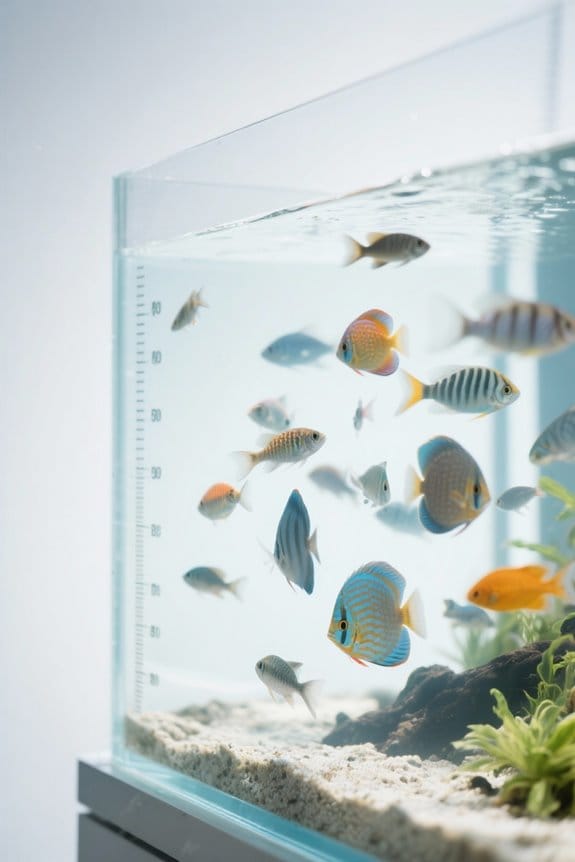
Evaluating tank stocking levels is fundamental for maintaining a balanced aquarium environment. Begin by monitoring the bioload, as overcrowded tanks produce more waste and can complicate water quality management. Use the inch-per-gallon rule as a guideline, which suggests one inch of fish per gallon of water for community tanks. Regularly test water parameters such as ammonia, nitrite, and nitrate to assess the effects of the current stocking levels on tank health. If readings rise, consider reducing the number of fish or upgrading filtration. Pay attention to the specific needs and compatibility of tank inhabitants, as different species contribute differently to the overall bioload. Regular testing is vital to prevent toxic buildup, as seen in highly sensitive ammonia testing, which can detect levels down to 0.05 mg/L. This assessment guarantees the well-being of aquatic life and facilitates successful large water changes.
Required Equipment for Water Changes

Starting on large water changes requires a set of essential tools to guarantee success and safety. First, use a large bucket, around 5 gallons, to facilitate easy water removal while accurately calculating percentage changes. A reliable gravel vacuum, such as the Qanvee siphon, is necessary for effectively removing old water and cleaning the substrate. Additionally, a dechlorinator is vital for treating tap water, neutralizing harmful chemicals before it re-enters the tank. To maintain ideal water quality, employ a water test kit to monitor pH, ammonia, nitrite, nitrate, and hardness levels. Finally, consider using a net for removing plant waste and debris, creating a cleaner environment pre-water change, which enhances overall tank health. Regular water changes are essential for fish health and toxin prevention, making them a crucial part of maintaining a healthy aquatic environment.
Preparing the New Water

Preparing new water effectively involves several essential steps that, when followed carefully, can provide a stable environment for aquatic life. Begin by preparing the new water at least 24 hours in advance; this allows for ideal parameters and prevents sudden changes. Always dechlorinate the new water to eliminate harmful chemicals, especially when using tap water, providing safety for fish and plants. Next, match the new water’s temperature to that of the tank, aiming for a difference of no more than 2-3 degrees Fahrenheit to prevent shock. Additionally, test the new water’s pH, ammonia, nitrite, and nitrate levels to verify compatibility with existing chemistry. If using mineral-rich sources like RO or HMA filters, confirm their outputs meet your tank’s specific needs. It is important to use conductivity meters to ensure the new water’s salinity and overall conductivity are optimal for the aquatic environment, as these devices can provide accurate readings crucial for maintaining the health of the tank’s inhabitants.
Techniques for Siphoning Water

Successfully siphoning water from an aquarium is essential for maintaining a healthy environment, and utilizing effective techniques can make the process smoother. Begin with a siphon or gravel vacuum, keeping the head close to the substrate for optimum waste removal. Carefully start siphoning from a chosen area, allowing gravity to aid the flow, which minimizes stress on fish. Monitor the flow rate to prevent rapid water level drops, aiming for a steady, controlled siphon. To protect small fish or invertebrates, employ a mesh pre-filter or guide the siphon away from those sensitive zones. Additionally, prime the siphon in empty tanks or containers before beginning water changes, facilitating easier and quicker removal of water. Electric gravel vacuums offer multifunctional capabilities such as debris cleaning and water changing, making them highly efficient tools for aquarium maintenance.
Gradual Introduction of New Water
After siphoning out the old water, attention turns to the next step: adding fresh water back to the aquarium. To guarantee a safe change during large water alterations, pursue a gradual introduction of new water. Pour it slowly into the tank using an elevated bucket, allowing for a gentle flow that minimizes turbulence. Maintain a close watch on temperature; aim for a difference of no more than 1-2 degrees Celsius. Verify the pH levels align as well. Consider splitting significant changes into smaller increments—two 25% changes instead of one 50%—to reduce stress on aquatic life. Finally, always use dechlorinator in the new water to effectively neutralize harmful substances, safeguarding the health of your fish. Many gravel cleaners offer multi-functional capabilities that assist with both water changes and debris management, reducing the need for multiple tools and simplifying the maintenance process.
Monitoring Water Parameters
Monitoring water parameters is essential for maintaining a healthy aquarium environment, especially in heavily stocked tanks. Regular testing of pH, ammonia, nitrite, and nitrate levels is vital; these metrics guarantee livestock health and reveal any harmful fluctuations. After performing water changes, it’s important to monitor these parameters closely. Establish a baseline before changes to detect shifts that may stress aquatic life. Utilize a high-quality water test kit, such as API Freshwater Master Test Kit, for accurate readings. Aim for consistent checks every few days following significant water changes, as this practice prevents toxic buildups and supports a balanced ecosystem. Immediate corrective actions based on test results can safeguard fish and plants from environmental harm. For accurate water quality monitoring, using ammonia test kits that can detect levels as low as 0.25 ppm is crucial to ensure the safety of your aquatic inhabitants.
Dechlorinating New Water
Dechlorinating new water is an essential step in safely upkeeping an aquarium, as chlorine and chloramine present in tap water can seriously harm fish and plants. To effectively dechlorinate, use a commercial dechlorinator, and follow the manufacturer’s dosage instructions, typically a few drops per gallon. For a simple alternative, allowing tap water to sit for 24 hours can help reduce chlorine through evaporation, but this method is less reliable for chloramine. Some dechlorinators also detoxify heavy metals, making them safer for sensitive species like shrimp and certain fish. Always test water parameters, especially chlorine levels, before and after dechlorination with a water test kit. This guarantees a safe and healthy environment for aquarium inhabitants. It is also important to choose dechlorinators that are suitable for the specific type of aquarium, whether it is freshwater or saltwater, to ensure optimal fish health and safety.
Addressing Specific Tank Needs
Understanding the unique requirements of an aquarium is vital for maintaining a thriving ecosystem. For heavily stocked tanks, perform large water changes of 30-50% weekly. This practice effectively removes waste and prevents toxin accumulation. Always use dechlorinated, temperature-matched water to reduce stress on aquatic life. Siphon the substrate thoroughly while draining to guarantee built-up waste is eliminated. After each large water change, monitor water parameters such as pH, ammonia, nitrite, and nitrate frequently, checking for sudden fluctuations. Implementing gradual water changes over several hours is advisable, allowing fish and other inhabitants to acclimate smoothly. This method guarantees a stable environment, safeguarding sensitive livestock against potential harm and promoting overall tank health. Consider using a Python No Spill Clean and Fill system, which simplifies the process of water changes by eliminating the need for messy buckets and is suitable for both freshwater and saltwater aquariums.
Community Insights and Best Practices
Successful aquarium maintenance heavily relies on community insights and best practices shared among seasoned hobbyists. To effectively manage tank health, consider changing 30-50% of the water weekly, based on your bioload and water quality. Experienced aquarists often advocate for frequent, smaller water changes rather than infrequent large ones, as this minimizes stress on fish and plants. Always use dechlorinated, temperature-matched water to prevent shocking the aquatic inhabitants. Employ a gravel vacuum during siphoning; this technique cleans the substrate while removing old water, enhancing tank health. Consider using a multi-functional model that can handle water changes, gravel cleaning, and algae removal for comprehensive maintenance. Finally, monitor water parameters, such as pH, ammonia, and nitrates, particularly after large changes, to guarantee a safe environment for sensitive species, creating a thriving aquatic ecosystem.
Frequently Asked Questions
How to Do a Large Water Change in a Fish Tank?
To perform a large water change in a fish tank, one must prioritize tank maintenance by removing 30-50% of water, ensuring water quality with dechlorinated, temperature-matched water, and monitoring conditions post-change for stability.
Do Heavily Planted Tanks Need Water Changes?
Heavily planted tanks require water changes to guarantee water quality and promote plant health. Regular water changes remove accumulated organics and prevent toxic levels of ammonia and nitrites, contributing considerably to a balanced aquatic ecosystem.
Can You Do Too Many Water Changes in a Fish Tank?
Yes, excessive water change frequency can lead to fish stress, destabilizing the aquarium environment. Gradually adjusting water changes is essential to maintain balance and guarantee the health of both fish and beneficial bacteria in the tank.
How to Change Water in Fish Tank Without Killing Fish After?
To change water without harming fish, one must gradually replace portions, ensuring temperature stability and monitoring water parameters. This approach minimizes fish stress, maintaining a healthy environment and preventing potential harm to aquatic life.