To set up a quiet aquarium in a bedroom or home office, choose a 10 to 20-gallon tank, weighing approximately 83 to 120 lbs when full, to maintain better water conditions. Position the tank away from high-traffic areas and avoid direct sunlight to minimize temperature fluctuations. Use sponge filters and low-noise pumps, incorporating LED lights. Regular maintenance, including 20% weekly water changes, guarantees fish health. These steps will create a tranquil atmosphere, enhancing focus and relaxation. Explore additional details on specific aquascaping techniques and fish selections.
Key Takeaways
- Choose a small, quiet tank, like a 10 or 20-gallon, positioned away from high-traffic areas for minimal distractions.
- Use low-noise equipment, such as sponge filters and submersible heaters, to maintain a tranquil aquarium environment.
- Incorporate calming fish species, like bettas or tetras, alongside live plants for enhanced aesthetics and water quality.
- Conduct regular maintenance, including water changes and temperature checks, to ensure a healthy and peaceful aquarium.
- Utilize soft, ambient lighting and decorative elements to create a soothing atmosphere conducive to relaxation and productivity.
Importance of a Quiet Aquarium Environment
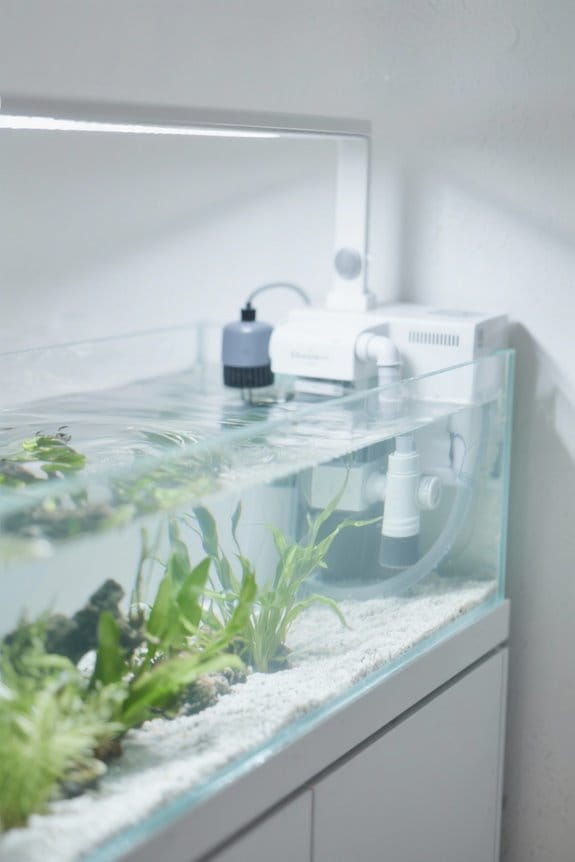
Creating a quiet aquarium environment is essential for fostering a calming atmosphere in any space, especially in areas designated for relaxation or focus. To minimize noise pollution, utilize a sponge filter, which offers gentle water movement and operates quietly. This choice reduces distractions effectively. Position the aquarium away from high-traffic zones, thereby limiting disturbances that could heighten stress levels. Select fish species known for their calm demeanor, such as bettas or tetras, to further promote tranquility. Incorporate silent pumps and sound-dampening materials in the tank’s construction to enhance the peaceful experience. Tetra Whisper Technology utilizes sound-dampening chambers and a patented dome shape to minimize noise, making it an excellent choice for maintaining a serene environment. Ultimately, these considerations contribute to an aquarium setup that supports relaxation and mental clarity, creating an ideal sanctuary in your bedroom or home office.
Choosing the Right Size Tank for Your Space

When deciding on the appropriate tank size for a bedroom or home office, it is crucial to evaluate the specific dimensions and weight of the aquarium setup. A 10-gallon tank is often ideal for small spaces, weighing about 83 lbs when full and allowing for easy maintenance. If more water volume is needed for better water parameters, consider a 20-gallon tank, which weighs between 110 and 120 lbs when full. For a calming environment, a nano tank of 5 gallons or less occupies minimal space while providing a soothing visual. Ascertain the tank fits aesthetically into the room and consider its practical needs, such as filtration access and structural support for larger tanks like 30 gallons, weighing around 250 lbs. To enhance the aesthetic appeal and functionality of your aquarium space, consider using suction cup hooks for organizing accessories and decorations without damaging your walls or furniture.
Benefits of a Nano Aquarium in Bedrooms

A nano aquarium, typically defined as a tank containing 10 gallons or fewer, offers several advantages for bedroom environments. Its compact size allows for placement in limited spaces, making it ideal for various bedroom layouts. Nano tanks also require less water, simplifying maintenance routines since water parameter fluctuations are easier to manage. Additionally, using quiet sponge filters guarantees minimal noise pollution, providing a peaceful ambiance. Observing tranquil fish species, such as bettas or small tetras, can help reduce stress and enhance a sense of well-being. Furthermore, carefully chosen fish contribute to the tank’s aesthetic, creating a serene focal point that promotes relaxation. Overall, a nano aquarium enriches the bedroom experience in multiple beneficial ways. Adding aquaculture corals, like Montipora digitata, can introduce vibrant colors and textures while promoting sustainability in your bedroom aquarium.
Selecting an Appropriate Location for Your Tank

Selecting the right location for a nano aquarium is fundamental to guaranteeing both fish health and the ease of maintenance. First, choose a quiet location within the room; this promotes a peaceful environment. Next, verify the selected area has a flat, hard, and waterproof surface, as a filled 20-gallon tank can weigh between 110 to 120 lbs. Position the aquarium away from direct sunlight to reduce algae growth and temperature fluctuations. Additionally, consider the room size; make certain it is accessible for routine maintenance. Proximity to electrical outlets is essential for equipment, while keeping the tank away from air conditioning ducts and heat sources protects water temperature. Finally, prioritize quieter filter options to maintain tranquility. In the context of air line splitters, regular inspections and cleaning are essential to check for wear and corrosion; this maintenance practice can also be applied to aquarium equipment for optimal performance.
Weight Considerations for Safe Placement

Given the significant weight of a filled aquarium, careful attention must be paid to its placement to guarantee safety and stability. A standard 20-gallon tank can weigh approximately 110 to 120 lbs when filled with water, so assess the strength of the supporting surface before setting it up. Make certain that the stand can support the total weight, including substrate, decorations, and equipment, which may reach over 1,000 lbs for larger tanks. Avoid placing aquariums on older flooring that may have settled or weakened. Additionally, distribute weight evenly across the stand, as uneven pressure can lead to stress points, increasing the risk of breakage. For safe placement, always prioritize a sturdy, level foundation for your aquarium setup. It is also important to consider energy efficiency when selecting filtration systems to minimize electricity usage and operational costs.
Essential Quiet Equipment for Low Noise Operation
While setting up an aquarium, choosing quiet equipment is essential for fostering a peaceful aquatic environment, particularly in living spaces where noise can be disruptive. To enhance low-noise operation, opt for sponge filters, as they are quieter than traditional air pumps and still provide adequate biological filtration for small tanks. Utilize submersible heaters designed specifically for low-noise operation to maintain stable water temperatures with minimal sound. For lighting, select LED solutions rather than fluorescent or metal halide lights, which generate more noise. Additionally, choose a tank size appropriate for your space; smaller tanks usually feature less equipment, naturally lowering noise levels. Finally, guarantee that the aquarium stand is stable and properly aligned to minimize vibrations that contribute to noise during operation. Sponge filters are ideal for breeding tanks due to their gentle water flow and safety features.
Decorating Your Aquarium for Serenity
To create a serene aquarium, attention must be given to the selection of decorations and plants that not only enhance the aesthetic but also promote tranquility for both the fish and the observer. Opt for muted color schemes in soft blues, greens, or earth tones, as these elicit a calming atmosphere. Incorporate smooth pebbles and natural driftwood, which enhance the organic feel and mimic aquatic environments. Use live aquatic plants to improve water quality and oxygen levels, generating a peaceful ambience. Install soft LED lighting, illuminating without glare, further enhancing the tranquil experience. Establish hiding spots with decorations, offering fish a sense of security, reducing stress, and promoting natural behavior in your serene setup. Including grindal worms in your fish’s diet can improve their health and vitality, contributing to an overall serene and thriving aquarium environment.
Maintaining Consistent Temperature and Conditions
Creating a serene environment in an aquarium involves more than just thoughtful decoration; maintaining consistent temperature and conditions is equally important for the health and well-being of aquatic life. Focus on maintaining a range of 74-80°F for tropical fish, using the Right Aquarium Heater, preferably one rated at about 5 watts per gallon of water volume. Regularly monitor the temperature with a quality thermometer, placing it in various spots within the tank to guarantee even heating. Avoid placing the aquarium in direct sunlight or near heat sources, as this can lead to harmful fluctuations. Utilizing an aquarium lid minimizes evaporation and keeps both temperature and water quality steady. Also, consider a larger tank size for better temperature stability. Many submersible aquarium heaters include safety features such as automatic shut-off mechanisms to prevent overheating, ensuring a safer environment for your fish.
Ensuring Minimal Light Exposure for Algae Control
Positioning an aquarium away from direct sunlight is essential for controlling algae growth, as excessive light can greatly boost algae proliferation. To regulate light exposure, utilize LED lighting timers, keeping lights on for only 8-10 hours daily. This schedule helps limit algae growth by reducing the light available for algae to flourish. Incorporate floating plants or a background to shade the water, decreasing light penetration and further preventing algae. Regularly clean aquarium surfaces and perform partial water changes of 10-20% weekly to eliminate excess nutrients spurred by light exposure. Finally, consider a low-light aquatic plant setup, as healthy plants can outcompete algae for nutrients, fostering a balanced ecosystem while requiring minimal light. Additionally, integrating live aquarium plants like Anubias and Java Fern can enhance the tank’s aesthetic while contributing to a healthier ecological system.
Regular Maintenance Routines for Healthy Fish
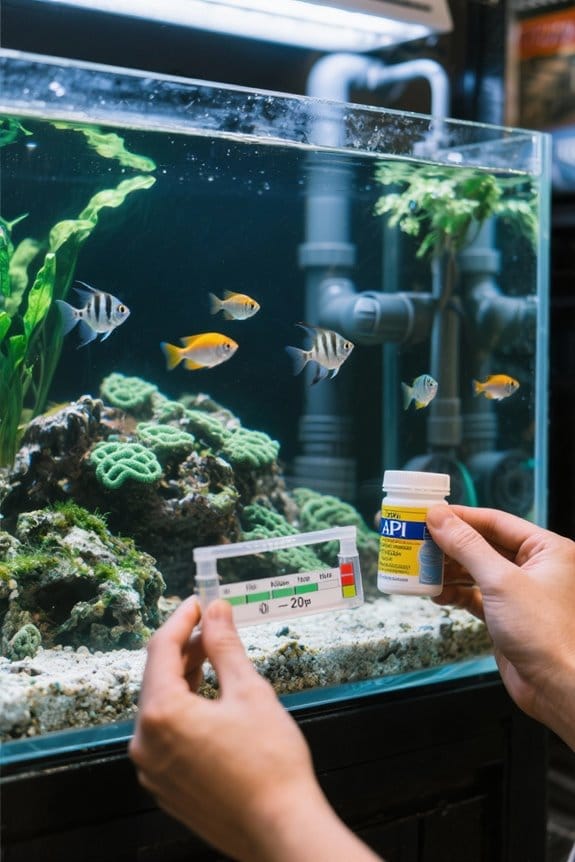
Implementing regular maintenance routines is essential for guaranteeing a thriving aquatic environment for fish. Begin with weekly water changes of 20%, or biweekly changes of 50%, to maintain water quality and help to reduce toxins like ammonia and nitrites. Test water parameters weekly using a reliable test kit, ensuring pH, hardness, and nitrate levels remain safe for your fish tank inhabitants. Clean the filter every 4-6 weeks using tank water to preserve beneficial bacteria. Daily monitor the tank temperature with a heater thermostat and a backup thermometer, keeping it ideal for your species. Additionally, schedule a complete tank clean every 1-3 months, including substrate vacuuming, to remove waste buildup and prevent water quality issues. Regular use of gravel siphons enhances water quality by efficiently removing debris and reducing waste buildup, promoting overall aquarium health.
Creating a Relaxing Atmosphere With Aquascaping
A well-designed aquascape transforms a standard aquarium into a serene oasis. Incorporate soft, ambient lighting to enhance the beauty of fish and plants, creating a calming atmosphere suitable for bedrooms and home offices. Opt for live plants like Java Fern or Anubias, which maintain water quality by absorbing excess nutrients and providing oxygen. Additionally, add decorative elements such as smooth stones and driftwood for a natural look, fostering relaxation. Make sure to use low-noise filtration systems, like sponge filters, to minimize disturbances. This balanced aquascaping design, with strategic hiding spots for fish, encourages natural behaviors and enriches the viewing experience. These choices will help you determine the right setup answering frequently asked questions about ambiance and tranquility.
Enhancing Productivity With a Peaceful Aquarium Setup
Creating a peaceful aquarium setup can greatly enhance productivity, especially in personal spaces like home offices and bedrooms. To achieve this, select a freshwater aquarium of 10 gallons or less, which offers manageable care. Opt for a sponge filter to minimize noise, as it operates quietly compared to traditional options. Include different species, such as calm bettas or guppies, which contribute to a soothing atmosphere. Enhance the environment with aquascaping elements like plants, which not only beautify the tank but also act as sound barriers to reduce filtering noise. Implement regular maintenance, performing weekly 20% water changes to maintain ideal water quality. This consistent care fosters a tranquil workspace, encouraging focus and reducing stress, ultimately boosting productivity.
Frequently Asked Questions
Is It Okay to Put an Aquarium in the Bedroom?
Placing an aquarium in the bedroom can be beneficial for sleep quality and stress relief. Its calming presence fosters a soothing atmosphere, ultimately enhancing relaxation and creating a more peaceful environment conducive to restful slumber.
Where to Put a Fish Tank in an Office?
He recommended positioning the aquarium based on tank size, ensuring it suits various fish species. Ideal lighting options should be considered, avoiding direct sunlight to prevent algae growth while enhancing the office’s visual appeal.
How to Make Your Aquarium Silent?
To achieve a silent aquarium, one should implement silent equipment solutions, utilize vibration reduction techniques, and manage water flow effectively. These strategies guarantee minimal noise disruption while maintaining a healthy aquatic environment.
Which Direction Should Aquarium Be Placed in Office?
The aquarium should ideally face southeast for ideal feng shui, enhancing prosperity. Proper tank lighting supports health, while careful fish species selection promotes harmony, creating a peaceful workspace to improve focus and well-being.