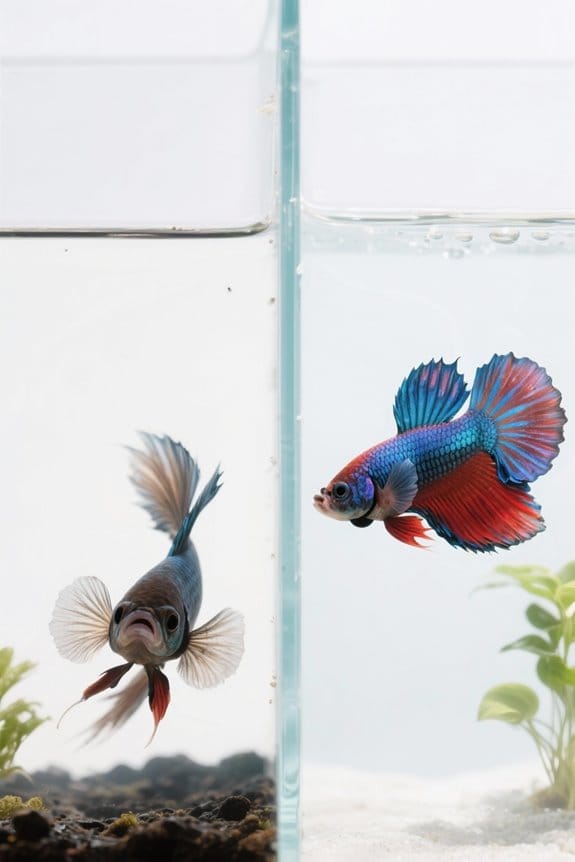
Overfeeding a betta is evident through signs like a swollen abdomen, lethargy, and irregular swimming patterns. Look for decreased appetite or unpassed waste. To correct this, reduce feeding to 4-6 pellets sized like the betta’s eyeball, twice daily, and implement a fasting day. Always remove uneaten food within five minutes to maintain water quality. Regularly test water parameters and perform weekly water changes. Discover more practical tips to guarantee your betta stays healthy and energetic.
Key Takeaways
- A swollen or bloated abdomen in your betta indicates potential overfeeding, leading to swim bladder issues and discomfort.
- Observe for lethargy; an overfed betta may hide frequently and show less activity in the tank.
- Excessive gill flaring can signal irritation due to poor water quality from uneaten food breakdown.
- Monitor feeding habits carefully; loss of appetite or lack of stool can indicate dietary distress.
- Implement a fasting day weekly and remove uneaten food within five minutes to correct overfeeding.
Understanding Your Betta’s Diet

Understanding a betta fish’s diet is crucial for maintaining its overall health and vibrancy, as the right nutrition directly influences its well-being. Bettas require a high-protein diet, ideally with around 35% protein from both plant and animal sources. Feed them two to three times daily, using pellets the size of their eyeball, and offer 2-12 pellets based on the product. Make sure the fish finishes its meal within five minutes to enhance water quality, preventing harmful waste buildup. Regularly replace food containers and store food properly; stale food can impact health negatively. Additionally, provide occasional high-protein treats like frozen or freeze-dried food once or twice a week to support a balanced diet. This approach promotes ideal growth and overall health. Looking for a protein content of 40-45% is recommended to support optimal growth and maintain overall health.
Common Signs of Overfeeding
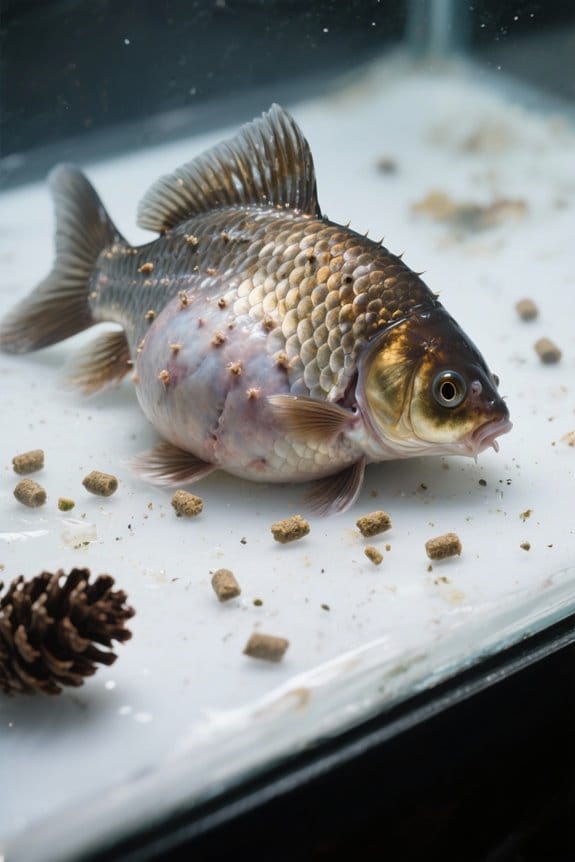
When a betta fish is overfed, several noticeable signs can indicate underlying health issues. A swollen or bloated abdomen often reveals potential swim bladder problems, stemming from excess food intake. Watch for lethargy; an overfed betta may hide more than usual, stressed by deteriorating water quality caused by uneaten food. Excessive gill flaring can signal irritation related to poor conditions. Additionally, observe your betta for a loss of appetite or lack of stool, both signs of distress needing immediate dietary review. Abnormal swimming patterns, like spasms or erratic movements, reinforce the importance of monitoring feeding habits closely. Adjust the feeding quantity to prevent these symptoms, aiming for small portions suitable for your betta’s size and activity level. Incorporating nutrient-rich options such as calcium-enhanced foods can promote overall health and prevent specific issues like weak shell development in snails, which can be a consideration when maintaining a diverse aquarium.
Effects of Overfeeding on Water Quality
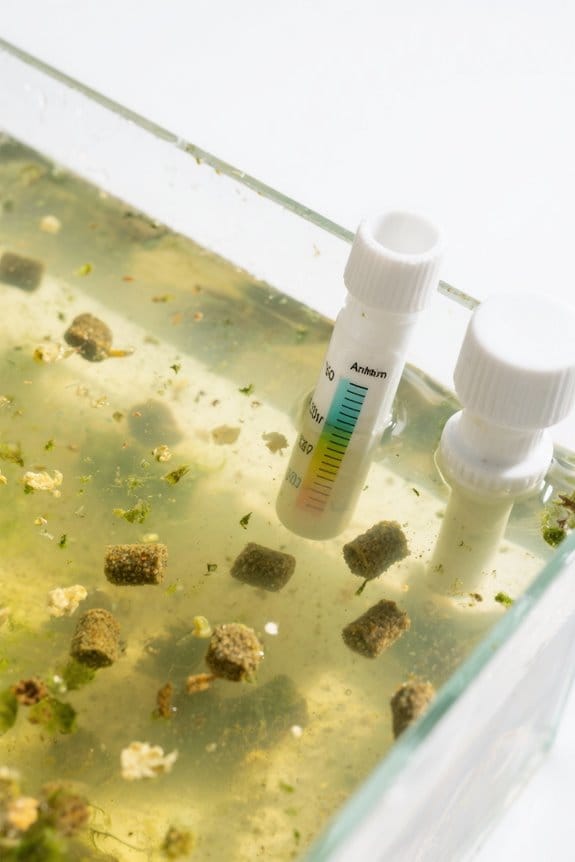
Overfeeding betta fish has direct and often severe consequences on water quality, making it vital for fish owners to be vigilant. Excess food decomposes, creating a sludge of organic waste that increases ammonia and nitrite levels. This spike in toxins can lead to cloudy water, which stresses the fish, evidenced by gill flaring and decreased activity. To combat these issues, regular water changes are essential; aim for 20-30% changes weekly to maintain a healthy environment. Additionally, monitor water parameters using comprehensive testing kits like API Pondcare or 7-in-1 Test Kit for optimal fish health. Remove uneaten food promptly to prevent further pollution. By establishing a strict feeding routine and adhering to a tank cleaning schedule, betta owners can help guarantee peak water quality and promote their fish’s well-being.
Best Practices for Feeding Your Betta

Feeding a betta fish requires careful attention to detail in order to promote health and prevent issues. To effectively feed your betta, provide pellets specifically sized for their eyeball, using about 4-6 pellets per meal, at least twice a day. This approach fosters a balanced diet while avoiding overfeeding. Always observe feeding durations; uneaten food should be removed within five minutes to prevent water quality degradation. Incorporate a fasting day weekly to facilitate digestion, thereby reducing risks like constipation. Additionally, consider offering high-protein treats, such as frozen or freeze-dried foods, once or twice a week to diversify their diet. Monitoring water quality consistently guarantees your betta thrives in a healthy environment without adverse effects. For those growing plants alongside their betta, full spectrum LED lights can enhance plant health and aesthetics while aligning with sustainable living practices.
Recommended Feeding Schedule

Establishing a recommended feeding schedule is vital for maintaining the health and vigor of a betta fish. Feed your betta at least twice daily, providing 4-6 pellets per meal, each about the size of the fish’s eyeball. This portion size guarantees your betta can consume the food comfortably within five minutes, aiding digestion and promoting healthy internal organ function. Additionally, implement a fasting day once a week to further support digestion and prevent health issues associated with overfeeding. Consistency is important, so adhere to the same feeding times and portion sizes daily. Monitor your betta’s appetite and adjust the quantity as needed, especially if the fish appears less active or shows signs of bloating. It’s crucial to maintain water quality by monitoring feeding practices, ensuring that the uneaten food does not degrade the tank environment.
How to Identify and Correct Overfeeding Issues
A healthy betta fish should exhibit vibrant colors and an active demeanor; however, identifying signs of overfeeding is essential for maintaining its well-being. Indicators include a bloated appearance, lethargy, and hiding behaviors. If these signs appear, immediately refrain from feeding for at least one day, allowing for full digestion. Monitor the fish closely for signs of recovery, as overfeeding can lead to health issues like swim bladder disease. Always remove uneaten food within five minutes to prevent water quality degradation. Implement a regular feeding schedule of 4-6 pellets daily, and include occasional fasting days. Maintaining a suitable water temperature between 75 and 80 degrees Fahrenheit enhances metabolism, hence mitigating the effects of overfeeding and reducing the need to feed excessively. Additionally, incorporating active foragers like Amano shrimp in the tank can help maintain cleanliness by consuming uneaten food and debris.
Importance of Regular Tank Maintenance
To guarantee a thriving environment for a betta fish, regular tank maintenance is essential. Establish a cleaning schedule that includes weekly checks of ammonia, nitrite, and nitrate levels, aiming for zero ammonia and nitrite, with nitrates below 20 ppm. Conduct monthly deep cleans, replacing 25-50% of the water using a high-quality water conditioner. Regular tank maintenance prevents waste buildup and toxins from overfeeding, ensuring excellent water quality. Additionally, promptly remove uneaten food within five minutes after feeding to minimize excess waste. By maintaining clear water, you reduce the risk of common issues such as gill flaring and inactivity. This proactive approach fosters a stable habitat, promoting the overall health and wellness of your betta fish. Using an accurate and reliable aquarium thermometer ensures that the water temperature remains optimal, which is vital for maintaining a healthy environment for your betta.
Frequently Asked Questions
How Do I Tell if I Overfed My Betta?
Observing betta behavior can reveal overfeeding, such as lethargy, hiding, and bloating. Additionally, food types that cause rapid digestion should be prioritized, as improper feeding may lead to stress and health issues for the fish.
Can a Betta Recover From Overfeeding?
A betta, like a phoenix after a flame, can indeed recover from overfeeding. Prioritizing betta health through adjusted feeding frequency, water quality improvements, and careful observation fosters resilience and rejuvenation in this vibrant aquatic creature.
How to Tell if You’re Overfeeding Your Fish?
Overfeeding fish can be identified by monitoring feeding frequency and portion control. Signs include lethargy, bloating, or excessive uneaten food in the tank. Regular checks can help maintain proper health and prevent complications.
What Happens if You Feed a Betta Fish Too Much Food?
Feeding a betta fish too much can jeopardize its health, leading to lethargy and swim bladder issues. Adhering to strict feeding guidelines fosters a thriving environment, ensuring vibrant activity instead of distressing symptoms and water quality decay.