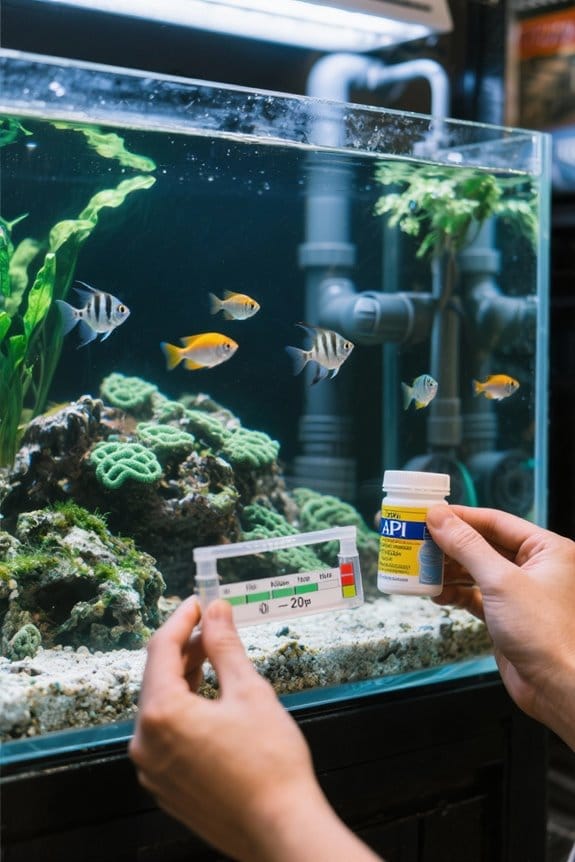
For effective weekly aquarium maintenance, start with a 10% water change to enhance water quality and support beneficial bacteria. Use a dedicated aquarium bucket and a siphon for safe water removal. Test key parameters like pH (6.5-8.2) and nitrate (below 20 mg/L) using reliable kits. Clean algae with an aquarium-safe scrubber and monitor fish behavior for health signs. Maintain water temperature between 74-82ºF (23-28ºC) with a quality heater. More detailed practices and tips await exploration.
Key Takeaways
- Perform a weekly partial water change (10% of total volume) to enhance water quality and support beneficial bacteria in the nitrogen cycle.
- Test water parameters like pH, ammonia, nitrite, and nitrate to ensure a healthy environment for your aquatic life.
- Clean the aquarium glass with an algae scrubber and monitor equipment function to maintain optimal water conditions.
- Feed fish only what they can consume in one minute and implement a fasting day each week to reduce waste.
- Regularly inspect plants for health, trim dead leaves, and ensure lighting matches their needs for healthy growth.
The Importance of Regular Aquarium Maintenance

Regular aquarium maintenance is absolutely vital for sustaining a vibrant and healthy aquatic environment. Performing partial water changes on a weekly basis, typically around 10% of the total volume, effectively improves water quality. This process helps remove harmful waste and maintains the delicate balance required for beneficial bacteria to thrive, supporting the nitrogen cycle. Additionally, routine tasks such as cleaning algae and monitoring equipment guarantee that the aquarium remains visually appealing and operationally efficient. Conduct daily checks on water temperature and fish behavior to identify potential health issues early, enhancing the longevity of your aquatic life. Document all maintenance activities, including test results and schedules, to make informed decisions and optimize your aquarium management strategy. For accurate monitoring, consider using aquarium test strips that provide rapid results within 30 to 60 seconds, ensuring that your aquatic environment remains healthy.
Essential Tools for Aquarium Care

A well-equipped aquarist understands that having the right tools is essential for maintaining a thriving aquarium environment. First, use a dedicated aquarium bucket to prevent cross-contamination with household items. For efficient water changes, employ a siphon; selecting the right tubing size optimizes your cleaning process. Regularly cleaning glass surfaces is critical, so invest in algae scrubbers to keep algae buildup at bay. When cleaning the exterior, an aquarium-safe glass cleaner like Tunze Care Panes guarantees clarity while protecting aquatic life. Consider using a multi-functional gravel vacuum to streamline tank maintenance and enhance overall water quality. To manage plant growth effectively, scissors for trimming live plants are necessary. Finally, always add a water conditioner to guarantee your aquarium remains safe and healthy for its inhabitants.
Daily Checks to Ensure Tank Health

Maintaining an aquarium requires not only the right tools but also a consistent daily routine to guarantee the health of the tank’s environment. Conduct daily checks on the filter equipment and lights, ensuring they operate smoothly and require no maintenance. Monitor the water temperature, keeping it between 74-82ºF (23-28ºC) to support fish health. Observe the fish closely, noting any changes in behavior or appearance that might indicate stress or illness. Remove any uneaten food daily using a siphon or gravel vacuum, as this prevents degradation of water quality. Finally, top off the aquarium water with treated or aged water, ensuring it’s chlorine-free and suitable for aquatic life. These steps will enhance the overall well-being of the aquarium. It’s also important to consider using algae control products as part of your routine to prevent unwanted algae growth and maintain water clarity.
Weekly Water Testing: Parameters to Monitor

Monitoring water quality through weekly testing is essential for maintaining a healthy aquarium environment. Key water parameters to assess include pH, which should ideally range between 6.5 and 8.2, as well as alkalinity and hardness levels appropriate for the specific fish. Regularly check ammonia and nitrite levels to confirm they are at 0 mg/L, and keep nitrate below 20 mg/L to protect fish health. Utilize a reliable water testing kit, especially for saltwater tanks where salinity should also be monitored. Record test results in a logbook or spreadsheet to track changes over time. Conduct water testing before and after water changes to evaluate effectiveness, ensuring a safe environment for aquatic life. It’s recommended to test ammonia levels weekly for accurate monitoring, which can help prevent ammonia poisoning and associated health issues in fish.
Performing Water Changes: Step-by-Step

Initiating water changes is a fundamental practice for maintaining a thriving aquarium. Start by preparing dechlorinated water, ensuring it matches the aquarium’s temperature to avoid stressing fish. Use a gravel vacuum or siphon to remove 10-25% of the tank water, which will also clean debris from the substrate. After draining the water, take an algae scraper to the interior glass, eliminating any algae buildup. Slowly refill the tank with the prepared water, diffusing the flow to prevent substrate disruption. Finally, monitor water parameters such as pH, ammonia, nitrite, and nitrate after the water change, ensuring ideal conditions for fish health. Regular testing allows identification of elevation or decline in phosphate concentrations, which is crucial for maintaining a healthy aquatic environment. Performing these weekly tasks contributes considerably to a healthy aquarium ecosystem.
Cleaning Your Aquarium Glass and Decor
Cleaning the aquarium glass and decor plays an essential role in maintaining a healthy aquatic environment. Begin by using aquarium-safe glass cleaners with an algae scrubber or magnet to remove algae and smudges from the exterior glass panels, ensuring clarity. Next, focus on cleaning the tank’s interior; employ a soft sponge designated for aquarium cleaning, as this prevents harmful chemicals from contaminating the water. After this, rinse decorative items and plants thoroughly with fresh water before returning them to the tank; this step is vital for removing any debris. Conduct this thorough cleaning before water changes to minimize transferring algae and debris back into the clean aquarium. Regular maintenance fosters a thriving habitat for all aquatic life. Additionally, consider using corrosion-resistant stainless steel scrapers, which are ideal for both freshwater and seawater tanks, to efficiently tackle stubborn algae buildup inside the tank.
Maintaining Your Filtration System
To maintain ideal water quality in an aquarium, attention to the filtration system is crucial. Regularly clean the filtration system at least once a month, as this prevents clogging and guarantees optimal water flow. Replace filter cartridges every 2-4 weeks to effectively remove solid debris, maintaining a healthy environment. Inspect and clean the protein skimmer collection cup weekly, essential for removing organic waste. When cleaning filter sponges, rinse them in tank water to preserve beneficial bacteria that assist in biological filtration. Consider utilizing BIO-Wheel® technology to enhance this process, maximizing oxygen exposure and promoting beneficial bacteria growth. Test the water quality regularly, and take these steps seriously for a thriving aquatic ecosystem. Additionally, using submersible aquarium internal filters with robust filtration systems can ensure cleaner water and enhanced oxygenation, making them an excellent choice for maintaining a healthy aquarium environment.
Observing Fish Behavior for Signs of Health Issues
Observing fish behavior is essential for maintaining a healthy aquarium, as it provides critical insights into the well-being of the aquatic inhabitants. Regularly watch for signs of abnormal behavior, like scratching against surfaces, which may indicate external parasites or skin issues. Notice any changes in swimming patterns; erratic movements or lethargy can signify stress, sickness, or poor water quality. Pay attention to feeding habits, as fish that refuse food for more than a couple of days might be experiencing health issues or stress. Monitor for signs of disease, such as white spots or fin deterioration. Additionally, observe group dynamics; aggressive behavior or excessive hiding can reveal compatibility issues or stress among tank mates. It is also crucial to monitor water parameters regularly, as driftwood can lower pH by leaching tannins, which may affect fish health if pH levels drop too low.
Compliance With Temperature and Lighting Requirements
Temperature and lighting compliance are essential for a thriving aquarium environment, as both elements markedly impact fish health and behavior. To maintain proper water temperature, guarantee it stays within the 74-82ºF (23-28ºC) range, supporting most freshwater and marine species. Check the temperature daily with an accurate thermometer; consider investing in a quality heater with a thermostat to minimize fluctuations that can stress fish. For lighting, tailor your setup to match the needs of your tank’s inhabitants. Aim for 10-12 hours of light per day, utilizing timers to mimic natural day/night cycles. This practice not only benefits fish but also supports the health of live plants, enhancing the overall quality of your aquarium environment. When setting up equipment, consider using push-to-connect fittings for easy installation and maintenance, ensuring a seamless and efficient setup process.
Best Practices for Feeding Your Fish
Feeding fish requires attention to detail and an understanding of their nutritional needs. To keep your fish healthy, provide a variety of food types, including flakes, pellets, frozen, and live foods, that are best suited to each species. Feed your fish only as much as they can consume in one minute to avoid overfeeding, which can compromise water quality. Implement a weekly fasting day to aid digestion and minimize waste. Regularly monitor feeding behaviors; if fish show disinterest or altered behavior, adjust the type and quantity of food. Always use high-quality, species-appropriate fish food to meet dietary requirements, helping your fish thrive in their environment while maintaining a balanced diet. Confirm your weekly water changes align with feeding routines for peak aquarium health. Consider incorporating omega fatty acids into their diet for healthy scales and skin.
Tips for Managing Live Plants in Your Tank
How can aquarium enthusiasts successfully manage live plants in their tanks? First, make sure to trim live plants regularly to remove dead leaves, preventing overcrowding and promoting healthy growth. Additionally, fertilizing with a specific aquatic plant fertilizer can enhance growth rates, especially in nutrient-poor substrates. It is vital to check the water temperature and maintain appropriate water parameters, such as pH and hardness, tailored to the specific needs of your plants. Position plants based on their light requirements to minimize competition for resources. Regular inspection of plants for signs of disease or algae growth is important. By addressing these issues promptly, aquarium enthusiasts can maintain a vibrant, thriving aquatic environment that supports both plants and fish effectively.
Frequently Asked Questions
How to Maintain an Aquarium for Beginners?
Maintaining an aquarium for beginners involves monitoring water quality, establishing a feeding routine, conducting tank cycling, performing equipment checks, and implementing algae control measures to guarantee overall fish health and a thriving aquatic environment.
What Is a Regular Maintenance Schedule for Aquariums?
“A stitch in time saves nine.” A regular maintenance schedule enhances aquarium health through daily checks, weekly water changes, bi-weekly filter cleanings, and monthly parameter testing, ensuring effective algae control and ideal fish compatibility throughout the tank cycling process.
How to Do Weekly Fish Tank Cleaning?
Weekly fish tank cleaning includes performing aquarium water changes, substrate cleaning, and using algae removal techniques. Essential cleaning tools needed are a siphon, scrubbing pads, and filter maintenance tools for effective filtration and hygiene.
What Is the Golden Rule for Tank Maintenance?
The golden rule for tank maintenance lies in balancing water changes and tank filtration, alongside controlling algae growth, regularly cleaning substrates, and replacing filters to achieve ideal chemical balance for a thriving aquatic environment.